
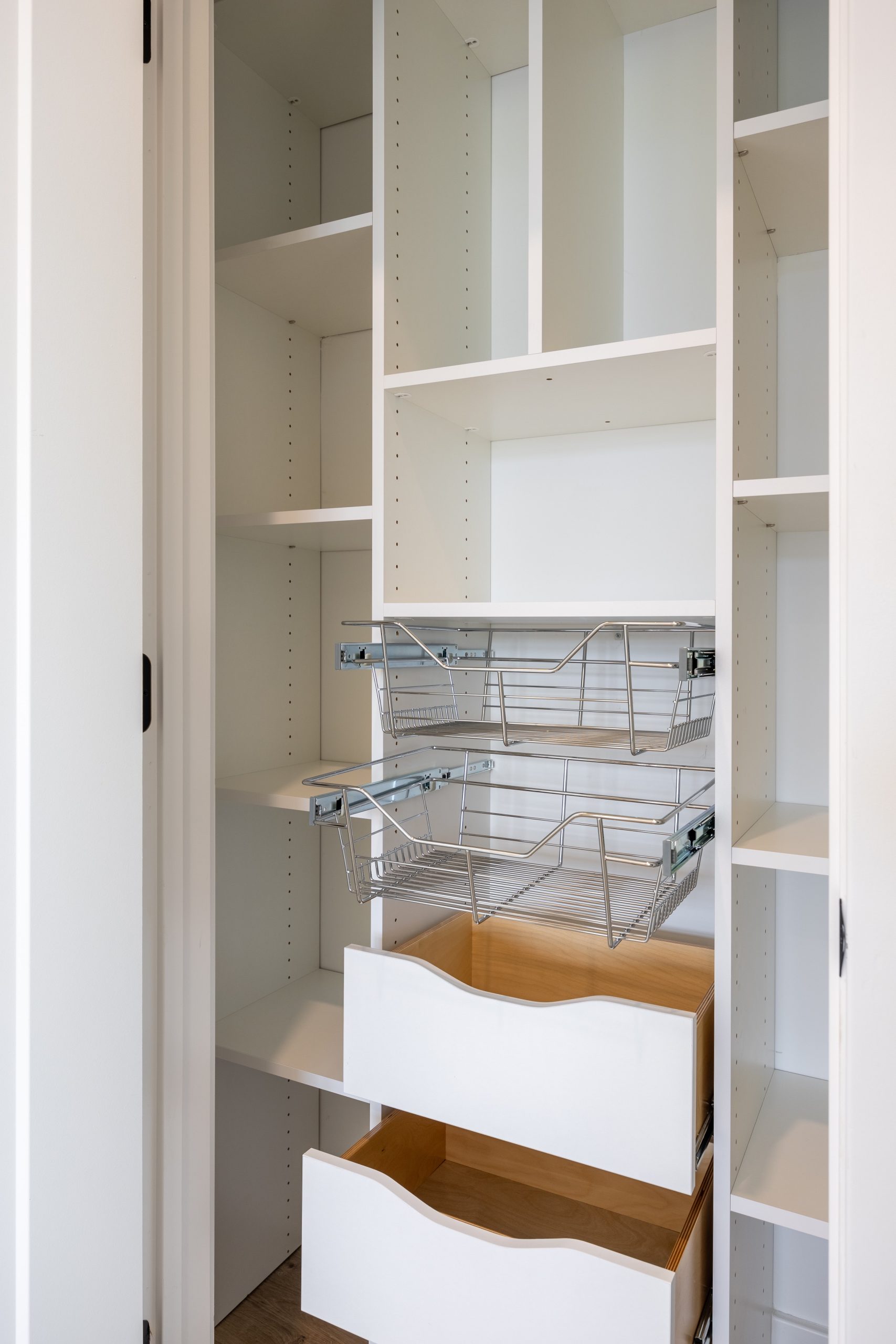
Closet organization units have a way of making or breaking how a space actually functions. The options are wide, the decisions feel small until they are not, and the difference between a closet that works beautifully and one that frustrates you daily often comes down to choices made before a single shelf is installed.
The good news is that choosing the right units for your space is a process, and a rewarding one when approached with the right information. At The Tailored Closet, we have seen how much a well-matched system can transform not just a closet but the entire rhythm of a morning routine. Understanding what to look for makes all the difference, and that is exactly what we are here to walk you through.
What “Choosing the Right Closet Units” Really Means
Picking closet units sounds straightforward until you are standing in front of a wall of options with no clear starting point. The real question is never just about the pieces themselves, it is about how they work together inside your specific space.
Thinking in Systems, Not Individual Pieces
Most homeowners approach closet units one piece at a time, a rod here, a shelf there, a drawer unit that looked useful online. Designers approach the same space as a system, where every component has a relationship with the others and with the room itself. That shift in thinking is what separates a closet that holds things from one that genuinely works.
What “Right” Actually Depends On
The right units for your closet are determined by a specific set of factors that are unique to you and your space. Getting this combination right is what makes a closet feel intuitive rather than frustrating. Those factors include:
- The shape of your space, including ceiling height, wall lengths, and any architectural quirks
- Your wardrobe habits, how much you hang, fold, and rotate seasonally
- Your storage priorities, whether that is shoes, accessories, or maximizing hanging capacity
- Traffic flow and how much room you need to move comfortably inside the closet
- Accessibility needs that affect where and how components are placed
- The aesthetic you want the space to carry
Every one of these variables influences which units belong in your closet and which ones would work against the layout.
The Mistake That Costs the Most Time and Money
Choosing units before understanding how you use your closet is one of the most common and costly missteps in a closet project. It leads to components that look right individually but create friction as a group, and it often results in a redo that could have been avoided with a clearer picture of the space and its demands from the start.
The Right Combination Over the Most Components
A well-designed closet is built on the right combination of units working in harmony, not the highest number of components packed into the available space. More is not always better, and a simpler layout built around your actual habits will outperform an overstuffed one every time. That is the standard a good design process holds itself to from the very first decision.
Closet Organization Units: What They Are and What They Actually Do
Knowing your options makes every design decision easier. Here is a straightforward breakdown of the main closet organization unit categories, what each one does, and where it fits into a well-planned space.
Hanging Units
Hanging units are the backbone of most closet layouts, and they come in three main configurations. Single hang works well for longer garments like dresses, suits, and coats. Double hang maximizes vertical space for shorter items like shirts, folded trousers, and jackets. Long hang is reserved for full-length items that need uninterrupted vertical clearance. Height and spacing within each configuration matter considerably because they determine both capacity and how easy the closet is to use daily.
Shelving Units
Shelving comes in two forms: adjustable and fixed. Adjustable shelving offers flexibility as your wardrobe evolves, allowing you to reconfigure heights without a redesign. Fixed shelving offers stability and a cleaner look in spaces where the layout is unlikely to change. Open shelving works beautifully for items you want visible and accessible, though in larger quantities it can create visual noise if the contents are not consistently organized.
Drawer Units
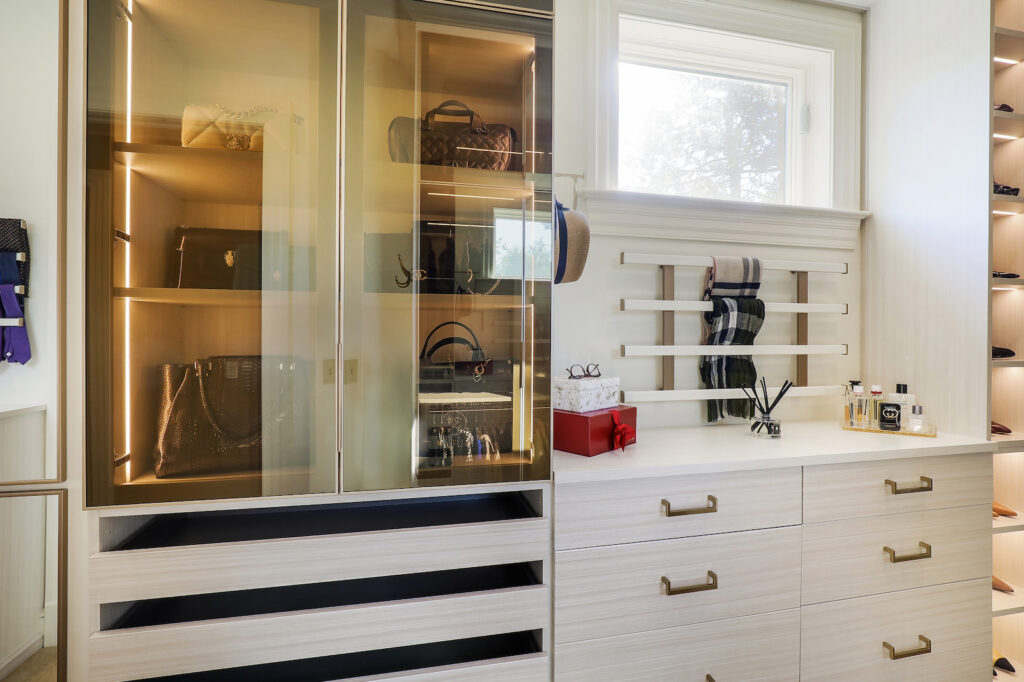
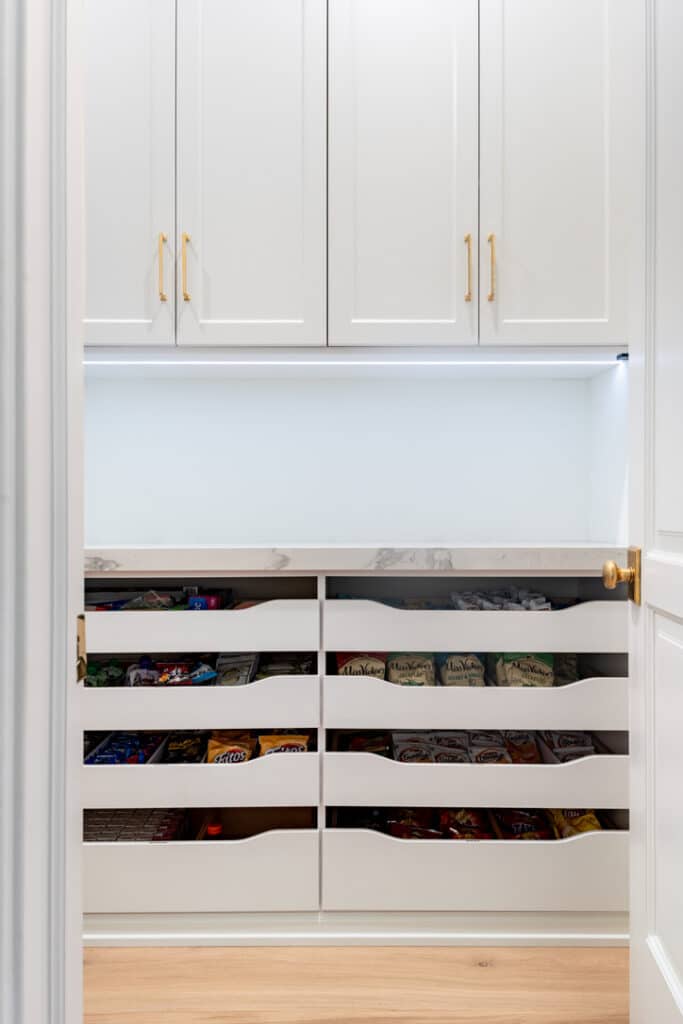
Drawers are one of the most effective tools for keeping a closet feeling calm and contained. They conceal smaller items that would otherwise create clutter on open shelving, and they come in configurations suited to specific needs. Velvet-lined drawers protect delicate jewelry and accessories. Divided interiors keep categories separated and easy to find. Placement is also a key consideration since drawers positioned in high-traffic zones can create collision points that disrupt the flow of the entire layout.
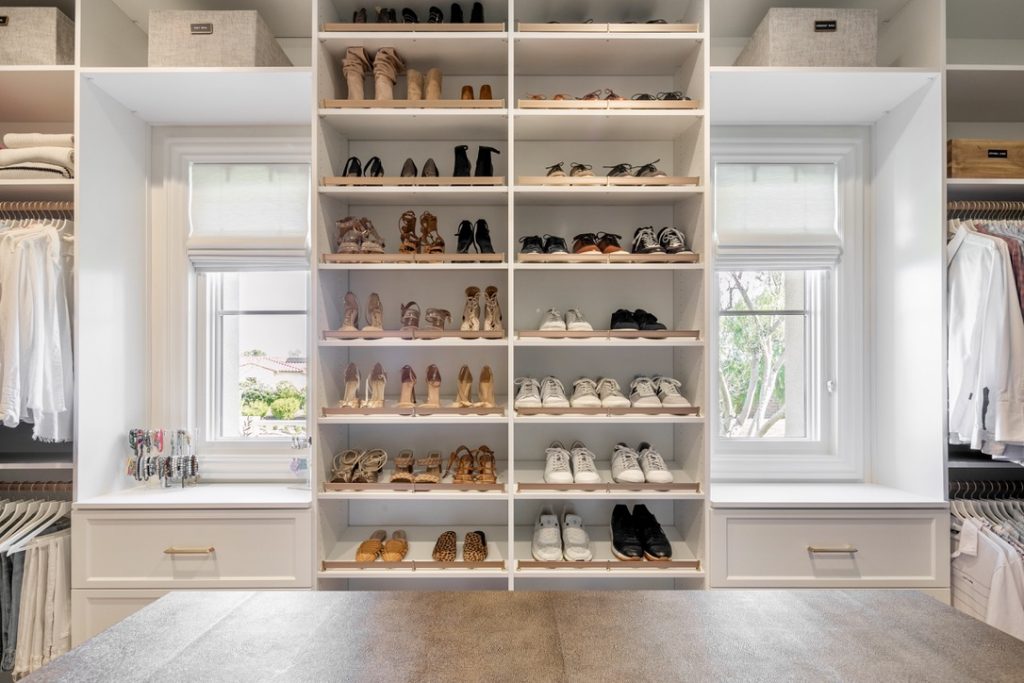
Shoe Storage Units
Shoe storage is one of the most personalized elements of any closet design. The options include flat shelves, slanted shelves, cubbies, and dedicated shoe towers, and the right format depends on both the quantity and type of footwear being stored. A designer evaluates your collection before recommending a configuration, because the storage needs of someone with mostly heels look very different from someone with a large collection of sneakers or boots.
Specialty Units
Specialty units are what take a functional closet and make it feel genuinely tailored. Each one addresses a specific need that standard components leave unmet. Here is what falls into this category:
- Valet rods for staging outfits the night before
- Pull-out baskets for folded items, gym wear, or seasonal pieces
- Jewelry organizers that keep accessories visible and tangle-free
- Pull-out hampers that keep laundry contained and out of sight
- Pull-down rods that bring high hanging sections within easy reach
- Belt, tie, and scarf racks that keep accessories organized and accessible
- Integrated mirrors and lighting that make the closet fully functional as a dressing space
These additions extend the longevity of your closet system and make the daily experience of using it noticeably better.
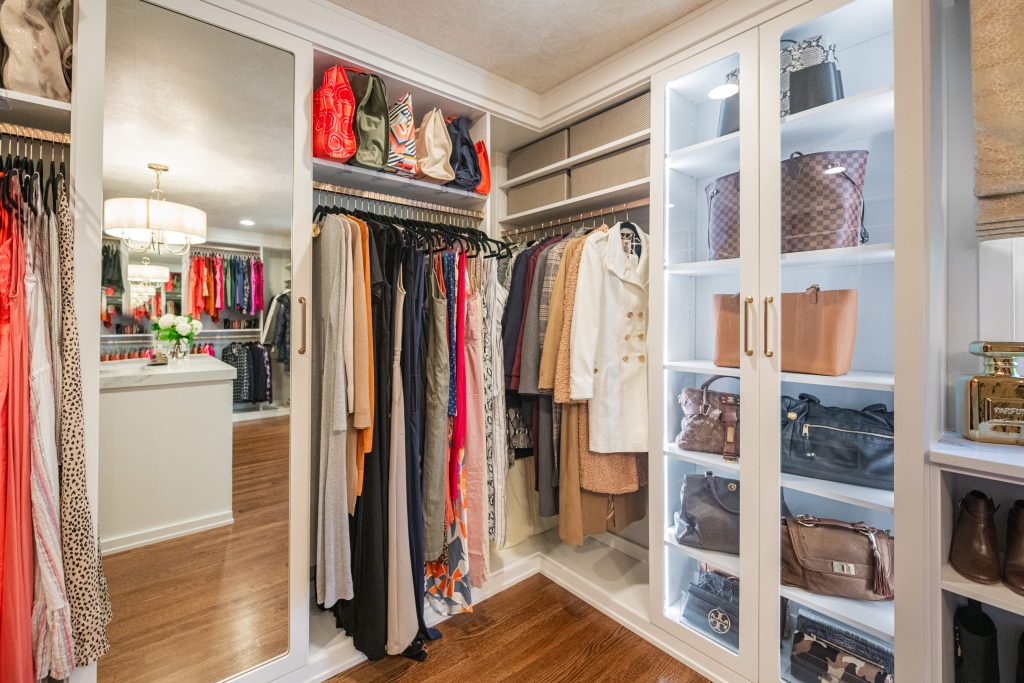
Enclosed Cabinetry
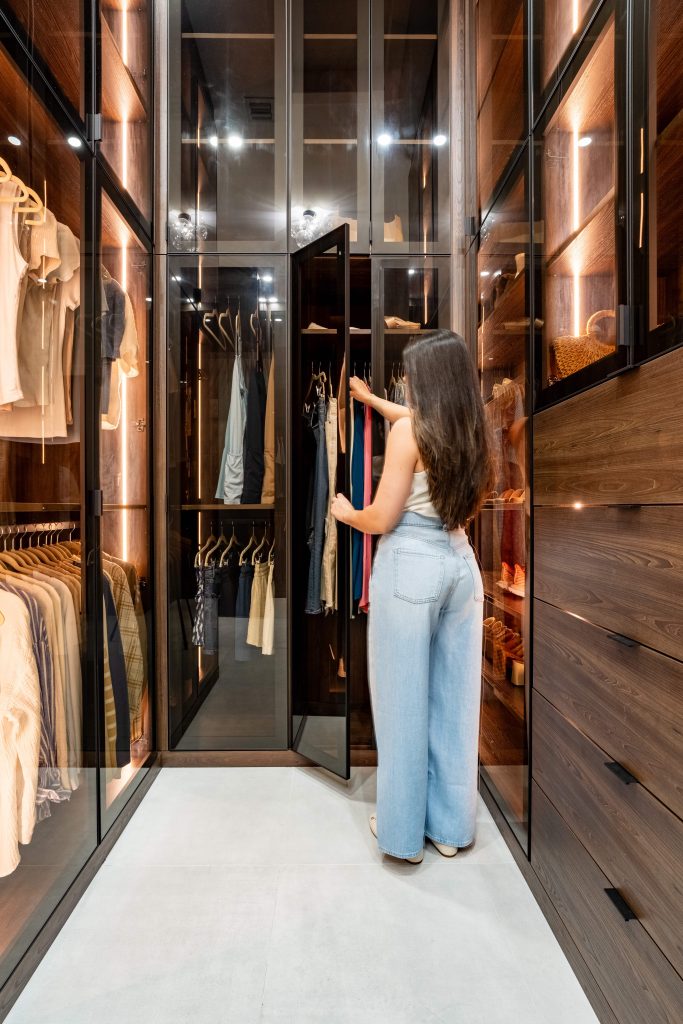
Enclosed cabinetry brings a level of refinement to a closet that open shelving alone cannot achieve. It creates visual calm by concealing contents behind closed doors, which makes even a full closet feel organized at a glance. It also protects garments and accessories from dust and light exposure over time. Aesthetically, it lends a boutique quality to the space, the kind that makes a closet feel like a considered room rather than a functional afterthought.
Factors That Should Guide Your Closet Unit Choices
Choosing closet units well requires more than measuring your walls. The decisions that hold up over time are rooted in a clear understanding of who you are, how you dress, and what you actually need the space to do.
Your Wardrobe Composition
This is the most overlooked starting point in any closet project. People regularly invest in units that have little relationship to what they actually own, ending up with generous hanging space and nowhere to put folded items, or rows of shelving with no dedicated shoe storage. A designer takes inventory first, understanding the full breakdown of your wardrobe before a single unit is recommended.
Your Daily Habits
A closet that suits your wardrobe but ignores your routine will still create friction. Designers think carefully about how you actually get dressed, which items you reach for daily versus once a season, and what needs to live at eye level. A system built around your habits feels almost automatic to use, and that ease is what makes the investment worthwhile.
Future-Proofing Your Investment
A closet designed for a single moment in time has a short shelf life. The configurations that hold up well tend to include:
- Adjustable shelving that can be repositioned as needs change
- Flexible hanging sections that can be reconfigured without a full redesign
- Units sized to accommodate life changes, whether a new job, a different climate, or a growing family
Building adaptability into the layout from the start is one of the clearest signs of a thoughtful design.
Aesthetics and Lifestyle Fit
Function and appearance work together in a well-designed closet. Integrated lighting makes the space easier to use and elevates the daily experience of being in it. Matching finishes and hardware bring visual cohesion that feels intentional. The balance between open and closed storage shapes both the practicality and the mood of the room, and a good design process treats these decisions with the same care as any structural choice.
Common Mistakes Homeowners Make When Choosing Closet Units
A few missteps show up in closet projects more than others. Knowing what they are puts you in a much better position before any decisions get made.
Buying Units Individually Instead of as a System
Selecting closet units one at a time feels manageable, but it tends to produce a space that looks assembled rather than designed. Each piece might work fine on its own, yet the overall layout lacks the cohesion and functionality that comes from thinking through the full system from the start. The individual pieces matter far less than how they work together.
Getting Shelf Depth Wrong
Shelf depth is one of those details that seems minor until you are living with the consequences. Shelves that are too deep swallow items and make them hard to retrieve. Shelves that are too shallow cannot accommodate what they need to hold. Getting this right requires knowing exactly what will live on each shelf, which is a decision that benefits from a clear layout plan guiding it.
Underestimating How Much You Need Drawers
Drawers tend to get deprioritized in favor of more visible storage options, and most closets end up paying for it. Folded items, accessories, and smaller pieces need contained, concealed storage to keep a closet feeling organized. Here is where the gap tends to show up most:
- Folded tops and knitwear that end up stacked on open shelves and quickly become disheveled
- Accessories like jewelry, belts, and scarves with no dedicated home
- Undergarments and socks crowding shelving space better used for other categories
Drawers resolve all of these quietly and efficiently, and most well-designed closets include more of them than the homeowner originally anticipated.
Overloading the Layout With Open Shelving
Open shelving has real advantages in a closet, but in large quantities it creates visual noise that makes even a tidy space feel chaotic. A balanced layout uses open shelving selectively, reserving it for categories that benefit from visibility while relying on closed storage to give the eye places to rest.
Ignoring Door and Drawer Clearance
A unit that looks well-placed on paper can become a daily frustration once drawers are opening into pathways or cabinet doors are swinging into other components. Clearance is a spatial calculation that requires a full picture of the layout, and skipping it is one of the more disruptive mistakes to correct after the fact.
Retrofitting Prefabricated Units Into a Custom Space
Prefabricated units are designed for general use, and general use rarely maps perfectly onto a specific space. Forcing standard sizing into a closet that has its own dimensions, quirks, and architectural details produces gaps, wasted space, and a layout that never quite feels finished. Customization exists precisely because spaces and the people using them are specific, and that specificity deserves a design that reflects it.
The Tailored Closet: Closet Units Designed for Your Life, Not Just Your Space
At The Tailored Closet, we approach every project with one goal in mind: a closet system that fits your space precisely and works around your life completely. Here is what that looks like in practice.
Why Homeowners Choose Us
We build custom closets to the exact dimensions of your space, which means no gaps, no awkward retrofitting, and no wasted potential. Our designers take the time to understand your wardrobe, your daily habits, and your vision before recommending a single unit. The result is a combination of components that makes sense for you specifically. Our cabinetry is built to last, finished with hardware and materials selected to suit your aesthetic, and supported by specialty features that elevate the daily experience of using the space.
What We Bring to the Table
A well-designed closet system requires the full range of unit options executed well. We bring that range to every project, from hanging configurations and shelving to drawer units, shoe walls, valet rods, jewelry drawers, and pull-out hampers. Each element is chosen with purpose and placed with precision, producing a layout that feels considered from every angle.
How the Process Works
We keep the process straightforward and genuinely collaborative. Here is what to expect from start to finish:
- A free in-home consultation where we assess your space and get to know your needs
- An interactive design collaboration supported by 3D renderings so you can see the finished closet before installation begins
- Tailored recommendations across every unit category, hanging, shelving, drawers, and specialty features
- Professional installation that brings the design to life with precision and care
From the first conversation to the final walkthrough, the process is designed to feel clear, personal, and worth every step.
Your Closet Deserves Units That Were Built With You in Mind
Choosing the right closet organization units comes down to understanding your space, your wardrobe, and the daily habits that shape how you use both. The decisions that hold up over time are the ones made with the full picture in mind, from hanging configurations and shelving depth to drawer placement and the specialty features that make a closet feel genuinely tailored.
A well-designed closet system does not happen by accident. It is the result of deliberate choices, guided by expertise and built around real life. If you are ready to stop working around your closet and start enjoying it, contact The Tailored Closet today to schedule your free consultation and let’s build something that works beautifully from day one.
Closet Organization Units FAQs
What are closet organization units and how do they differ from regular storage furniture?
Closet organization units are components designed specifically to work together within a closet space, covering hanging, shelving, drawer, and specialty storage needs. Unlike general storage furniture, they are built to maximize vertical space, fit precise dimensions, and function as a coordinated system. The difference shows up immediately in how the finished space feels to use every single day.
How do I figure out which units my closet actually needs?
Start with your wardrobe. Take stock of how much you hang versus fold, how many shoes you own, and what accessories need a dedicated home. From there, think about your daily routine and which items need to be most accessible. That inventory gives you a clear picture of which unit categories your closet needs most and in what proportion.
Is custom cabinetry worth it compared to prefabricated closet units?
For most spaces, yes. Prefabricated units are built for general dimensions and general needs, which means they rarely fit a specific space perfectly. Custom cabinetry is built to your exact measurements and wardrobe requirements, which eliminates gaps, maximizes usable space, and produces a finished result that feels intentional rather than assembled from whatever was available.
What makes The Tailored Closet different from buying units at a home improvement store?
The difference is in the approach. Home improvement stores offer general solutions built for general spaces. We design around your specific dimensions, wardrobe, habits, and aesthetic preferences. Every unit is chosen with purpose, every finish is selected with your style in mind, and professional installation ensures the result fits and functions exactly as designed from the very first day you use it.
How does The Tailored Closet decide which units are right for my space?
It starts with a thorough in-home consultation where we assess your space and get to know your wardrobe and daily habits. From there, our designers build a layout that balances hanging, shelving, drawer, and specialty units based on what your closet actually needs. The recommendations come from a clear understanding of both the space and the person using it.