
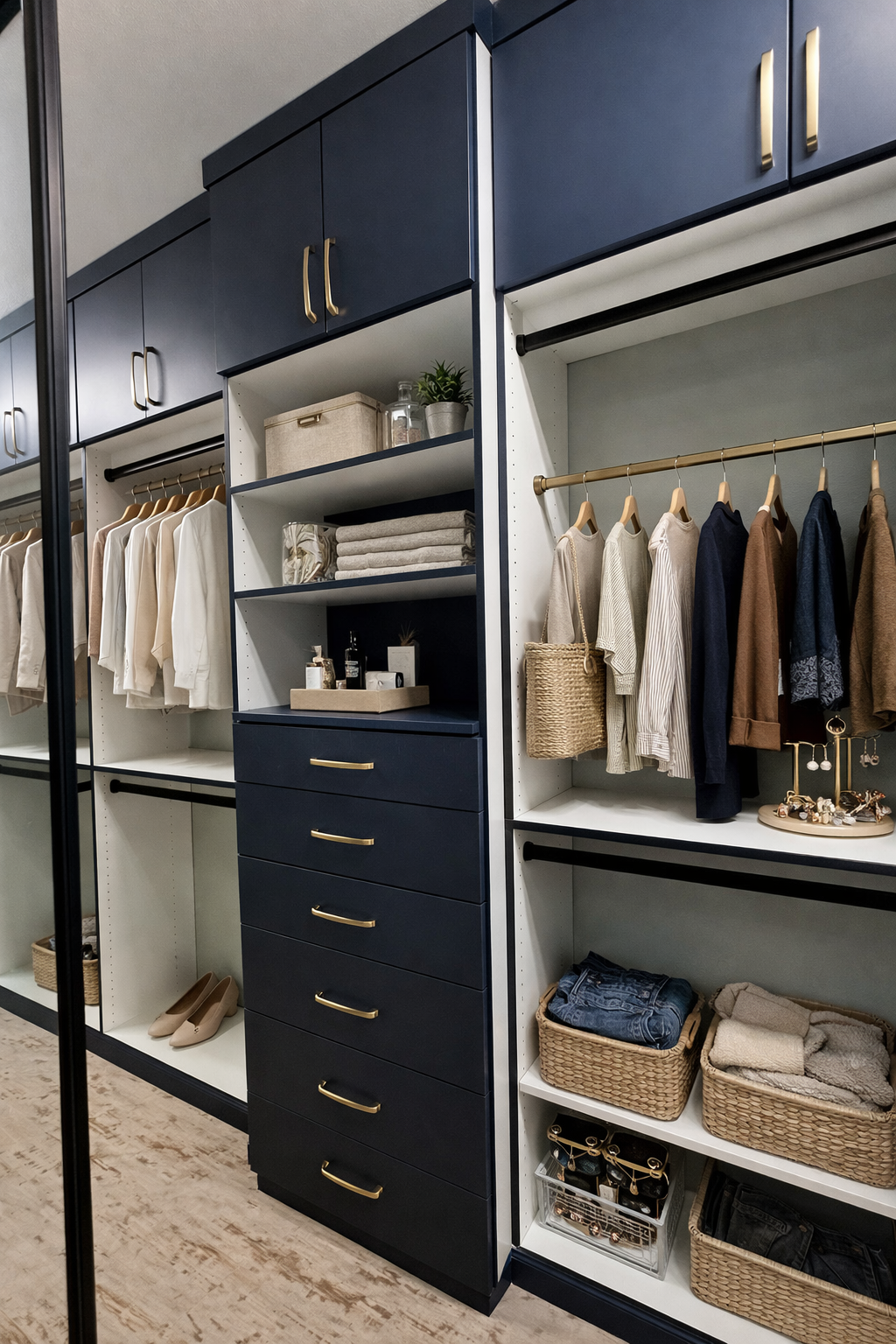
A wall to wall closet transforms an ordinary bedroom wall into a fully integrated storage system, and the impact on both function and aesthetics is immediate. When it is planned well, the result feels like the room was always designed that way.
At The OC Tailored Closet, we design and install wall to wall systems across Orange County, and the decisions that shape a successful outcome are more involved than most homeowners anticipate. From how the space gets measured to which configuration serves the wardrobe, from finish selection to the details that make the system feel built-in rather than added on, there is a clear path to getting it right.
What a Wall to Wall Closet Actually Is
The term gets used loosely, and that looseness creates confusion when it comes time to plan. Understanding what a wall to wall closet is, and how it differs from other built-in options, makes every conversation with a designer more productive from the start.
In reality, a wall to wall closet spans the full width of a wall from end to end, floor to ceiling, creating a seamless storage system that reads as an architectural feature rather than a piece of furniture placed against a wall. A standard reach-in closet, by contrast, occupies a defined cavity built into the wall itself. The reach-in exists within the wall plane. The wall to wall closet uses the wall plane as its backdrop and projects into the room, claiming the full width and height of the surface as storage.
The Distinction From a Walk-In
A walk-in closet creates a dedicated room for storage, separate from the bedroom itself. A wall to wall closet keeps the storage in the bedroom but organizes it behind a unified front that spans the entire wall. The practical difference is significant. A walk-in removes square footage from the bedroom to create a separate zone. A wall to wall system keeps the bedroom intact while delivering a comparable storage capacity along a single wall, which suits rooms where a separate closet space is either unavailable or undesirable.
Why the Distinction Matters for Planning
Each closet type carries its own design logic, budget range, and set of questions a designer needs to ask before drawing anything. A homeowner who understands the difference between a reach-in, a walk-in, and a wall to wall system walks into a design consultation with a clearer sense of what they are asking for and what the project actually involves. That clarity shortens the planning conversation and reduces the likelihood of misaligned expectations on either side.
Planning the Layout: How to Use the Full Wall Effectively
More wall space opens up more design options, and more options mean more decisions worth making carefully. A thoughtful layout plan is what turns a full wall into a storage system that performs.
Zoning the Wall
The most effective wall to wall designs divide the wall into distinct functional zones rather than repeating a single configuration across the full width. Hanging zones, tower sections with drawers and shelves, and upper cabinetry each serve a different purpose, and their placement should reflect the wardrobe and the daily habits of the person using the space. A wall treated as one undivided storage surface tends to underperform because no single configuration handles every storage category well. Zoning resolves that by giving each category the space and format it actually needs.
Hanging Zones and Tower Sections
The hanging zone calculation drives the rest of the layout. Full-length garments need uninterrupted vertical clearance, while short-hang items work well in double-hang configurations that stack two rods and double the capacity of that zone. Determining how much linear hanging space the wardrobe genuinely requires is the starting point for every other placement decision. Tower sections handle folded items, shoes, and accessories, and their placement should reflect access frequency:
- Full-length hanging zones positioned where vertical clearance is unobstructed
- Double-hang sections allocated to shirts, jackets, and shorter garments
- Tower units with drawers and shelving placed closest to the center for daily access
- Shoe and accessory storage positioned within the most naturally accessible zones
The zones reached for most often belong where they are easiest to reach without adjusting the rest of the layout around them.
Upper Cabinetry and the Symmetry Question
The space above hanging rods and tower sections is where a wall to wall design gains a meaningful capacity advantage. Closed upper cabinets hold seasonal items, overflow, and less frequently accessed storage without contributing visual clutter to the overall composition. They complete the floor to ceiling footprint that gives wall to wall closets their architectural quality. The question of symmetry deserves honest consideration here. A layout that looks perfectly balanced across the wall does not always function as well as one designed around the actual wardrobe. The best wall to wall designs find the balance between visual coherence and practical zoning, and a good designer will navigate that tension rather than defaulting to one at the expense of the other.
Common Planning Mistakes and How to Avoid Them
A well-planned wall to wall closet delivers for years. A poorly planned one reveals its limitations quickly. The mistakes below are the most common and the most avoidable.
Designing for Today Instead of Tomorrow
A wall to wall closet sized precisely around the current wardrobe will feel constrained within a few years. Wardrobes grow, households change, and storage needs shift in ways that are difficult to predict exactly but easy to plan for generally. Adjustable shelving, convertible hanging zones, and a layout that builds in some breathing room give the system a longer useful life without requiring a redesign when circumstances inevitably change. A good designer will raise this consideration during the planning conversation rather than waiting for the client to think of it.
The Door and Traffic Flow Oversights
A door configuration chosen primarily for aesthetics can become a daily frustration if it creates friction in the morning routine. The door decision should be evaluated against how the closet actually gets used. Key considerations worth working through before committing to a door system:
- How frequently panels need to be moved to access daily items
- Which zones need to be simultaneously accessible during the morning routine
- Whether the door swing or slide path conflicts with other bedroom furniture
- How the projection depth of the door system affects movement through the room
The room’s traffic flow deserves equal attention. A wall to wall closet that interrupts the natural movement path through the bedroom creates a spatial problem that the interior design cannot compensate for, and it is entirely avoidable with the right planning upfront.
Upper Sections and Non-Standard Walls
Upper cabinetry is one of the most consistently underutilized opportunities in a wall to wall design. Leaving the upper zone as open shelving or skipping it entirely sacrifices meaningful storage capacity and the visual completion that floor to ceiling cabinetry provides. The format’s architectural quality depends on that top section being designed intentionally. Non-standard wall conditions deserve equal attention before a system is selected. Outlets, windows, door frames, and sloped ceilings are common enough that most walls have at least one. A modular component system handles these awkwardly at best and incompletely at worst. A fully custom design accounts for every anomaly from the start and produces a result that fits the wall as it actually exists.
Why Orange County Homeowners Choose The OC Tailored Closet for Wall to Wall Closets
At The OC Tailored Closet, we approach wall to wall closet design as an architectural project. The goal is a result that feels like it was always part of the room, and every decision we make in the process reflects that standard.
A Design Process That Starts With the Room and the Wardrobe
Before any layout takes shape, our designers invest time understanding your wardrobe composition, your daily habits, and the existing design language of the room the closet will live in. That conversation informs every zoning decision, every finish selection, and every hardware choice that follows. Our 3D visualization tool then renders the full wall as it will look before a single cabinet is built, so you can see the finished result, respond to it, and approve it with complete confidence before installation begins.
The Customization to Fit Any Wall and Any Wardrobe
We design to exact dimensions across every wall to wall project we take on. Our range of cabinet styles, finishes, door options, and interior hardware is broad enough to address any wall configuration and any aesthetic. Outlets, windows, architectural anomalies, and non-standard dimensions are all accounted for in the design rather than worked around after the fact. Every selection is made in conversation with your designer, with your specific wall and your specific wardrobe guiding the choices from start to finish.
Installation Quality That Shows at Wall Scale
At wall scale, the quality of the installation is visible from every corner of the room. Our craftsmen work from precise measurements and detailed material specifications, and the standard they are held to reflects the visibility of the work they are doing. When installation is complete, a project manager conducts a final walkthrough with you before the job is considered done. Client sign-off is our completion standard, and it keeps us accountable to a result that looks and functions exactly as designed.
A Better Closet Starts With the Right Wall
A wall to wall closet delivers something a standard storage setup cannot: a fully integrated system that uses the entire wall plane, serves the complete wardrobe, and reads as a deliberate part of the room rather than something added to it. From layout zoning and door selection to finish choices and upper cabinetry, every decision compounds into a result that performs and looks the part for years.
At The OC Tailored Closet, we offer a free in-home consultation to get that process started. Come with your wall, your wardrobe, and your wishlist. We will handle everything from the first measurement to the final walkthrough. Reach out to us today and let’s build something that feels truly yours.
FAQs
What makes a wall to wall closet different from other built-in storage options?
A wall to wall closet spans the full width and height of a wall, creating a seamless storage system that reads as an architectural feature rather than furniture placed against a surface. It keeps storage within the bedroom rather than creating a separate room, and its floor to ceiling footprint gives it a capacity and visual presence that standard reach-in or freestanding options cannot match.
How much does a wall to wall closet typically cost?
The range is wide because the variables are significant. Wall width, ceiling height, configuration complexity, door system, material tier, and hardware choices all influence the final number. A modest configuration on a standard wall sits at a different price point than a fully custom floor to ceiling system with mirrored sliding doors and integrated lighting. A free consultation with a qualified designer is the most reliable way to get an accurate estimate for your specific wall and wardrobe.
How does The OC Tailored Closet approach the design of a wall to wall closet project?
We treat every wall to wall project as an architectural undertaking. Our designers invest time understanding your wardrobe, your daily habits, and the existing design language of the room before drawing anything. Our 3D visualization tool renders the full wall as it will look before a single cabinet is built, so you can see, respond to, and approve the design with full confidence before installation begins.
Does The OC Tailored Closet handle walls with architectural anomalies like windows or outlets?
We do, and we account for them fully in the design rather than working around them after the fact. Outlets, window frames, door casings, sloped ceilings, and other wall conditions are incorporated into the custom design from the start. The result fits the wall as it actually exists rather than approximating a fit the way a modular system would.
What door options does The OC Tailored Closet offer for wall to wall closet projects?
We offer sliding panels, bifold doors, hinged doors, and mirrored sliding options across our wall to wall projects. Every door decision is made in conversation with your designer, taking into account the room’s floor plan, the bedroom’s aesthetic, and how the closet gets used daily. Mirror panel sliding doors are among our most popular choices for bedroom applications given their dual function and visual impact.