
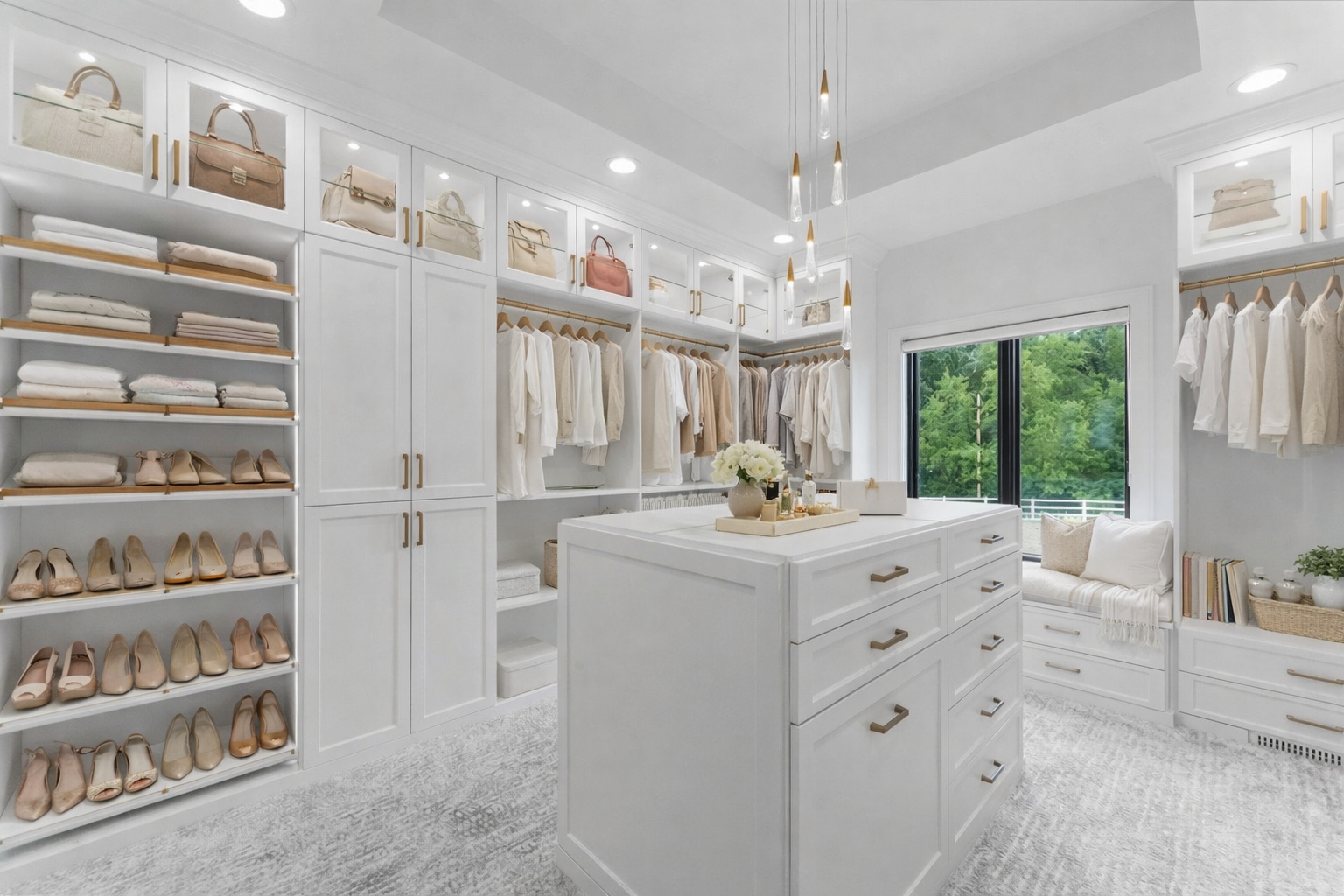
A walk-in closet has so much potential to make your everyday routine feel smoother, calmer, and more organized. Understanding walk-in closet dimensions before choosing finishes, storage features, or decorative details helps you see how much space you have and how that space can comfortably support the way you get ready each day.
Walk-In Closet Dimensions: What Size Should a Walk-In Closet Be?
Walk-in closets can feel wonderfully luxurious when the layout supports both storage and movement. General design standards are a helpful place to begin, especially when you are trying to understand what different closet sizes can comfortably accommodate.
The most successful walk-in closets come from pairing measurements with thoughtful space planning. A few inches can change how easily drawers open, how comfortably you move through the closet, and how natural the space feels during your daily routine.
Minimum Dimensions for a Comfortable Walk-In Closet
For a very compact walk-in closet, a common minimum starting point is around 4 feet wide by 4 feet deep. This size usually works best for a simple layout with storage on one wall and enough room to step inside. Once hanging clothes, shelving depth, and door swing are considered, the usable space can feel much smaller than the room’s total dimensions suggest.
Walking clearance is one of the most important comfort factors. Around 24 inches of clear walkway is often treated as a practical minimum, while 30 to 36 inches generally feels easier for daily use. Those extra inches can make it more comfortable to turn around, reach for items, view clothing, and move through the closet without feeling boxed in.
Single-Sided Walk-In Closet Layouts
A single-sided walk-in closet places storage along one wall, which makes it a strong option for narrower spaces. This layout keeps the opposite side open for movement, helping the closet feel more usable even when the overall footprint is modest.
In general, hanging clothes require about 24 inches of depth, so the remaining width needs to allow for a comfortable path. A single-sided layout can work beautifully when the room is slim, because the design focuses storage in one organized run while preserving enough clearance to move, browse, and access each section easily.
Double-Sided Walk-In Closet Layouts
A double-sided walk-in closet uses storage along two parallel walls, creating more capacity while placing extra importance on the center walkway. This type of layout is often used when homeowners want room for hanging sections, shelves, drawers, shoes, and accessories on both sides of the closet.
As general design standards, a double-sided layout often includes:
- Storage depth on both walls: Hanging sections commonly need about 24 inches per side, so the room must be wide enough to support cabinetry or closet systems along both walls without crowding the center.
- Comfortable walkway spacing: A center aisle of about 30 to 36 inches usually feels more comfortable for everyday movement, especially when opening drawers or accessing lower storage.
- Balanced storage placement: Frequently used items should be easy to reach, while seasonal or occasional pieces can be placed higher, lower, or farther back to keep the main areas feeling open and practical.
Poor spacing can make even a generously sized closet feel difficult to navigate. When the walkway is too narrow, drawers compete with movement space and both sides of the closet can feel visually heavy. A successful double-sided layout gives storage room to perform while keeping the walking path clear and comfortable.
Island Considerations for Larger Walk-In Closets
A closet island can add storage, surface space, and a beautiful central feature to a larger walk-in closet. It may include drawers for jewelry and accessories, space for folded items, or a countertop that makes daily routines feel more organized.
Clearance is the deciding factor. Many walk-in closets need about 36 inches around an island to feel comfortable, with additional space often preferred when drawers open toward surrounding cabinetry. The island should feel proportional to the room, leaving enough open floor area so the closet remains easy to move through.
The best islands improve usability. They create a helpful landing zone, add practical storage, and bring visual balance to the room. When an island is sized and placed thoughtfully, it can make a spacious walk-in closet feel more polished, organized, and enjoyable.
Think Before You DIY: Why Professional Closet Cabinetry Makes a Difference
A walk-in closet can seem simple at first glance. Measure the walls, add a few shelves, hang a few rods, and the space should come together. Once the planning begins, though, the details quickly multiply. Clearances, corners, drawer depth, hanging height, shoe storage, lighting, door swings, and daily routines all influence how well the final layout works.
That is where professional cabinetry can make a meaningful difference. With expert design support, a closet becomes a carefully planned space that feels natural to use, looks cohesive, and supports the way you live. At The OC Tailored Closet, we look beyond basic dimensions to create custom storage that feels polished, practical, and personal.
Professionals Optimize Walk-In Closet Dimensions Beyond Standard Measurements
Standard walk-in closet dimensions are helpful starting points, yet they rarely tell the full story of a room. A closet may have an unusual shape, a sloped ceiling, a window, an angled wall, a tight entry point, or a corner that needs special attention. Professional designers know how to evaluate these details and turn them into a layout that feels intentional.
We consider how every inch can serve the room. That includes vertical storage, shelving depth, hanging zones, drawer placement, and open space for movement. Even small adjustments can make the closet easier to use, especially in compact spaces where one poorly placed cabinet can interrupt the entire flow. Professional cabinetry also allows the design to fit the room with precision. The result feels more integrated than a collection of separate storage pieces, giving the closet a cleaner look and a more comfortable daily experience.
Expert Designers Plan Around Real-Life Usage
A successful closet layout starts with how the homeowner actually uses the space. Some people need more long hanging for dresses and coats. Others need extra drawers, shoe storage, handbag shelves, jewelry inserts, hampers, or a dedicated area for workwear. The best design begins with real routines.
Our designers look at questions that often get overlooked during a DIY project:
- What items are used every day? Everyday pieces should be placed where they are easy to see and reach, helping the closet feel intuitive during busy mornings.
- Which categories need their own zones? Clothing, shoes, accessories, seasonal items, and specialty pieces each benefit from a defined place within the layout.
- How should the closet feel when shared? For couples or shared spaces, balanced storage zones can make the room easier and more comfortable for both people.
- Which storage features will make upkeep easier? Drawers, dividers, adjustable shelves, pull-outs, and enclosed cabinetry can help maintain order over time.
These choices may seem small, but they shape how the closet works every single day. When the layout supports your routine, the space feels calmer, cleaner, and easier to enjoy.
Better Layouts Improve Both Organization and Aesthetics
A walk-in closet should function beautifully, and it should also feel visually calm. Professional cabinetry helps bring both priorities together through proportion, alignment, material selection, and thoughtful storage placement.
A well-planned layout can reduce visual clutter by giving every category a clear home. Hanging sections can be grouped by length, drawers can conceal smaller items, shelves can display shoes or handbags neatly, and cabinetry can frame the room in a cohesive way. The overall effect is a closet that feels orderly the moment you step inside.
Design details also influence the atmosphere of the space. Cabinet color, door style, hardware, lighting, and open shelving all contribute to the finished look. With custom cabinetry, we can create a closet that complements the rest of the home while still supporting very practical storage needs.
Professional Planning Helps Avoid Costly Mistakes
DIY closet projects can get frustrating fast when the details don’t line up. A shelf might be too shallow, a rod might be too high, a drawer might hit another cabinet, or a walkway might feel tighter than expected once everything is installed.
Professional planning helps catch those issues early. We think through measurements, clearances, storage depth, materials, and installation before the cabinetry goes in. That way, the final design feels comfortable, durable, and easy to use from day one. For homeowners, that peace of mind is a big part of the value. With a professional team guiding the design and installation, your closet can feel beautifully organized, thoughtfully planned, and ready for real life.
5 Smart Features That Improve Closet Functionality Beyond Basic Dimensions
Walk-in closet dimensions are an important starting point, but the real magic happens in the details. Once the overall layout is mapped out, the features inside the closet determine how easy the space feels to use, how well it adapts over time, and how naturally everything stays organized.
A thoughtfully designed closet should support your daily rhythm. From adjustable shelves to lighting and accessory storage, the right features can make the space feel more intuitive, polished, and personal. The right combination of features can turn a simple storage area into a closet that feels easier, calmer, and more enjoyable to use every day.
Adjustable Shelving for Flexibility
Adjustable shelving gives a closet room to grow and change with you. Wardrobes shift from season to season, shoe collections expand, folded items change, and storage needs evolve over time. Shelves that can be moved make it easier to keep the layout useful as your needs change.
This feature is especially helpful for shoes, handbags, sweaters, denim, bins, and seasonal accessories. A taller shelf might make sense for boots in the winter, while shorter spacing may work better for sandals, flats, or folded knits during warmer months. That flexibility helps the closet stay practical throughout the year.
Adjustable shelving also makes the space feel more tailored. When shelf heights are planned around the items you actually own, everything looks cleaner and feels easier to reach. The result is a closet that feels organized in a way that matches real life.
Drawer Systems That Improve Visibility
Drawers are one of the most useful features in a custom closet because they help smaller items stay contained, protected, and easy to find. They work beautifully for undergarments, workout clothes, accessories, folded shirts, and everyday basics that tend to get messy on open shelves.
Drawers can also soften the visual feel of a closet. By tucking away smaller or busier items, the open areas of the closet feel calmer and more intentional. This creates a cleaner overall look while still keeping daily essentials close at hand.
Dedicated Accessory Organization
Accessories are often the pieces that make a closet feel cluttered fastest. Belts, jewelry, ties, hats, handbags, watches, and scarves all need thoughtful storage because they vary so much in size, shape, and how often they are used. Dedicated accessory organization gives these items a clear home.
A few smart options can make a big difference:
- Jewelry inserts and divided drawers help protect delicate pieces while making it easy to see necklaces, rings, bracelets, and watches at a glance.
- Pull-out racks for belts, ties, or scarves keep slim accessories accessible without taking over valuable shelf or drawer space.
- Handbag shelving and cubbies allow bags to hold their shape while keeping favorites visible and easy to rotate.
- Hooks and valet rods create a convenient spot for planning outfits, hanging dry cleaning, or setting aside tomorrow’s look.
When accessories are easy to see and reach, they become part of the daily routine again. The closet feels more complete, and getting dressed becomes smoother from start to finish.
Integrated Lighting for Accessibility
Lighting can completely change how a closet feels and functions. Even a well-sized walk-in closet can feel difficult to use when corners are dim, colors are hard to distinguish, or shelves cast shadows over important items. Integrated lighting helps make the entire space easier to navigate.
Good lighting supports both visibility and atmosphere. It can brighten hanging sections, highlight shoe shelves, illuminate drawers, and make the closet feel more open. For larger walk-ins, lighting can also help define zones, making it easier to move through the space and find what you need quickly.
There is also a design benefit. Soft, well-placed lighting can bring out the beauty of cabinetry finishes, hardware, and display areas. It gives the closet a more finished feel while making everyday use more comfortable.
Customized Layouts for Different Wardrobe Needs
Every wardrobe has its own personality. Some homeowners need extra long hanging for dresses, coats, and formalwear. Others need more short hanging for shirts, blouses, jackets, and pants. Some need generous shoe storage, while others want drawers, hampers, accessory trays, or space for luggage and seasonal pieces.
A customized layout brings those needs together in a way that feels natural. The best closet designs consider what you own, how often you use it, and how you prefer to get ready. That might mean placing everyday items at eye level, reserving upper shelves for occasional pieces, or creating separate zones for workwear, casual clothing, activewear, and special events.
We Measure, We Design, We Install, You Enjoy
At The OC Tailored Closet, we make the custom cabinetry process feel clear, guided, and genuinely exciting from the very beginning. We start by carefully measuring your space, then we design a solution around your home, your routines, and the way you want the finished cabinetry to function.
From there, our professional installation team brings the design to life with detailed craftsmanship and a polished finish. Whether you are planning a custom closet, pantry, home office, mudroom, or wall bed, we handle the details so you can enjoy a space that feels beautifully organized, thoughtfully designed, and made for everyday living.
Let’s Design a Closet That Fits Your Life
Understanding walk-in closet dimensions is the first step toward creating a space that feels comfortable, organized, and easy to use. From minimum clearances and layout types to smart features like adjustable shelving, drawer systems, accessory storage, and lighting, every detail plays a part in how well your closet supports your daily routine.
With thoughtful planning and custom cabinetry, even the smallest design choices can make your closet feel more polished and practical. Ready to see what your space could become? Schedule your free in-home consultation with us today, and let’s design a closet that feels beautifully tailored to the way you live.
FAQs
What walk-in closet dimensions should I consider before planning a layout?
A comfortable walk-in closet depends on more than the room’s total size. You’ll want to think about walking clearance, hanging depth, drawer access, shelving placement, and how many people will use the space. Even a few inches can affect how easy it feels to move around, open drawers, or reach everyday items. The best layouts balance storage capacity with open space, so the closet feels organized, accessible, and comfortable during your daily routine.
Is a single-sided or double-sided closet layout better?
It depends on the shape and width of the room. A single-sided layout works well in narrower closets because storage is placed along one wall, leaving the opposite side open for movement. A double-sided layout offers more storage by using two parallel walls, but it needs enough width for cabinetry and a comfortable center aisle. The better option is the one that gives you strong storage while still keeping the closet easy to move through.
Can The OC Tailored Closet help me decide what type of closet layout works best?
Yes, we guide you through layout options based on your room dimensions, wardrobe, and daily habits. We look at whether a single-sided, double-sided, U-shaped, or larger custom layout makes the most sense for your space. We also consider details like drawer access, shoe storage, hanging needs, and walking clearance. Our goal is to help you choose a layout that feels comfortable, organized, and natural to use.
Can you design more than closets?
Yes, we design custom cabinetry for several areas of the home, including closets, pantries, home offices, mudrooms, wall beds, and coffee nooks. Many homeowners come to us for one space and then realize the same thoughtful storage approach can improve other rooms, too. We focus on creating cabinetry that brings better organization, better flow, and a more finished look to the spaces you use most.
Can a small walk-in closet still feel luxurious?
Absolutely. A smaller walk-in closet can feel beautiful and highly functional with the right planning. The key is using the available space wisely with clear zones, proper shelving depth, efficient hanging areas, and storage that fits your wardrobe. Details like clean cabinetry lines, good lighting, organized drawers, and thoughtfully placed shelves can make the space feel polished. Luxury often comes from ease, comfort, and a design that feels tailored to your routine.
