
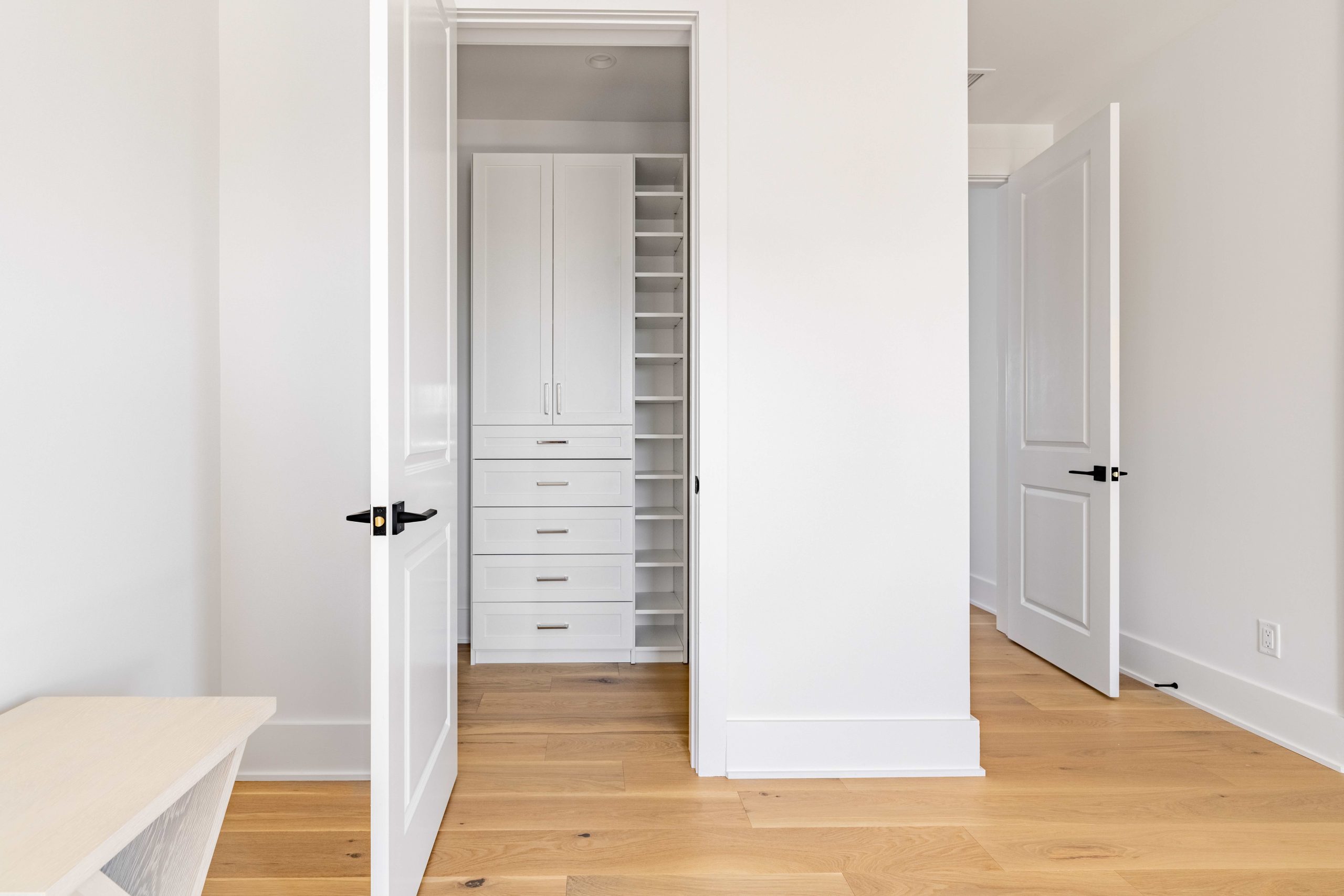
The smallest spaces in a home often carry the biggest workload. A utility closet might hold cleaning supplies, tools, linens, laundry essentials, pet items, backup paper goods, and the odds and ends that need a place to land. When that space is cramped or hard to navigate, even simple household tasks can feel more frustrating than they need to.
With thoughtful utility closet storage, a small service space can become easier to use, easier to maintain, and better suited to your daily routines. At The OC Tailored Closet we love helping homeowners look at these hardworking areas with fresh eyes, because even a compact closet can offer surprising potential when every shelf, cabinet, hook, and bin has a purpose.
What Makes Utility Closets So Hard to Keep Organized?
Utility closets tend to become some of the busiest storage areas in the home because they are expected to hold so many different categories at the same time. One shelf may be used for cleaning sprays and dust cloths, while another becomes overflow storage for laundry detergent, extra paper towels, light bulbs, batteries, pet supplies, and seasonal items. Before long, the closet starts serving as a general household hub for anything practical that needs to be tucked away.
When there is no clear home for each category, everything competes for the same limited square footage. This is one of the biggest reasons utility closet storage can feel challenging, even for homeowners who are naturally tidy and intentional.
Limited shelf space creates stacking and clutter
Small utility closets often come with only a few basic shelves, which means items quickly get stacked in front of, beside, and on top of one another. At first, this may seem like a practical way to make everything fit. Over time, though, stacked storage makes the closet harder to use because the items you need most are often hidden behind other supplies.
When cleaning products, refill bottles, tools, and household extras are layered together, it becomes easy to forget what you already have. That can lead to duplicate purchases, expired products, and supplies that stay buried for months. A closet may have more usable space than it appears to, especially when the vertical space has never been properly planned. With the right layout, walls, doors, upper shelves, and lower sections can all work together more efficiently.
Awkward layouts make organization difficult
Many utility closets were built with basic storage in mind, which can make them difficult to organize for real daily use. Narrow depths can limit what fits comfortably. Fixed shelving can create wasted gaps above short items and cramped sections around taller ones. A closet may technically have shelves, yet still lack the structure needed to keep everything accessible and orderly.
Designated zones make a major difference in how a utility closet functions. Cleaning supplies, laundry overflow, tools, paper goods, and seasonal items each need their own area so the closet feels intuitive to use. Without those zones, items naturally drift into any open spot. This is where thoughtful design matters. Clutter is often caused by the layout itself rather than a lack of effort or discipline.
Convenience usually overrides organization
Most utility closet clutter happens gradually through everyday habits. When someone is carrying laundry supplies, replacing a roll of paper towels, or putting away a mop after cleaning, speed usually wins. Items get placed wherever there is room in the moment. One quick drop-off turns into another, and the closet slowly becomes harder to navigate.
This kind of clutter is completely normal in a household. Utility spaces are used often, and they need storage that supports quick, simple routines. When every item has a logical place to return to, staying organized becomes much easier. A well-designed utility closet helps convenience and order work together, so the space remains useful even during the busiest weeks.
What Makes a Utility Closet Truly Functional?
Accessibility should come first
A truly functional utility closet starts with ease of access. The items you use most often should be the simplest to reach, especially cleaning sprays, laundry products, pet supplies, or paper goods that are part of your weekly routine. When these essentials are placed at eye level or within a comfortable reach zone, the whole closet becomes easier to use.
Accessibility also helps reduce the little frustrations that build up over time. No one wants to dig behind refill bottles to find a dust cloth or bend to the floor every time they need a fresh sponge. A thoughtful layout supports the way your household actually moves through the day, making routine tasks feel smoother and more efficient.
Every category needs a designated home
Utility closets work best when each category has a clear, consistent place to live. This makes it easier to put items away quickly, see what you have on hand, and avoid the slow clutter buildup that happens when everything shares the same shelf.
Common utility closet categories often include:
- Cleaning supplies that need upright storage, easy visibility, and quick access for everyday chores.
- Laundry products such as detergent, dryer sheets, stain removers, and backup supplies that should stay grouped together.
- Paper goods like paper towels, tissues, and extra household essentials that need open, easy-to-monitor space.
- Pet supplies such as grooming tools, waste bags, leashes, treats, or backup food items that are easier to manage when they have their own zone.
- Tools and batteries that benefit from smaller compartments, bins, or drawers so they remain easy to find when needed.
When every category has a designated home, the closet becomes more intuitive. Everyone in the household can understand where items belong, which makes the system easier to maintain.
Vertical space matters more than floor space
In many utility closets, the greatest opportunity is above eye level, along the side walls, or on the back of the door. Floor space fills up quickly, so vertical planning becomes essential. Strategic shelf placement can dramatically improve storage capacity without making the closet feel crowded.
We often look at vertical space as one of the most valuable assets in a small service area. Tall sections can support brooms and mops, upper shelves can hold less frequently used items, and mid-level shelving can keep daily supplies right where they are needed. When the full height of the closet is used wisely, the space feels calmer, cleaner, and more capable.
Flexibility is essential
A utility closet has to support real household life, and household needs naturally change over time. Cleaning routines shift, laundry products change, children grow, pets come into the home, seasonal items rotate, and bulk purchases may require extra room. A closet that can adapt will stay useful longer.
Flexible features can make a meaningful difference, including:
- Adjustable shelves that can move up or down as product sizes and storage needs change.
- Removable bins that allow categories to be refreshed, relabeled, or reorganized with ease.
- Hooks and wall-mounted accessories that can be repositioned for brooms, dusters, bags, or pet gear.
- Mixed storage options such as open shelves, cabinets, drawers, and tall compartments that support a wider variety of household items.
This kind of adaptability helps a utility closet keep up with everyday life. Efficient utility storage also reduces visual stress, that subtle feeling of tension that comes from opening a crowded door and seeing too much at once. When the closet is organized, accessible, and easy to maintain, the whole household flow feels lighter.
6 Smart Utility Closet Storage Solutions for Small Spaces
Small utility closets can become surprisingly capable when the storage is planned around real household routines. The goal is to make everyday items easier to see, reach, return, and maintain, so the closet supports the way your home actually functions.
1. Adjustable shelving for evolving storage needs
Adjustable shelving is one of the most practical features for a small utility closet because household supplies come in so many shapes and sizes. When shelves can move up or down, the closet can be arranged around what you actually store instead of forcing everything into fixed openings.
This also makes the closet easier to refresh over time. As routines change, product sizes shift, or certain categories grow, adjustable shelves allow the layout to change with them. That flexibility helps the space stay organized long after the first setup.
2. Pull-out storage for easier visibility
Pull-out storage can make a narrow or deep utility closet much easier to use. Instead of reaching into the back of a shelf and hoping to find the right item, pull-outs bring the contents forward so everything is visible at once. This is especially helpful for cleaning products, refill bottles, pet supplies, and small household extras that tend to disappear behind larger items.
Pull-out systems also improve workflow. When supplies are easy to see, it becomes faster to grab what you need and simpler to put it back in the right place. That small convenience can make a big difference in how well the closet stays organized from day to day.
3. Door-mounted storage solutions
The back of the closet door is valuable storage space, especially in a small service area. Door-mounted solutions can hold lightweight, frequently used items while keeping shelves free for larger supplies. They also help keep smaller items visible, which reduces the chance of buying duplicates or forgetting what you already have.
4. Vertical compartments for tall cleaning tools
Brooms, mops, dusters, and vacuum attachments can quickly make a utility closet feel crowded when they are leaned into corners or wedged between shelves. Vertical compartments give these tall tools a dedicated place to stand upright, which makes the closet look cleaner and function better.
A well-planned tall section can keep handles separated, prevent items from sliding around, and make each tool easier to remove. This is a simple upgrade that can dramatically improve the feeling of order inside a small closet, especially when floor space is limited.
5. Drawer systems for smaller essentials
Small household essentials are often the hardest items to manage because they scatter easily. Drawer systems create a contained space for the things that otherwise end up loose on shelves or buried in bins. They are especially helpful for items that need to be easy to find quickly.
6. Built-in zones for laundry essentials
For homes where the utility closet supports laundry overflow, built-in zones can make a major difference. Detergent, stain removers, dryer sheets, wool dryer balls, garment bags, and backup supplies are easier to manage when they have their own dedicated area. This keeps laundry products grouped together and makes it simpler to move through washing, drying, sorting, and restocking.
Some closets can also support hamper integration or a small folding or sorting surface, depending on the available space. Even a compact shelf placed at the right height can help with quick laundry tasks. When laundry storage, cleaning supplies, tall tools, drawers, and door storage work together, the closet becomes more than a place to store things. It becomes a smoother household station where daily tasks feel easier from start to finish.
Signs It May Be Time for a Custom Utility Closet Solution
A utility closet can only work as well as its layout allows. When shelves, floor space, and storage zones no longer support your household routines, the closet can start feeling frustrating no matter how often you tidy it. A custom utility closet solution can help create a smoother, more practical system that fits your space, your habits, and the items you rely on every day.
- You’re constantly reorganizing without lasting results: If you find yourself clearing out the utility closet again and again, only to have it feel cluttered a few weeks later, the issue may be the structure of the space. Many utility closets become difficult to maintain because the shelves are too shallow, too deep, too far apart, or too limited for the mix of items being stored.
- The layout wastes valuable storage potential: A utility closet may look full while still leaving useful space untouched. Inefficient shelf spacing can create large gaps above shorter products, while crowded shelves can make daily supplies harder to reach. Upper areas, side walls, and door space are often overlooked, especially in closets that were built with a very basic layout. Poor accessibility can also make the closet feel smaller than it really is. When frequently used items are tucked behind bulky supplies or stored too high, the space becomes harder to use.
- Your household storage needs have changed: A utility closet that worked well a few years ago may struggle to keep up as household routines evolve. Growing families often need more space for cleaning products, laundry supplies, bulk goods, pet items, sports gear, or seasonal essentials. Some homes also begin using one closet for several purposes, especially when storage needs expand in nearby laundry rooms, garages, kitchens, or mudrooms. These changes are completely normal. The challenge comes when the closet layout stays the same while the household asks more from it. A custom solution allows the storage to reflect the way your home functions today, with zones and features that support your current routines.
- You want a more polished, cohesive look: Utility spaces deserve the same thoughtful attention as the more visible areas of the home. When a closet looks clean, cohesive, and intentionally designed, it can make everyday tasks feel easier and more pleasant. Cabinets, drawers, shelves, and compartments can bring a sense of order to items that are usually practical, bulky, or visually busy.
The OC Tailored Closet Approach to Better Utility Storage
A well-designed utility space can bring a surprising amount of ease to everyday routines. Whether the closet holds cleaning supplies, laundry overflow, tools, pet essentials, or household backups, the right system can make everything feel more organized and accessible. At The OC Tailored Closet, we approach utility closet storage with a focus on real-life function, thoughtful design, and a finished look that feels right at home.
Personalized storage systems designed around real household routines
Every home uses its utility spaces a little differently, which is why personalization matters so much. We begin by looking at what the closet needs to hold, how often those items are used, and which routines the space needs to support. A household with heavy laundry demands may need a very different layout than one that uses the closet mostly for cleaning products, tools, and paper goods.
Our design process is collaborative, so the final system reflects both your practical needs and your preferences. We can create zones for daily essentials, backup supplies, tall cleaning tools, smaller household items, and seasonal storage. When each part of the closet has a clear purpose, the space becomes easier to use and much easier to maintain.
Solutions that maximize small or awkward spaces
Small and awkward utility closets often have more potential than they appear to at first glance. With efficient space planning, we can look beyond the basic shelf-and-floor setup and consider the full height, depth, and layout of the closet. This helps us create storage that feels more intentional and less crowded.
Our utility storage solutions may include:
- Adjustable shelving that can accommodate changing product sizes, refill containers, and household supplies.
- Tall compartments for brooms, mops, dusters, vacuums, and other cleaning tools.
- Drawers or smaller cabinet sections for batteries, light bulbs, cloths, gloves, and miscellaneous essentials.
- Flexible storage zones that keep cleaning, laundry, paper goods, and tools grouped by use.
- Easy-access layouts that reduce digging, bending, and searching during daily tasks.
By combining several storage features, we can improve both capacity and workflow. The closet becomes easier to navigate because the design supports how items are stored, reached, and returned.
Designs that balance functionality and style
Utility spaces can be practical and still feel polished. We design custom cabinetry that brings order, warmth, and visual cohesion to hardworking areas of the home. A clean, finished system can make the closet feel more connected to surrounding spaces, especially when it sits near a hallway, laundry room, mudroom, kitchen, or garage entry.
With a wide selection of finishes and cabinet door styles available, we can help create a look that complements your home’s overall design. Some homeowners prefer a sleek and minimal appearance, while others want a more classic or decorative feel. The result is a utility space that feels organized, attractive, and thoughtfully integrated.
Professional installation and long-term durability
A custom utility closet should feel dependable from the first day and continue supporting your household over time. Our professional installation team helps ensure that every shelf, cabinet, drawer, and storage feature is installed securely and precisely. This attention to detail helps the finished space feel seamless, sturdy, and ready for daily use.
High-quality craftsmanship also matters in a closet that works hard. Utility spaces often handle heavy bottles, bulky supplies, frequent use, and changing storage needs.
We design and install systems with durability in mind, so your closet can remain useful, reliable, and through the rhythms of your everyday home life.
Bring More Ease to Your Everyday Storage
A well-planned utility closet can make everyday home routines feel smoother, calmer, and more manageable. When frequently used items are easy to reach, every category has a designated home, and vertical space is used with intention, even a small service area can become surprisingly efficient.
The best utility closet storage combines practical workflow, flexible features, and a polished design that fits beautifully into your home. If your current closet feels crowded, awkward, or difficult to maintain, we would love to help you reimagine it. Schedule your free in-home consultation with The OC Tailored Closet and discover how much potential your utility space truly has.
Utility Closet Storage FAQs
How can I make utility closet storage more efficient in a small space?
Start by grouping items by how you use them, then give each category a clear place to live. Cleaning supplies, laundry products, paper goods, pet items, and small household essentials all work better when they have their own zones. Adjustable shelves, door-mounted organizers, drawers, and tall compartments can help small closets feel much more useful. The most efficient layouts make frequently used items easy to reach and place backup supplies higher or lower.
How do I stop my utility closet from becoming cluttered again?
Clutter usually returns when items do not have an easy place to go back to. A good system should make cleanup feel natural, with labels, clear zones, reachable shelves, and storage that matches the size of the items inside. Keep daily supplies at a comfortable height and place overflow items together so they do not spread across the closet. A quick monthly reset can also help catch small messes before they build up.
Are pull-out shelves worth it in a utility closet?
Pull-out shelves can be very helpful, especially in deep or narrow utility closets. They allow you to see what is stored toward the back without digging through layers of bottles, bins, or household supplies. This makes it easier to grab what you need and avoid buying duplicates. Pull-outs are especially useful for cleaning products, refill containers, pet supplies, and smaller items that tend to get hidden behind larger products.
Can The OC Tailored Closet design a custom utility closet for a very small or awkward space?
Yes, we can design around small, narrow, deep, angled, or otherwise awkward utility spaces. We look closely at the dimensions, door swing, ceiling height, existing shelving, and the items you need to store. From there, we create a layout that makes better use of the available space. Features like adjustable shelves, slim compartments, drawers, and vertical tool storage can help even a compact closet become more organized and practical.
Can The OC Tailored Closet design my utility closet to match the rest of my home?
Yes, we offer a range of finishes and cabinet door styles so your utility closet can feel cohesive with the rest of your home. Many homeowners want service spaces to feel clean, polished, and thoughtfully finished, especially when the closet is near a hallway, laundry room, kitchen, or mudroom. We can help you choose materials and design details that support the function of the space while also complementing your home’s overall style.
