
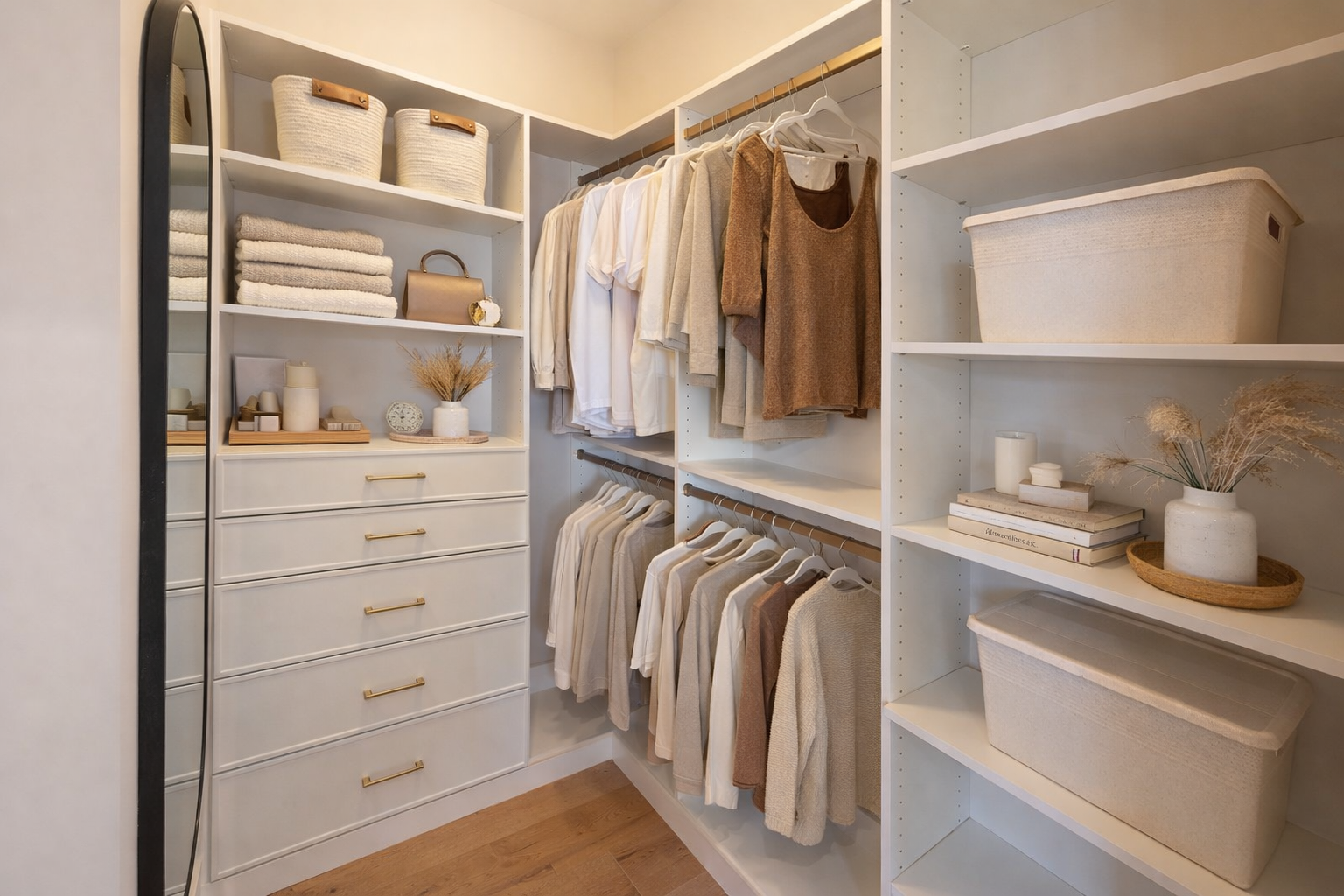
A closet that truly works starts long before anything gets hung up or folded away. It starts with dimensions. The way a closet is measured, planned, and proportioned determines everything about how it feels and functions every single day. And when those dimensions are done right, the difference is genuinely remarkable.
That’s exactly what we help Orange County homeowners achieve at The OC Tailored Closet. We design custom closet layouts built around your actual space, your wardrobe, and the way you move through your mornings. Whether you’re rethinking a reach-in or dreaming up a boutique walk-in, the right plan changes everything.
Why Closet Layout Dimensions Shape the Entire Experience
Here’s something that surprises a lot of homeowners: a large closet can feel completely frustrating, and a small closet can feel wonderfully functional. The difference isn’t square footage, but in its planning.
When hanging areas, shelves, drawers, and walkways aren’t proportioned correctly, even a generous closet starts working against you. Clothing gets hard to see. Movement feels cramped. Certain zones go unused while others overflow. The closet technically holds your wardrobe, but using it every morning feels like a task rather than a routine.
Good dimensions fix that. When every section is sized with purpose, the closet becomes easier to move through, easier to maintain, and easier to actually enjoy. You can see what you own. You can reach what you need. The whole space has a logic to it that makes your daily routine feel effortless.
Professional design is what gets you there. Without it, it’s easy to end up with awkward access points, wasted corners, or storage zones that don’t match the wardrobe they’re meant to serve. A well-proportioned closet supports your routine without you ever having to think about it.
The right closet layout dimensions can help you:
- Make better use of every wall
- Keep clothing easier to see and access
- Reduce wasted vertical and corner space
- Create more comfortable movement through the closet
- Balance hanging, folded, shoe, and accessory storage
- Make the closet feel organized rather than overfilled
Start With the Type of Closet You Have
Dimensions aren’t universal. A planning approach that works beautifully in a walk-in won’t translate directly to a reach-in, and a boutique closet has entirely different priorities than a shared space. Before anything else, it helps to understand what kind of closet you’re working with.
Think of the dimensions in this section as planning references, not rigid rules. Every space is different, and the final design should always reflect your actual room and your actual wardrobe.
Walk-In Closet Layout Dimensions
Walk-in closets offer real opportunity, but they also require real planning. The goal is to balance generous storage with comfortable, open movement through the space. A walk-in that’s packed too tightly may hold a lot, but it won’t feel good to use.
Careful planning around hanging sections, shelving, drawers, corner zones, and circulation is what separates a walk-in that works from one that just looks impressive on paper. And if two people share the space, that adds another layer of intentionality to the design.
A walk-in closet layout should consider:
- Clear walkway space
- Hanging depth
- Drawer and door access
- Corner usability
- Shoe storage placement
- Long-hanging and short-hanging sections
- Shared closet zones if two people use the space
- Whether the room can comfortably support extra features
Reach-In Closet Layout Dimensions
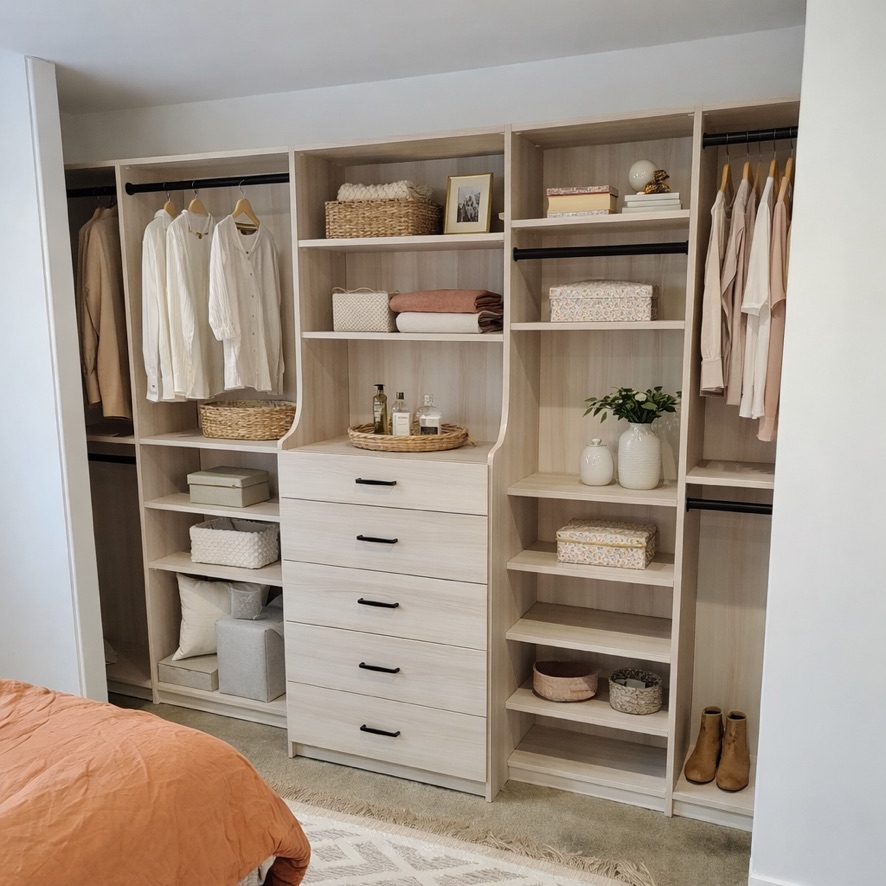
In a reach-in closet, width is everything. These spaces are shallower and more linear, which means the design has to make the full opening count. Dead zones behind doors or at the edges of the opening are wasted potential that a thoughtful layout can eliminate.
The best reach-in designs bring together hanging, shelving, drawers, and shoe storage in proportions that match what you actually own. When every inch is used with intention, a reach-in closet can be surprisingly capable.
Boutique Closet Layout Dimensions
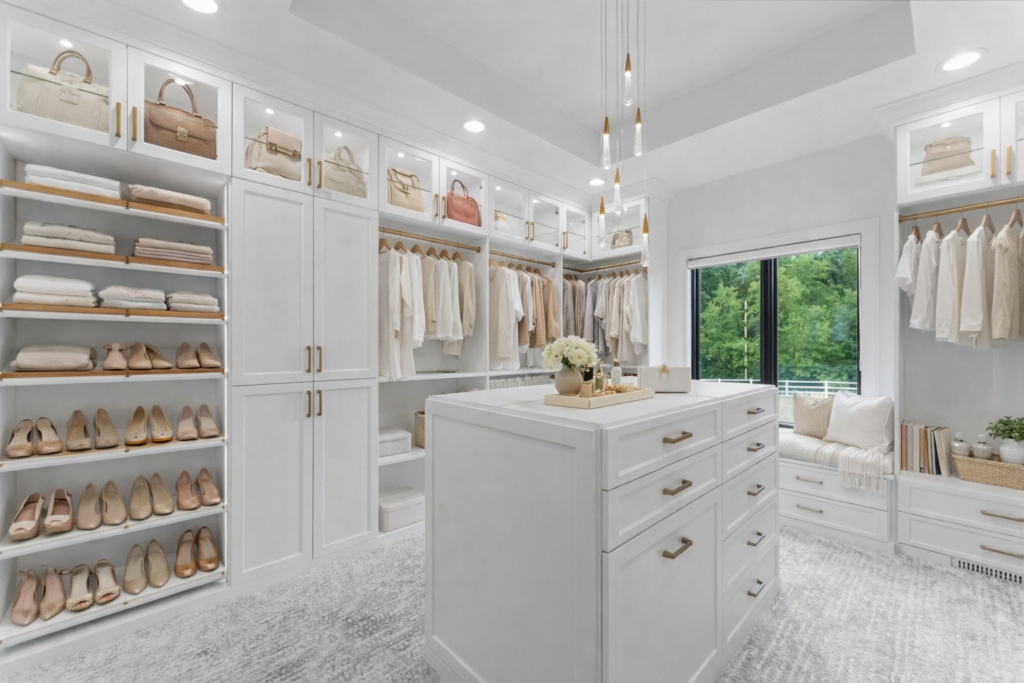
A boutique-style closet is a different kind of experience. Spacing, visibility, and presentation take center stage alongside pure storage capacity. These closets are designed to showcase a wardrobe, with display areas, accessory zones, shoe walls, and handbag storage all proportioned to feel curated and intentional.
Balanced proportions are especially important here. Every section should feel considered, and the overall design should feel elevated from the moment you walk in.
Shared Closet Layout Dimensions
Two people, two wardrobes, two routines. A shared closet that isn’t designed with both users in mind almost always ends up unbalanced, with one side becoming overcrowded while the other feels underserved.
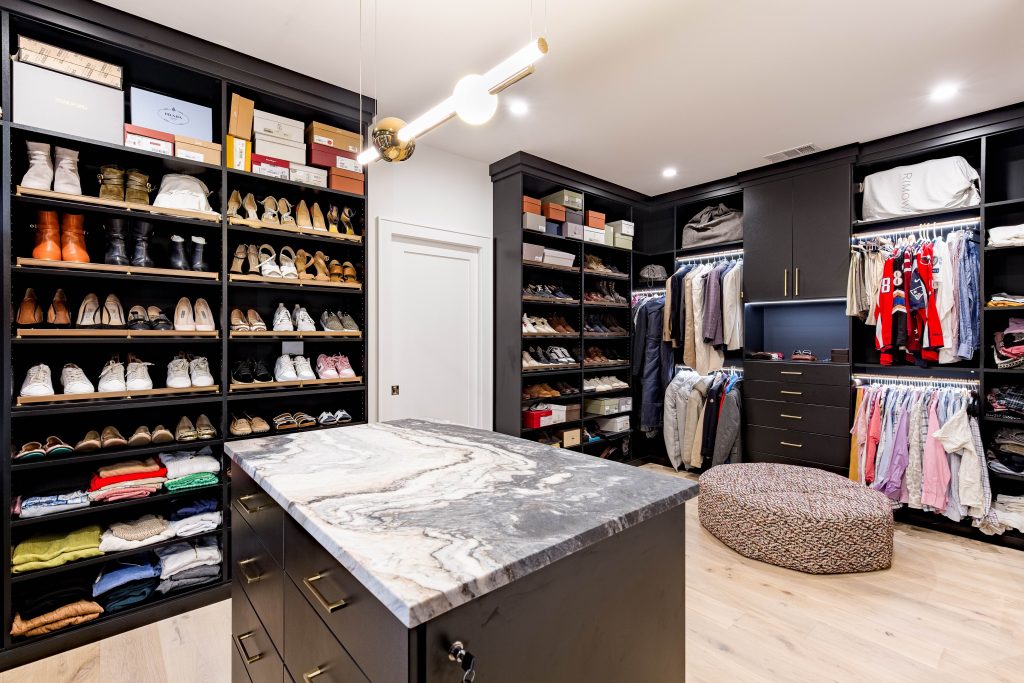
Professional design ensures that both zones are intentionally functional, with storage types and proportions that reflect each person’s needs. The result is a closet that works well for both of you, every single day.
Key Closet Dimensions That Affect Daily Function
This is where the planning gets specific. Understanding the key dimensions that drive closet function helps you ask the right questions and make smarter decisions throughout the design process. Use these as a starting point, and always confirm the final measurements with a professional designer who can evaluate your actual space.
Hanging Space Dimensions
Hanging storage needs the right depth and height to do its job comfortably. When these dimensions are off, clothing bunches, drags, or becomes difficult to access.
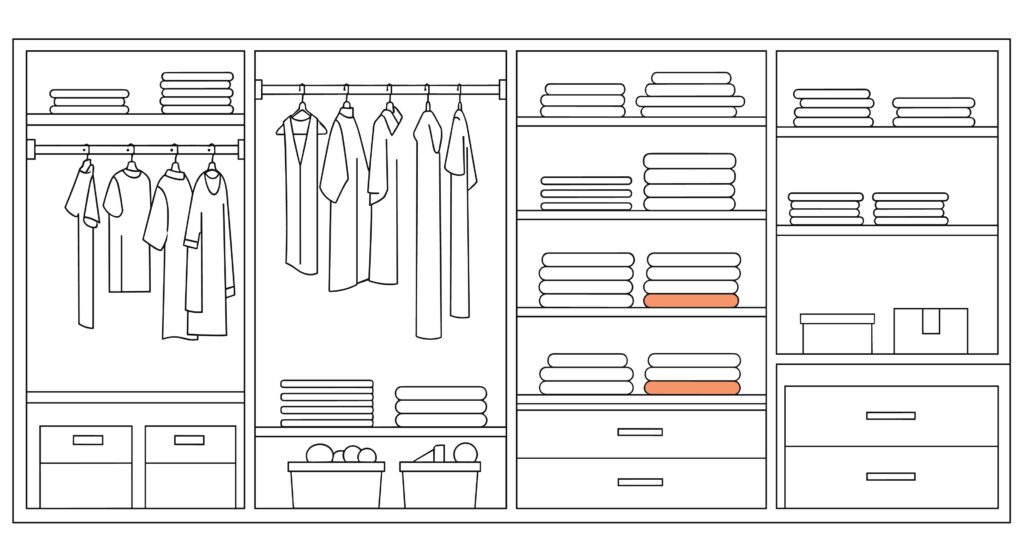
Common hanging space considerations include:
- Closet depth for hanging clothes: often around 24 inches for comfortable hanging
- Short-hanging sections: useful for shirts, blouses, jackets, and folded-over pants
- Long-hanging sections: useful for dresses, coats, robes, and longer garments
- Double-hanging areas: useful when the wardrobe has many shorter garments
- Clearance below clothing: important so garments don’t bunch or drag
The exact layout should always be based on your specific wardrobe. A standard formula won’t serve you nearly as well as a design built around what you actually own and how you actually dress.
Shelf Dimensions
Shelf spacing shapes how tidy and accessible your storage stays over time. Shelves placed too close together feel cramped and hard to use. Shelves that are too deep cause items to disappear toward the back, which leads to clutter and forgotten pieces.
Shelf planning should consider:
- What will be stored on each shelf
- Whether items need to be visible at a glance
- How often the items are used
- Whether shelves are for folded clothing, shoes, handbags, or accessories
- How shelf height and depth affect ease of access
Drawer Dimensions and Clearance
Drawers are fantastic for folded items, accessories, and smaller personal storage. But they need room to open fully and comfortably, which means placement has to account for doors, corners, and walkway space. This is one of the areas where walk-in closets require more planning than most homeowners expect. Drawers that are positioned without considering clearance end up being awkward to use, and awkward storage is storage you’ll stop using. Getting this right from the start makes a real difference.
Shoe Storage Dimensions
Shoes deserve their own dedicated planning. Different shoe types need different zones, and a collection that isn’t accounted for in the design will end up on the floor.
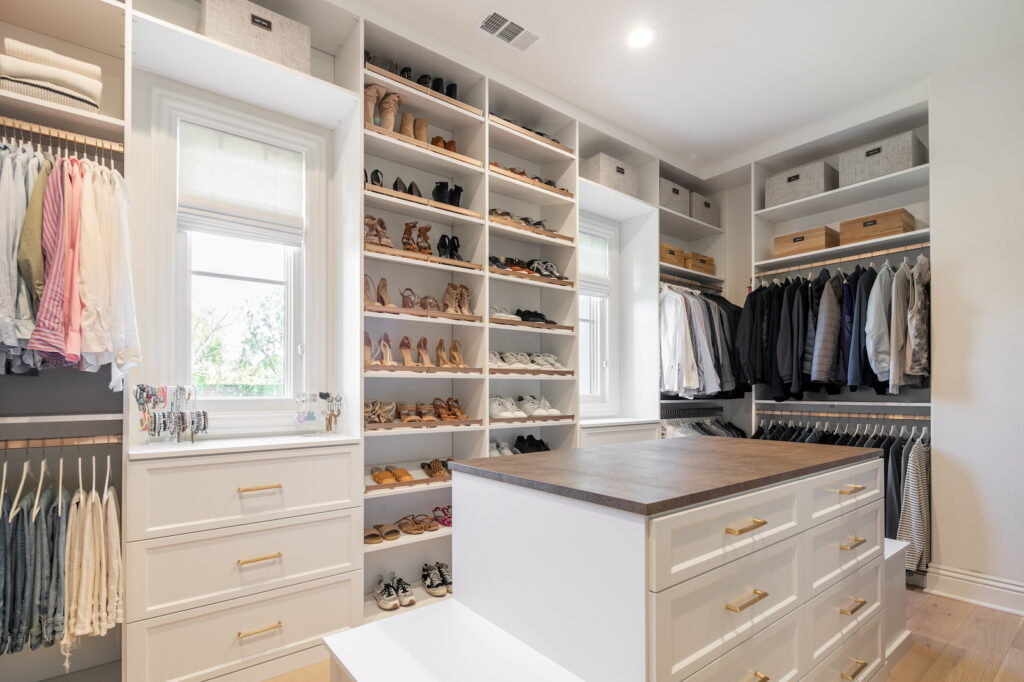
Shoe storage planning should account for:
- Everyday shoes
- Dress shoes
- Boots
- Seasonal footwear
- Shoes that need to be visible
- Shoes that can be stored in secondary areas
- Whether shoes should be displayed or tucked away
Walkway and Access Dimensions
Circulation is one of the most important dimensions in any closet design, and it’s one of the easiest to sacrifice when storage feels like the top priority. A closet with plenty of storage but a tight or obstructed walkway will feel frustrating every time you use it.
Professional measurement ensures that the closet stays comfortable to move through, with drawers that open freely and sections that are easy to reach without awkward maneuvering.
Corner Dimensions and Dead Space
Corners are notorious for becoming difficult and underused. Without intentional planning, they turn into hard-to-reach zones that collect clutter and go largely ignored.
A custom design addresses this directly, turning corners into functional storage while preserving easy access. What feels like a limitation in a standard closet becomes a genuine asset when it’s planned correctly.
Common Closet Layout Dimension Mistakes
If your current closet isn’t working as well as it should, there’s a good chance one of these is part of the reason. These are all very common, and every single one is fixable.
- Planning storage without measuring access: Drawers, doors, and corners all need room to function. Storage that blocks its own access quickly becomes storage you avoid.
- Using too much hanging space: Not every wardrobe is mostly hanging. Folded items, shoes, and accessories all need proportional space too, and a closet that skews too heavily toward hanging rods tends to feel unbalanced.
- Ignoring vertical space: Height is valuable real estate, but it should be used thoughtfully. Everyday items need to stay within easy reach, while secondary storage can live higher up.
- Making shelves too deep: Deep shelves push items toward the back and out of sight. What gets lost tends to get forgotten, which leads to a closet that feels messier than it needs to be.
- Forgetting long-hanging clothing: Dresses, coats, and longer garments need their own dedicated zone. Without it, they end up folded awkwardly or crowded into spaces that weren’t designed for them.
- Not planning for shoes: A shoe collection without a designated home will take over the floor. This is one of the most common sources of closet chaos, and it’s entirely preventable.
- Crowding the walkway: A walk-in closet should still feel comfortable and open to move through. When the walkway is too narrow or obstructed, the whole space feels frustrating regardless of how much storage it holds.
- Not accounting for a shared closet: Two people have two different wardrobes and two different routines. A design that doesn’t reflect both ends up working well for neither.
- Treating standard dimensions as the final answer: Published measurements are a starting point. The final design should always reflect your actual space, your actual wardrobe, and the way you actually live.
Why Custom Cabinetry Makes All of This Easier
Working with custom closet cabinetry removes the guesswork from every one of these challenges. Instead of adapting your wardrobe and routine to whatever a standard system allows, you get a closet that was built specifically for you.
Every dimension is confirmed in your actual space. Every zone is sized around what you own. Access, clearance, circulation, and proportion are all resolved before a single component goes in. The result is a closet that functions cleanly from day one and stays that way.
How The OC Tailored Closet Plans Custom Closet Layouts in Orange County
At The OC Tailored Closet, we design every closet around precise measurements, advanced space planning, and a genuine understanding of how you use your space. We take the time to understand your wardrobe, your routines, and what’s been frustrating about your current closet before we design anything.
That means we’re thinking about your hanging clothing, your folded items, your shoes, your accessories, your seasonal storage, and your daily rhythm all at once. Good closet dimensions are never guessed, but planned carefully around your specific room and your specific life.
Our Design Team
Our expert closet designers go deep on what you need. We use a 3D design tool that lets you actually see your closet transformation before installation begins, so you can explore options, make changes, and feel genuinely excited about the plan before any work starts.
Whether you’re prioritizing an expansive shoe collection, a dedicated handbag display, a shared space that finally works for both of you, or simply a place where everything has a home, we design around your vision and make sure it’s exactly right.
Our Installation Team
Our closet craftsmen follow detailed measurements and material specifications to ensure a precise, perfect fit. We’re dedicated to craftsmanship and client satisfaction at every step, and the process doesn’t end when the last component goes in.
Your project manager conducts a final walkthrough and inspection that you approve, so you leave the experience knowing the result is exactly what was designed and exactly what you wanted.
Our Custom Cabinetry and Home Organization Services
We design and install custom storage solutions for:
- Boutique and walk-in closets
- Reach-in closets
- Laundry rooms
- Pantries
- Home offices
- Entryways and mudrooms
- Wall beds
- Custom cabinetry throughout the home
Every space in your home is connected, and we bring that whole-home perspective to every project we take on.
From Inspiration to Installation
Our process is designed to feel simple and seamless:
- Be inspired: Explore what a beautifully planned closet could look like for your space
- We measure: Our team evaluates your room carefully and thoroughly
- We design: A fully custom layout is created around your wardrobe and routine
- We install: Our craftsmen bring the design to life with precision and care
- You enjoy: A closet that works better, looks better, and stays organized
The Right Dimensions Make All the Difference
A closet that’s planned with precision feels completely different from one that was pieced together over time. Every section has a purpose. Every zone is easy to use. The whole space supports your routine instead of complicating it. That’s what a well-designed custom closet layout delivers, and it’s what every homeowner deserves.
If you’re ready to stop settling for a closet that doesn’t work the way it should, we’re ready to help. Call us today to schedule your free in-home consultation. We’ll come to you, measure your space, and start designing the custom closet layout you’ve been waiting for.
FAQs
What are the most important dimensions to get right in a closet layout?
Hanging depth, walkway clearance, shelf spacing, and drawer access are the areas that have the biggest impact on daily function. When these are proportioned correctly for your specific space and wardrobe, the entire closet feels more comfortable and easier to use. A professional designer will evaluate all of these together rather than in isolation, which is what produces a truly well-balanced result.
How do I know if my current closet dimensions are the problem?
If your closet feels crowded even when it’s tidy, if certain areas go unused, if clothing is hard to see or reach, or if the space just never feels quite organized, dimensions are very likely part of the issue. The good news is that these are all solvable problems with the right design approach.
Can a small closet really be improved with custom design?
Absolutely. Smaller closets often benefit the most from custom planning because every inch genuinely counts. A thoughtful layout can significantly increase the usability of a compact space by eliminating dead zones, using vertical space well, and proportioning each storage type to what you actually own.
What makes The OC Tailored Closet different from buying a standard closet system?
We design around your specific space, your specific wardrobe, and your specific routine, not around a set of pre-made components that may or may not fit well. Our 3D design tool lets you see exactly what you’re getting before installation begins, and our craftsmen ensure a precise fit from start to finish. The result is a closet that was built for you, not adapted to you.
What happens after my closet is installed?
After installation, your project manager conducts a final walkthrough and inspection that you personally approve. We want you to leave the experience genuinely happy with the result, which means we stay engaged until everything is exactly right. Your satisfaction is how we measure a successful project.