
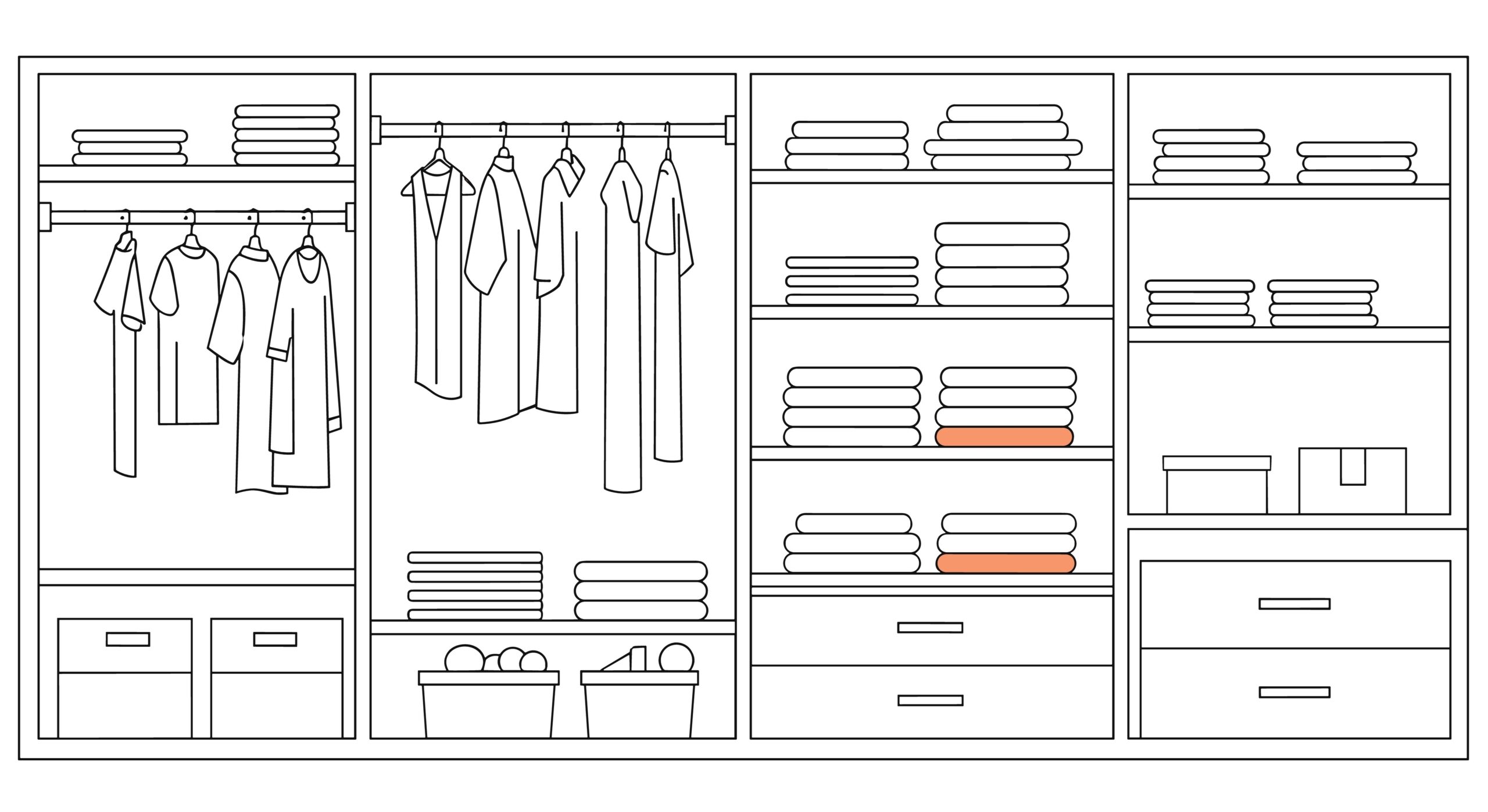
A closet plan view is one of those things that can completely change how you think about your storage space. It takes what feels like a guessing game and turns it into something clear, intentional, and actually exciting. Whether you’re dealing with a cramped reach-in or dreaming up a walk-in closet, seeing your space from above gives you a whole new perspective.
The way your closet is laid out affects everything, from how easy it is to get dressed in the morning to how much you can actually fit inside. Getting familiar with how closet layouts work is the first step toward a space that functions the way you need it to. At The Tailored Closet, we know exactly what that takes, and we are here to walk you through it.
Why the Plan View Matters More Than Most People Realize
The plan view is the step that determines whether any of it actually works. It maps out the full footprint of the space and is what separates a closet that looks good on paper from one that genuinely performs.
The Spatial Strategy Behind a Functional Closet
Think of the plan view as the architectural drawing behind the finished product. It shows you where things go, how much clearance you have to move around, and whether the components you have in mind actually fit the way you imagine. A beautiful hanging section looks great on a mood board, but the plan view tells you if there is actually room to stand in front of it comfortably.
Where Things Go Wrong Without One
Skipping the plan view tends to show up at the worst possible moment, usually mid-installation. These are the most common pitfalls:
- Misjudged clearances. The space needed to move around, open drawers, and access hanging sections comfortably requires precise calculation.
- Inaccurate space estimates. Linear footage and actual usable space are two different things the plan view distinguishes clearly.
- Mismatched components. Shelving, rods, and drawer units each have dimensional requirements that need to work together within the room’s architecture.
- Dead zones and bottlenecks. Corners and narrow walls require intentional planning, or they simply go to waste.
Navigating these pitfalls well takes more than awareness. It takes a solid plan view executed with precision from the start.
How Professionals Approach the Plan View
Every inch of a well-designed closet is deliberate, and that starts with understanding the full spatial picture before a single component is chosen. Professionals account for wardrobe size, daily habits, and the specific architecture of the room. It is a process that goes well beyond measurements and requires a trained eye to get right.
How Designers Use Plan Views to Maximize Space
A closet plan view is where design decisions get made. Before any component is selected or installed, a designer is already reading the space, identifying opportunities, and building a layout strategy around how you actually live.
Turning Walls and Corners Into Functional Zones
Every wall, corner, and awkward angle in your closet has potential. Designers look at the plan view and immediately begin carving the space into zones, each one assigned a purpose based on how the closet will be used day to day. What looks like a tricky corner to you reads as an opportunity to a trained eye.
Identifying Prime Real Estate in Your Closet
There is a sweet spot in every closet, the area between eye level and arm reach, and designers prioritize it deliberately. This is where your most-used items live. The plan view makes it easy to locate this zone within the footprint and build the layout around it, ensuring the things you reach for most are always within easy access.
Choosing the Right Hanging Strategy
Single hang, double hang, long hang. Each option serves a different wardrobe and a different space, and the plan view is what informs that choice. Designers look at the dimensions of the closet alongside the needs of your wardrobe before committing to any hanging configuration. Getting this right makes a significant difference in how much the closet can hold and how easy it is to use.
Recognizing When Your Closet Can Do More
Some closets have more capacity than their owners realize. A well-read plan view can reveal room for features you might not have considered. Depending on your footprint, your closet could accommodate:
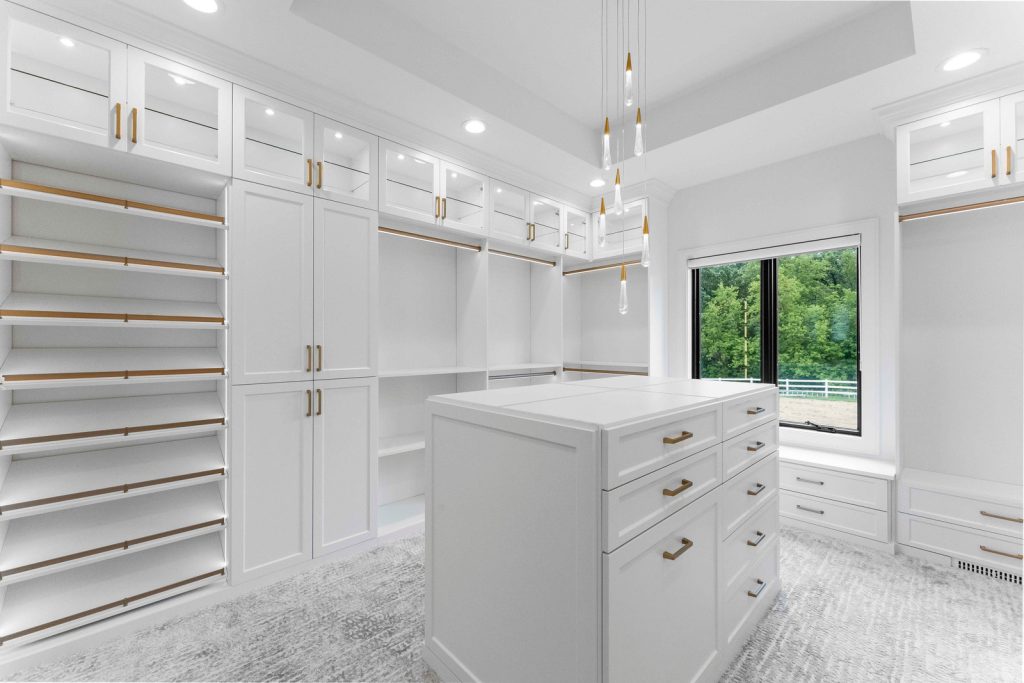
- A storage island for folded items and added surface space
- A shoe wall that keeps footwear organized and visible
- Pull-down hanging rods that make high spaces fully accessible
- Cabinet towers that maximize vertical storage efficiently
These additions are not always obvious from a walk-through alone. The plan view is what makes them visible.
Avoiding Collision Points Before They Happen
One of the most practical things a plan view does is expose potential conflicts before installation begins. Designers check for doors that would swing into drawer fronts, drawers that would block natural pathways, and rods that would overlap with shelving in ways that limit functionality. Catching these issues at the planning stage saves a significant amount of time and frustration down the line.
Why Lighting Gets Considered at the Plan View Stage
Good lighting in a closet goes beyond aesthetics. Designers factor it in during the plan view stage because the layout of shelving, cabinetry, and hanging sections directly affects where light needs to reach. A beautifully organized closet that is poorly lit still creates friction every morning, and that is something a thoughtful plan view accounts for early.
The Most Common Issues Found in Plan Views and Why They Matter
A plan view reveals a lot. It also reveals when something is off. These are the most common issues that show up in closet layouts and why each one has a real impact on how your space feels to use every day.
Overcrowding the Footprint
Fitting as much as possible into a closet sounds like a good idea until the layout starts working against you. When too many components are squeezed into a small footprint, the closet becomes hard to navigate and even harder to use comfortably. More storage capacity on paper can mean less functional space in practice.
Underutilizing Available Space
On the other end of the spectrum, some closets simply leave too much on the table. Large gaps, unused wall sections, and missed vertical opportunities are common in layouts that were planned without a thorough understanding of the full footprint. Your closet likely has more to offer than you are currently getting from it.
Unbalanced Storage Distribution
Every wardrobe has a mix of hanging items, folded pieces, shoes, and accessories. When a layout allocates too much space to one category and too little to another, the whole system feels off. Here is what unbalanced storage typically looks like in a plan view:
- Excessive long-hang space for a wardrobe that is mostly folded items
- Minimal shelf space despite a large collection of folded clothing or bags
- Shoe storage that is either crammed into one small section or spread inefficiently
- Drawer units placed where hanging space would serve the wardrobe better
Getting this balance right requires a clear picture of both the space and the wardrobe it needs to support.
Poor Traffic Flow
A closet needs room to breathe and so do you. Pathways that are too narrow to move through comfortably turn a daily routine into a small frustration, and small frustrations add up. Traffic flow is one of the first things a professional evaluates in a plan view because it affects everything else in the layout.
Inaccessible Corners and Dead Zones
Corners are some of the most common culprits in a poorly planned closet. Without a deliberate strategy, they become dead zones where items get pushed, forgotten, and piled up. A good plan identifies these areas early and finds ways to make them work.
Lighting Blind Spots
Good lighting is easy to overlook at the planning stage, but its absence is impossible to ignore once the closet is in use. These are the spots most likely to get left in the dark:
- Corners and recessed areas that the main light source does not reach
- Lower shelving sections that sit beneath taller cabinet towers
- Sections behind doors or partitions that block ambient light
- Deep hanging zones where clothing obscures the light above
Addressing these spots at the plan view stage is straightforward. Catching them after installation is a much bigger conversation.
Inflexible Systems That Cannot Grow With You
Wardrobes change. Lifestyles shift. A closet designed around a very specific moment in time can quickly feel limiting as those things evolve. Flexibility in a plan view means building in adjustability, shelving that can be repositioned, configurations that can accommodate change without requiring a full redesign.
When You Should Bring a Professional Into the Process
Some closet projects are straightforward. Others have a way of revealing layers the further you get into them. Knowing when to bring in a professional can save you a significant amount of time, money, and second-guessing.
When the Plan View Feels Confusing or Overwhelming
Reading a closet plan view takes practice. If you find yourself staring at measurements and layout options without a clear sense of what works, that is useful information. A professional brings immediate clarity to the process, translating spatial complexity into a design that makes sense for your specific space.
When Every Inch Has to Count
Limited space raises the stakes on every decision. There is little room for error when your closet footprint is tight, and a plan view that is even slightly off can ripple into real problems during installation. This is the scenario where professional precision pays off most visibly.
When You Want Built-In Cabinetry
Permanent cabinetry is a different category of investment than freestanding storage units. The planning requirements are more involved, the tolerances are tighter, and the decisions you make at the design stage are harder to walk back later. A professional ensures the plan view supporting that level of work is thorough and accurate from the start.
When You Want a Closet That Works With Your Room
A well-designed closet does more than hold your belongings. It fits the proportions of the room, complements the aesthetic, and contributes to how the overall space feels. Achieving that requires a plan view that accounts for more than storage alone, and that is a level of detail that benefits from professional input.
When DIY Fixes Have Run Their Course
There is a natural ceiling to what temporary solutions can do. If you have rearranged, added bins, bought organizers, and still find yourself frustrated with the space, the issue is likely the underlying layout. A professional plan view gets to the root of that and builds something that actually holds up over time.
The Tailored Closet: Turning Your Plan View Into a Personalized, High-Functioning Space
A plan view is only as good as what you do with it. At The Tailored Closet, we take that document seriously, using it as the foundation for a closet system built entirely around the way you live, dress, and move through your space.
What We Do With Your Plan View
Our designers interpret your floor plan with your wardrobe, routines, accessories, and personal style in mind. We evaluate traffic flow, storage balance, vertical use, and functional zones to build a layout that accounts for every part of your day. Along the way, we identify opportunities your current setup might be hiding. Depending on your footprint, your closet could have room for:
- Narrow towers that make use of tight wall sections
- Shoe walls that bring order and visibility to your footwear
- Pull-outs in place of deep shelves that make everything accessible
- Height extensions that take storage all the way to the ceiling
- Custom lighting integration planned from the layout stage
Every one of these additions starts with a thorough reading of your plan view before a single design decision is made.
What Makes Our Closets Different
We build custom cabinetry designed to hold up beautifully over time. Every finish, hardware selection, and material is chosen with your preferences in mind, and our professional installation ensures the final result fits the space with precision. From the first conversation to the final walkthrough, our process is consultative, turning what can feel like an overwhelming project into something clear and exciting.
Why Homeowners Love This Approach
The feedback we hear most often is that homeowners are surprised by what their space was capable of all along. A well-executed plan view has a way of unlocking storage people did not know they had, and a closet that is thoughtfully designed around real habits feels immediately intuitive to use. Organized, functional, and genuinely enjoyable, that is the standard we work toward on every project.
Your Closet Has More Potential Than You Think
A closet plan view is where good design begins. It brings clarity to a process that can otherwise feel overwhelming, revealing what your space is truly capable of and laying the groundwork for a system that works the way you need it to. Every decision, from hanging configurations to lighting placement, flows from that foundational layout.
Getting it right takes more than measurements. It takes an understanding of how you live, what your wardrobe demands, and how a space can be designed to grow with you. If you are ready to find out what your closet has been hiding, reach out to The Tailored Closet today to schedule your free consultation and let’s build something worth opening every morning.
Closet Plan View FAQs
What exactly is a closet plan view and why does it matter?
A closet plan view is a bird’s-eye drawing of your closet layout, showing walls, dimensions, and where every component sits within the space. It matters because it turns abstract ideas into concrete decisions. Before anything is built or installed, the plan view tells you whether your design actually works, catching potential issues early and ensuring every inch of the space is used with intention.
How detailed does a closet layout plan need to be?
Detailed enough to reflect reality accurately. That means precise measurements, correct wall placement, door swing directions, and the actual dimensions of every component going into the space. A rough sketch can help you visualize ideas, but a functional layout plan needs to be scaled and specific. The more accurate the plan, the fewer surprises show up during installation.
What are the most important measurements to get right in a closet design?
Width, depth, and ceiling height are your starting points, but the details matter just as much. Door swing clearance, the distance between hanging rods and shelves, pathway widths, and the height of your longest garments all play a role in whether the final design actually functions well. Missing even one of these can create friction in a layout that otherwise looks great on paper.
What happens during The Tailored Closet’s in-home consultation?
Our designer comes to your home, takes precise measurements, and gets to know how you use your space. We ask about your wardrobe, your routines, and what is and is not working about your current setup. From there, we build a design around your actual life rather than a generic template. You also get to see your new closet come to life through our 3D design software before anything is installed.
How custom are The Tailored Closet’s designs really?
Every detail is tailored to you. That includes the layout, the materials, the finish, the hardware, and the specific components selected for your wardrobe and lifestyle. Nothing is pulled off a shelf and dropped into your space. Our designers work through every decision with you so the final result reflects your preferences and functions around the way you actually live.
