

Designing a walk-in closet can feel simple on paper—until you’re staring at an empty room wondering where to place hanging rods, how many shelves you actually need, and whether that tricky corner can hold storage or will just sit empty. Orange County homes come with their own quirks, from compact walk-ins in older Tustin homes to sprawling dressing rooms in Newport Coast estates. Learning how to design a walk in closet that truly works means matching the layout to your wardrobe, your lifestyle, and your space so every inch feels useful.
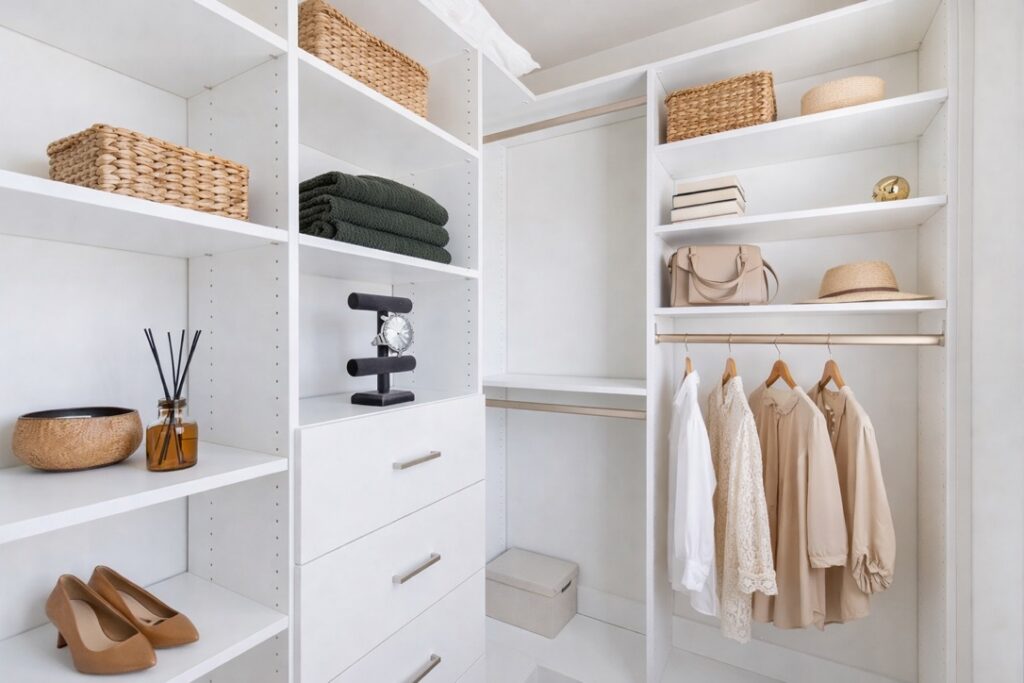
At The OC Tailored Closet, we’ve designed hundreds of custom walk-ins across Orange County. We know how to make tight spaces feel expansive, configure storage for large shoe collections, and position lighting where it actually matters. Our 3D design process lets you walk through your closet before a single board is cut—so you see, adjust, and approve every detail. The result is a walk-in that works beautifully today and continues to serve you for decades.
Measuring and Understanding Your Walk-In Space
“Walk-in closet” means vastly different things across Orange County’s diverse housing stock. A compact 5×6 walk-in in a Tustin tract home built in the ’80s is technically walk-in—you can step inside—realistically it’s tight. A generous 10×12 master closet in newer Irvine construction offers genuine design flexibility. A 200+ square foot dressing room in a Newport Coast estate presents luxury-level possibilities. Each configuration presents different design opportunities and constraints worth understanding before you start planning.
Common Walk-In Closet Configurations in Orange County
The Narrow Walk-Through (6×8 or similar)
Often found in older Orange County homes where the walk-in connects bedroom to bathroom, creating a pass-through situation. The design challenge centers on maximizing storage while maintaining clear walkway flow, you need passage width that doesn’t make you turn sideways with laundry. The opportunity comes from having two usable walls, one on each side of the walkway, creating efficient linear storage. The critical principle is to avoid over-designing. Cramming too much storage into a narrow walk-through makes the space feel claustrophobic and frustrating rather than functional.
The Square Standard (8×8 to 10×10)
The most common master walk-in configuration in mid-range Orange County homes. This footprint offers balanced design possibilities with three walls available for storage (leaving one for door entry), enough space for a small center island or ottoman if desired, and room to actually move and dress comfortably. This is the sweet spot where custom design really shines—large enough to warrant investment, manageable enough to keep costs reasonable. You can create genuinely impressive storage and organization without the square footage or budget of luxury homes.
The Spacious Layout (10×12 or larger)
Found in higher-end Orange County neighborhoods and newer construction master suites. Here you have genuine space for islands with drawer storage, seating areas for putting on shoes, full-length mirrors, and comprehensive storage for extensive wardrobes. Design focus shifts from maximizing every inch to creating zones and maintaining an open, boutique-like feel. The challenge becomes ensuring the space feels intentional and designed rather than underutilized or empty.
His and Hers Separate Walk-Ins
This configuration provides design freedom where each person’s closet gets designed for their specific needs and style. Coordination considerations arise: should you match finishes for cohesive aesthetic or personalize each space distinctly? Space planning complexity comes from fitting two functional closets in the available footprint while ensuring both work well independently.
Measuring Your Actual Space
Accurate measurements form the foundation of any successful walk-in closet design. You need all three dimensions—length, width, and ceiling height. Never assume standard 8-foot ceilings, especially in older homes or custom builds where heights vary. Document door locations and swing direction; this is critical for layout planning since a door swinging into your prime hanging area creates immediate problems. Note window placement if any—natural light is lovely and limits wall storage options. Identify obstacles like HVAC vents, electrical outlets, light switches, and any architectural features including crown molding, baseboards, columns, or structural elements.
Ceiling characteristics matter too. Flat ceilings are straightforward. Sloped ceilings require custom solutions. Tray ceilings affect upper storage options. Document everything before design begins.
DIY measurements and rough sketches can give a starting point, but they rarely capture the full picture. Slight miscalculations, overlooked obstacles, or uneven walls can derail a closet’s functionality. That’s why professional measurement and design from an experienced team ensures your final walk-in isn’t just beautiful on paper, but also works perfectly in real life, from every hanging rod to every shelf.
How to Plan Your Walk-In Closet Layout
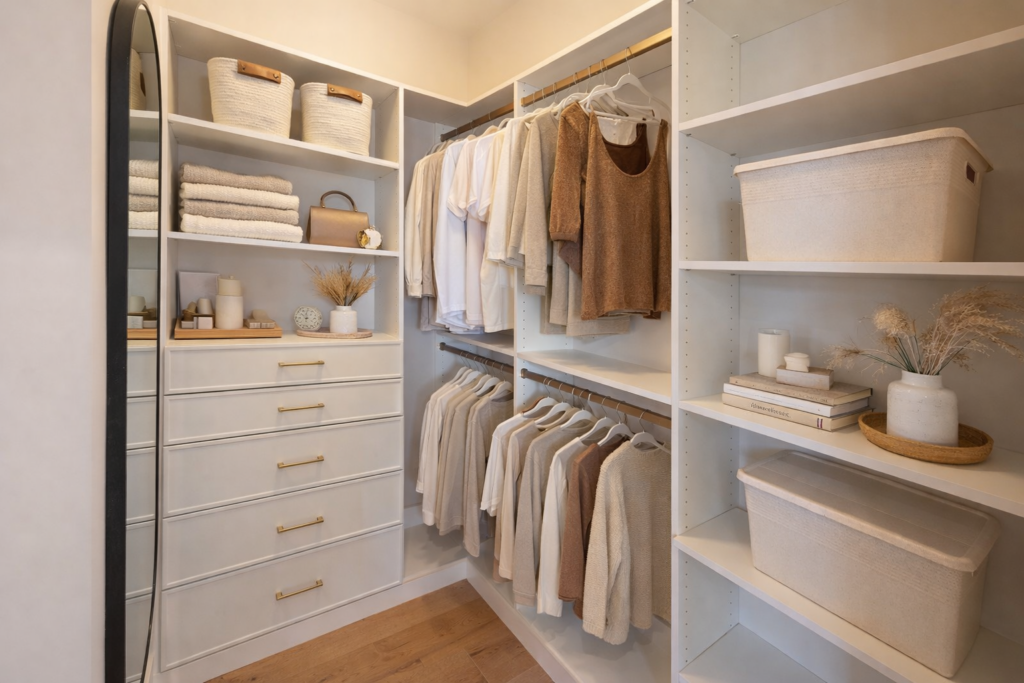
Effective walk-in closet design isn’t random—it’s zoned based on function, frequency of use, and how you actually get dressed. Understanding these principles helps you make smart decisions about what goes where.
Primary Zone: Eye-Level, Easy Access
The space between your waist and eye level is prime real estate in any closet. This is where you store the pieces you reach for every day, such as current-season clothes, everyday accessories, and anything you need to see clearly to make quick outfit choices. Design around accessibility and keep this zone for items you actually wear often. Reserve rarely-used items for higher or lower shelves so your main space stays efficient, visible, and functional.
Secondary Zone: Upper Shelves and Lower Areas
Still accessible with slight effort—upper shelves needing a step stool, lower drawers requiring bending. Appropriate uses include less-frequently-worn items, seasonal clothing awaiting rotation, shoe storage on lower shelves, and folded items in lower drawers. This zone handles regular but not daily access comfortably.
Tertiary Zone: Highest Spaces
The top shelf above 84 inches, deep corners, awkward spaces above doors. Realistic uses for these areas include long-term storage, seasonal items, luggage, special occasion clothing, and memorabilia or items you’re not ready to donate yet rarely access. Anything placed here should be items you genuinely access a few times yearly, not things you need monthly.
The Traffic Flow Imperative
Walkway space is non-negotiable in walk-in closet design. Understanding these minimum clearances needed for functionality will prevent common mistakes:
- 24 inches: Absolute minimum for walking passage. Any less feels cramped and makes accessing storage difficult.
- 30-36 inches: Comfortable standard for one person dressing and moving freely.
- 42-48 inches: Ideal if space allows, perfect for comfortable two-person access in shared closets.
Consider door swings, drawer pull-outs, and how you actually use the space during morning rush. Walking into a closet shouldn’t require careful navigation. The common mistake here is over-designing and cramming so much storage into a walk-in that it becomes difficult to use. The closet should feel open and functional. Sometimes less storage, better arranged, works better than maximum storage that’s awkward to access.
Choosing Finishes for Your Walk-In Closet
Finish Colors and Trends in Orange County
Choosing the right finish sets the tone for your walk-in closet. In your home, you’ll want a finish that feels bright, timeless, and adaptable to evolving design tastes. The right choice balances how it looks, how it holds up over time, and how your closet connects with the rest of your space.
- White and Light Finishes: White remains the go-to choice. It makes closets feel larger and brighter, reflects light beautifully, and creates a clean aesthetic popular in contemporary Orange County homes. Variations—from pure white to soft grays, warm whites, and light greiges—affect how the space feels and coordinates with your bedroom.
- Natural Wood Tones: Warm wood finishes are making a comeback. Light oak and maple suit Scandinavian-inspired modern spaces, while walnut and medium browns add richness and sophistication. Two-tone combinations, pairing white cabinetry with wood accents, bring warmth while keeping the look fresh and contemporary.
- Gray and Greige: Gray and greige bridge the gap between white and wood. They provide a sophisticated neutral that hides dust and wear better than pure white and complements modern palettes. These shades work especially well in closets adjoining bedrooms with gray or neutral décor, creating seamless flow.
- Dark Finishes (Espresso, Charcoal, Navy): Darker finishes deliver drama and luxury in spacious walk-ins with excellent lighting. They create contrast against clothing and add sophistication, but smaller spaces or poorly lit closets can feel cramped. Expert design guidance ensures dark tones enhance rather than overwhelm.
Hardware Selection
Hardware influences both function and style.
- Modern minimalist: Simple bars or integrated pulls for clean lines
- Traditional: Knobs or ornate pulls for classic elegance
- Transitional: Substantial yet versatile styles that suit multiple aesthetics
- Invisible/touch-latch: Sleek, handle-free surfaces with soft-close mechanisms
Finish Coordination
Align hardware finishes with bedroom fixtures, doors, and en suite bathroom details. Popular Orange County options include brushed nickel, matte black, champagne bronze, and polished chrome. The right finish subtly elevates the closet’s formality and ensures a cohesive, polished look.
When to DIY vs. Hire a Professional for Walk-In Closet Design
DIY closet projects can feel tempting—you imagine cost savings, creative control, and the satisfaction of designing and maybe even installing yourself. For simple reach-in closets, that can work. But for walk-in closets, the challenges quickly add up, turning what seemed like a fun weekend project into weeks or months of stress.
The Measurement and Math Challenge
Accurately measuring your space goes beyond walls. You need to calculate linear feet of hanging, determine ideal shelf spacing for your wardrobe, solve corner configurations, and account for baseboards, crown molding, vents, and other obstacles. One small error affects the entire layout. Professional designers do this math every day. You don’t have to guess and getting it right the first time protects your materials and investment.
Optimizing Your Layout
You know what storage you need, but arranging it efficiently is another story. Where should drawers go? Which walls get double-hang versus single-hang rods? How do you maximize corners? These decisions come from experience designing hundreds of closets, ensuring the space works for how you live rather than just looking good on paper.
The Installation Reality
Even with a perfect design, proper installation is critical. Shelves must be level, wall-mounted securely, seams tight, and hardware aligned for smooth operation. DIY installation requires advanced carpentry skills. Professionals handle these details so your closet works flawlessly and looks polished.
Modular Systems Can Limit You
Standard modular units rarely fit non-standard walk-ins perfectly. You end up with gaps, fillers, fixed configurations that don’t match your wardrobe, and visible seams that compromise the look. Custom cabinetry is built to your exact measurements, giving you every inch of usable space, tailored to your lifestyle, with a seamless finish that adds both daily enjoyment and long-term value.
Why Professional Custom Design Pays Off
- Complex Spaces: Sloped ceilings, odd angles, and architectural quirks require creative solutions. Professionals know how to maximize every inch.
- Valuable Wardrobe: Your clothing, shoes, and accessories deserve proper storage that protects your investment and extends the life of your items.
- True Customization: Custom dividers, specialized shelving, integrated lighting, and tailored layouts make your closet uniquely yours.
- Time and Stress: Professionals handle the planning, measuring, sourcing, and installation, saving you hours of effort and potential frustration.
- Long-Term Value: As a homeowner, investing in custom closets enhances daily life, supports resale value, and creates a permanent, high-quality improvement to your home.
When you want a walk-in closet that actually works for your life, your wardrobe, and your home, professional design ensures every decision is deliberate, every inch optimized, and every detail built to last.
Transform Your Space with The OC Tailored Closet
At The OC Tailored Closet, we specialize in custom cabinetry for closets, home offices, pantries, wall beds, and mudrooms throughout Orange County. Exceptional organization starts with thoughtful design, smart space planning, and craftsmanship you can rely on. Our solutions combine quality, versatility, and style, transforming every space into a seamless blend of functionality and elegance—from a master walk-in to a fully optimized pantry or home office.
Expert Designers Who Understand Walk-Ins
Our designers collaborate closely with you to create solutions tailored to your lifestyle. We take the time to understand how you live, what frustrates you about your current setup, and how to make your spaces effortless and enjoyable. The result is a custom design that maximizes functionality while reflecting your personal style.
Professional Installation That Delivers Precision
Our experienced installation team ensures seamless, secure installation of your custom cabinetry. They handle everything from initial measurements to final walkthrough, guaranteeing durability and longevity. Walk-in closet installation requires precision leveling, secure mounting for heavily loaded shelves, integrated lighting installation, and clean finish work. Our team has installed hundreds of systems—they know which wall anchors work in different construction types, how to handle uneven floors in older homes, and how to achieve that seamless built-in look.
Diverse Design Solutions for Every Application
Our expertise extends beyond walk-in closets to home offices, pantries, and custom storage solutions throughout your home. The same design thinking that optimizes your walk-in applies to pantry organization, home office efficiency, and mudroom functionality. Many Orange County homeowners start with a master walk-in and return for additional spaces once they experience the quality difference. We create tailored solutions that align with your vision and style while maximizing functionality across every application.
Beautiful, Functional Interiors That Last
Custom cabinetry should feel intentional in every room. Our expertise extends beyond closets to kitchens, offices, pantries, and mudrooms, creating cohesive interiors where design and function meet. With The OC Tailored Closet, every space in your home reflects quality, sophistication, and thoughtful design.
Ready to Design Your Perfect Walk-In Closet?
Learning how to design a walk-in closet means understanding your space constraints, choosing the right layout for your footprint, selecting materials that last, and configuring storage for your actual wardrobe. From measuring accurately to zoning strategically to deciding between DIY and professional design, each decision affects how well your walk-in functions for decades. The difference between a walk-in that frustrates you daily and one that makes mornings easier comes down to thoughtful design grounded in experience.
Ready to create your perfect walk-in closet? Schedule a free in-home consultation with The OC Tailored Closet. We’ll measure your space, discuss how you get dressed and what you need to store, and create 3D renderings showing exactly what we’ll build. Let’s design a walk-in that works beautifully for your Orange County home—today and for years to come.
How to Design a Walk In Closet FAQs
What’s the best way to learn how to design a walk in closet on my own?
Start by measuring your space accurately – length, width, and ceiling height. Photograph the space from multiple angles and sketch a rough floor plan. Inventory your wardrobe to understand how much hanging space, shelving, and drawer storage you actually need. Research standard measurements for rod heights, shelf spacing, and traffic flow clearances. Online closet design tools can help visualize layouts, though they are limited to standard configurations. The challenge comes when your space has odd dimensions or you want truly customized solutions beyond modular systems.
What’s the ideal size for a walk-in closet?
There is no single ideal – it depends on your wardrobe and lifestyle. Compact 5×6 walk-ins work for modest wardrobes with smart design. Standard 8×10 provides comfortable storage and dressing space for most couples. Larger 10×12 or bigger allows islands, seating, and boutique-style layouts. Focus less on hitting a specific square footage and more on whether your available space can accommodate proper traffic flow, adequate storage for your belongings, and comfortable movement. A well-designed small walk-in beats a poorly planned large one.
How do I maximize corner space in a walk-in closet?
Corners often become wasted space in DIY designs. Smart solutions include corner shelving units that wrap both walls, angled hanging rods that make corner clothes accessible, lazy susan-style rotating shelves for shoes or accessories, and custom cabinetry designed specifically for corner configurations. Avoid leaving corners completely empty or forcing standard rectangular units into corners where they do not fit properly. Professional custom design optimizes these awkward spaces that modular systems typically waste.
Does The OC Tailored Closet work with existing walk-in closets or only new construction?
We work with both existing walk-ins and new construction regularly. Many projects involve transforming builder-grade wire shelving or outdated systems into fully custom cabinetry. We assess your current walk-in, discuss what is working versus what frustrates you, and design custom solutions that maximize your existing footprint. Whether you are renovating a 1980s Tustin tract home walk-in or designing a brand-new Newport Coast master suite, we create solutions tailored to your specific space and needs.
How long does The OC Tailored Closet take from consultation to installation?
Typical timeline runs 6-8 weeks from initial consultation to final installation. The design phase takes 1-2 weeks as we measure, create 3D renderings, refine based on your feedback, and finalize specifications. Manufacturing takes 4-6 weeks depending on project complexity and material selections. Installation itself typically happens in 1-2 days for standard walk-ins, longer for elaborate projects with extensive cabinetry and features. We provide clear timeline expectations during consultation so you can plan accordingly.