
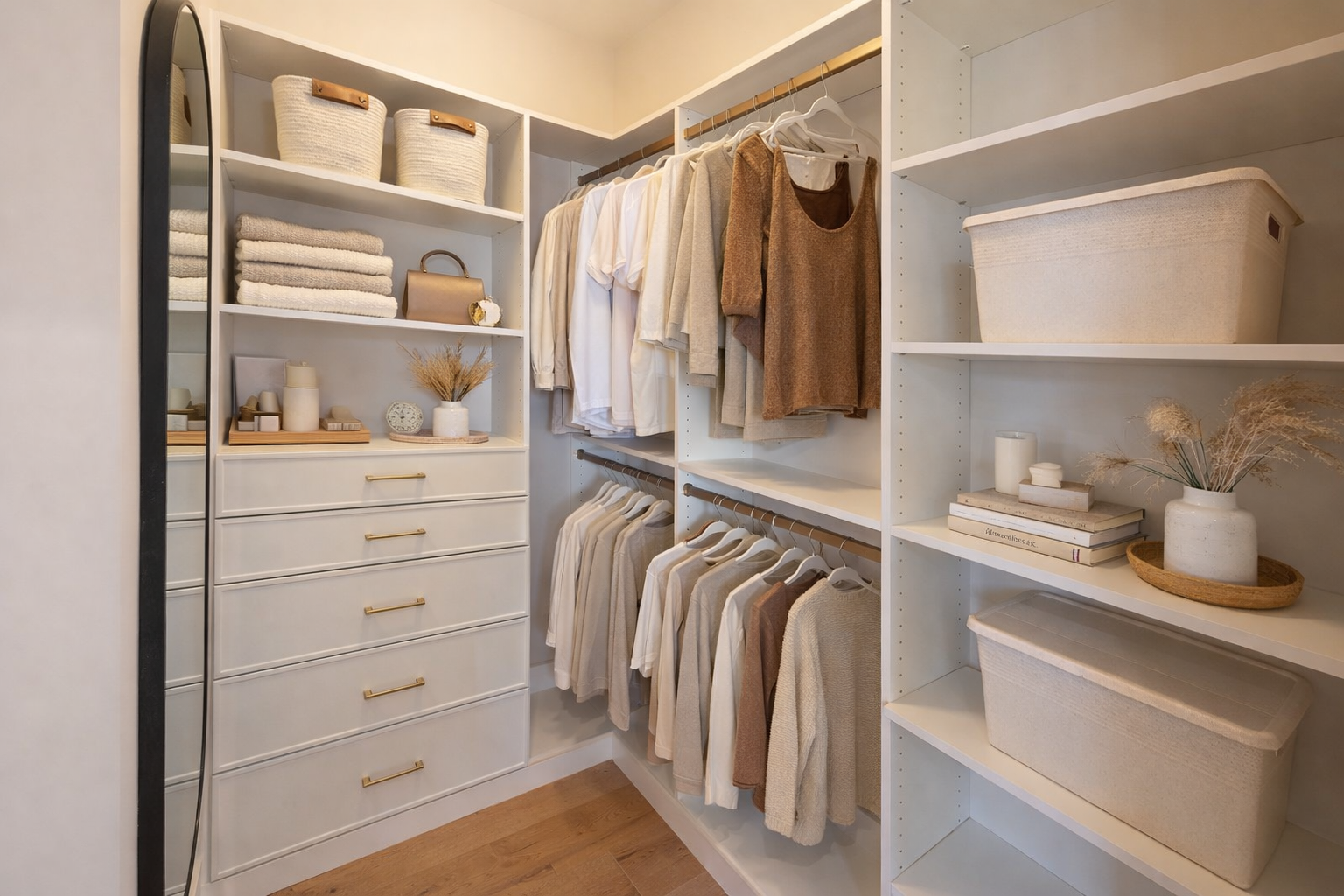
You’ve scrolled through enough Pinterest boards to know exactly what you want—floating shelves for your handbag collection, velvet-lined jewelry drawers, maybe even that island everyone seems to have now. But when you start getting quotes for a custom walk-in closet, the numbers feel like they’re all over the map. One company says $3,000, another quotes $25,000, and you’re left wondering what you’re actually paying for.
Walk-in closet cost in Orange County depends on far more than square footage. The materials, configuration, hardware quality, and level of customization all shift the price dramatically. Understanding these factors helps you invest wisely in a space you’ll use every single day.
The Four Cost Drivers Every OC Homeowner Should Understand
When you get three wildly different quotes for what seems like the same closet, you’re seeing the result of dozens of small decisions that compound quickly. The difference between a $4,000 closet and a $20,000 one often comes down to four major factors that most companies gloss over during consultations. Here’s what actually moves the needle on your final price.
1. Your Space Dictates More Than You’d Think
Square footage gives you a baseline, sure, but it’s rarely the whole story. Most Orange County walk-ins fall somewhere between 60 and 150 square feet—that sweet spot where you have enough room to spread out your wardrobe without turning a spare bedroom into storage. A 6×8 foot closet might run $3,500 to $8,000 depending on configuration, while a 10×12 foot primary suite closet can range from $8,000 to $25,000 once you start adding features.
Here’s the thing: doubling your square footage doesn’t automatically double your cost. A larger closet with simple shelving and hanging rods can actually cost less per square foot than a compact space packed with drawers, pullouts, and specialty storage. The layout matters more than the measurements. Walk-ins offer flexibility that reach-ins simply can’t match; you can design around your actual wardrobe instead of forcing everything into a narrow box.
2. The Material Conversation You Need to Have
This is where most of your budget lives. You’ve got options ranging from entry-level to mid-tier to premium materials. Each step up the material ladder brings better durability, more customization, and a noticeably elevated look.
The details amplify everything. Soft-close hinges, dovetail drawer construction, under-shelf lighting, custom pulls and handles—these aren’t just aesthetic upgrades. They’re the difference between a closet that feels like IKEA and one that feels like a boutique. Plus, Orange County’s coastal proximity means humidity and temperature shifts year-round. Quality materials and finishes hold up better over time, especially if your home is anywhere near the coast where moisture can affect cheaper options.
3. When Your Design Gets Interesting, Costs Follow
A basic setup—double-hang sections, shelving, a few drawers—works beautifully for straightforward storage needs and keeps costs reasonable. Then you start adding layers, and each one serves a real purpose while shifting your budget:
- Islands and countertop space – A center island gives you a surface for laying out outfits, folding clothes, or displaying accessories. It anchors the room and adds serious functionality.
- Seating areas – Built-in benches or ottomans aren’t just for show. They’re where you sit to put on shoes, and they often include hidden storage underneath.
- Specialty lighting – LED strip lighting under shelves, inside drawers, or highlighting your wardrobe makes everything easier to see and adds that boutique feel.
- Custom organizational features – Shoe walls with angled shelves, velvet-lined jewelry drawers, pull-out hampers, belt racks, scarf organizers, handbag cubbies. These feel indulgent until you use them daily.
- Height-adaptive solutions – Pull-down hanging rods, valet hooks, and adjustable shelving make every inch of vertical space accessible, especially in homes with high ceilings.
The key is matching your design to how you actually get dressed. Some features solve real problems in your routine, like finally seeing your entire shoe collection instead of digging through boxes, or protecting jewelry you’d otherwise keep locked away. The best closets come from honest conversations about what you own and how you want to access it.
4. The People Behind Your Project Change Everything
DIY closet kits from big box stores tempt a lot of homeowners with their price tags, and plenty of people regret it six months later when shelves sag, drawers don’t close right, and nothing quite fits the way it should. Custom cabinetry means precise measurements, professional-grade materials, and installation by people who do this for a living. The difference shows up in how drawers glide, how doors align, and whether your system still looks flawless three years in.
Generic “custom” companies often use the same cookie-cutter configurations with minor tweaks. Actual custom work means designing around your wardrobe, your space constraints, and your aesthetic preferences. Installation precision matters more in closets than almost anywhere else in your home—tight tolerances, level surfaces, properly anchored hardware. A quarter-inch gap or a slightly crooked shelf becomes glaringly obvious when you’re in there twice a day.
How The OC Tailored Closet Approaches Your Investment
At The OC Tailored Closet, we start every project with an in-home consultation where we measure your space, talk through how you use your closet, and figure out what’s actually going to make your mornings easier. Our 3D design tool lets you see exactly what you’re getting before we build a single piece, so there are no surprises when installation day comes. We’re building something you’ll interact with every single day, which means we take the time to get the details right—from drawer depths that fit your folded sweaters to lighting that actually shows true colors.
Our install team handles everything from initial measurements to final walkthrough, ensuring your closet fits perfectly and functions exactly how you envisioned. Book your free in-home consultation and we’ll walk you through options, materials, and pricing specific to your space and needs.
What’s Actually Included in Your Closet Investment
A custom walk-in closet quote reflects multiple stages of work, each requiring different expertise and resources. Understanding where your money goes helps you evaluate quotes more confidently and make decisions that align with both your budget and your expectations. Here’s what actually happens between your first consultation and the day you start hanging clothes.
The Design Phase Creates Everything That Follows
Good design costs money upfront, and it saves you significantly more down the line. A skilled designer solves spatial problems, anticipates how you’ll actually use the space, and configures storage around your real wardrobe instead of generic assumptions. This is where you avoid expensive mistakes like drawers that block each other, shelves placed too high to reach, or wasted corner space that could’ve held 30 pairs of shoes.
3D visualization tools let you walk through your closet before a single board gets cut. You can see how the island sits in the room, whether the lighting placement works, if the drawer configuration makes sense for your needs. This eliminates the “cross your fingers and hope it works” approach that leads to costly changes mid-project. The consultation process should focus on understanding what you own, how you get dressed, and what frustrates you about your current setup.
Materials and Manufacturing: Building Something That Lasts
Quality tiers exist for good reasons, and they make sense for different budgets and priorities. Entry-level materials deliver clean, functional storage at accessible price points. Mid-tier options bring more finish choices, better hardware, and construction techniques that extend longevity. Premium materials offer heirloom-quality craftsmanship, unlimited customization, and the kind of details you notice every time you open a drawer.
Knowing where to invest and where to economize keeps you from overspending on things that don’t matter to you while ensuring quality where it counts. Drawer boxes with premium joinery and full-extension glides get used dozens of times a week—that’s worth the upgrade. Decorative finishing details on the top shelf? Beautiful if it’s in your budget, completely optional if it’s pushing you past your comfort zone.
Here’s another way to think about materials: cost per year of use. A $12,000 closet that lasts 20 years costs you $600 annually. A $6,000 closet that needs replacement or major repairs in 8 years costs $750 per year, plus the headache of redoing it.
Installation Excellence Makes or Breaks Everything
Craftsmanship shows up in the details most people don’t consciously notice: seams that line up, hardware that’s placed consistently, finishes that wrap edges cleanly. Poor installation means callbacks, touch-ups, and the nagging feeling that something’s not quite right. Worse, it can mean structural issues—shelves that sag under weight, hanging rods that pull out of walls, drawer faces that warp over time because they weren’t installed with proper clearances.
The real cost of poor installation extends beyond inconvenience. You might need repairs within the first year, components that should last decades wearing out prematurely, or in extreme cases, a full reinstallation. Professional installation costs more upfront because it prevents all of that.
The Behind-the-Scenes Work Nobody Thinks About
Permits and regulations in Orange County can add to your timeline and budget, especially if you’re doing structural modifications or electrical work for lighting. Most closet projects don’t require permits, though some cities have specific requirements for built-ins. A reputable company handles this research for you.
Disposal and prep work include removing your old closet system, patching walls, ensuring surfaces are level and ready for installation. If you’re working with an older home, there might be surprises behind those walls—outdated wiring, uneven floors, or structural quirks that need addressing before the new system goes in.
Post-installation adjustments and warranty coverage matter more than most people realize. Doors might need minor alignment after the house settles, drawer glides occasionally need adjustment, hardware can require tightening after regular use. A solid warranty and responsive service team mean these small issues get handled quickly instead of turning into ongoing frustrations. Ask what’s covered, for how long, and what the response time looks like when you need help.
Ask These Questions Before Signing Anything
During consultations, pay attention to what the company asks you. Good designers want to understand your wardrobe, your routine, your frustrations, and your lifestyle. Red flags include companies that jump straight to selling features without learning about your needs, or ones that push you toward the most expensive options without exploring what would actually serve you best.
“What’s included in this price, and what costs extra?”
Get an itemized breakdown showing materials, labor, delivery, installation, and any additional fees. Some companies quote a low base price and then add charges for removal, disposal, electrical work, custom finishes, upgraded hardware, or delivery. You want to know your total investment upfront, with everything spelled out clearly so there are no surprises when the final invoice arrives.
“What’s your timeline from design approval to installation?”
Most projects take 4-8 weeks from the time you approve the design to the day installation wraps up. This varies based on customization complexity and the company’s current workload. Vague answers or constantly shifting timelines suggest poor project management. You deserve realistic expectations about when your closet will be ready.
“What does your warranty cover, and for how long?”
Quality companies stand behind their work with comprehensive warranties covering materials, workmanship, and hardware. Find out what’s included, what’s excluded, and how long coverage lasts. Ask specifically about common wear items like drawer glides, hinges, and finishes. A strong warranty signals confidence in the product.
“What happens if I need adjustments or service after installation?”
Doors sometimes need realignment after the house settles. Drawer glides occasionally require adjustment. Hardware can loosen with regular use. Ask about the process for requesting service, typical response times, and whether there are charges for post-installation adjustments during the warranty period. Companies with responsive service teams handle these minor issues quickly instead of leaving you frustrated.
“If I need replacement parts in five years, can you source matching materials?”
Finishes get discontinued. Hardware styles change. Companies go out of business. Ask whether they maintain relationships with manufacturers that ensure long-term availability of matching components, or if they keep records of your specific materials and finishes. This matters when you want to add a drawer organizer, expand your system, or replace a damaged door down the road.
“Can I see examples of completed projects similar to mine?”
Photos in a portfolio are helpful. References from actual clients with similar projects are better. Visiting a completed installation or talking to a recent customer gives you insight into quality, design execution, and how well the company delivers on promises. Anyone confident in their work will gladly connect you with satisfied clients.
The OC Tailored Closet Difference
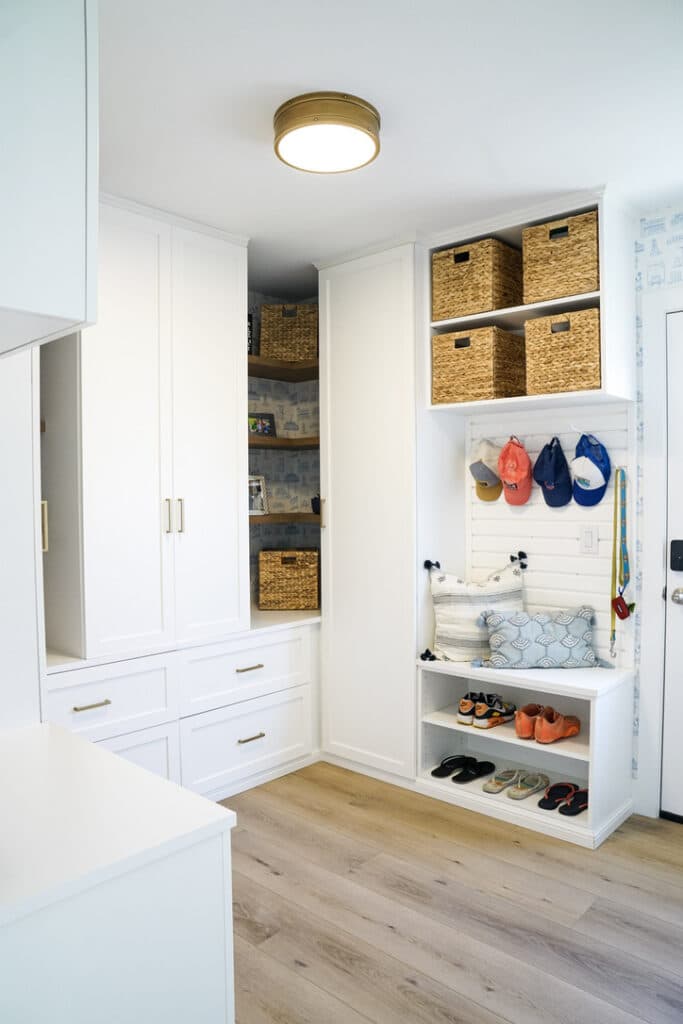
At The OC Tailored Closet, we specialize in custom cabinetry designed for closets, home offices, pantries, wall beds, and mud rooms throughout Orange County. We’ve built our business on the belief that exceptional organization starts with exquisite design, advanced space planning, and meticulous craftsmanship. Every project we take on gets the same level of attention—whether you’re transforming a compact reach-in or designing a luxurious primary suite walk-in with all the features.
We Start by Learning How You Actually Live
Every space presents its own organizational challenges, and every client has different priorities. Our design process begins with listening. We want to know what frustrates you about your current closet, how you get dressed in the morning, what you own that needs special storage, and what would genuinely make your daily routine easier.
Our 3D design tool brings your closet to life before we build anything. You’ll see exactly how the layout flows, where your shoes will go, how the island sits in the space, and whether the lighting placement works. This collaboration ensures you get the exact closet design you want, whether you’re storing an expansive shoe collection, organizing designer handbags, or simply creating a place for everything where everything has its place.
Design Choices That Reflect Your Style and Needs
Our custom closet solutions adapt to your specific requirements, maximizing storage efficiency and accessibility in ways that generic systems simply can’t match:
- Adjustable components – Shelving and rods that move as your wardrobe evolves, giving you flexibility for years to come.
- Drawer configurations – From shallow jewelry trays to deep sweater drawers, sized precisely for what you’re storing.
- Innovative accessories – Pull-out tie racks, belt holders, scarf organizers, valet rods, and specialty features that keep small items visible and accessible.
- Custom dimensions – Every measurement tailored to your space and your body—rod heights you can reach comfortably, shelf depths that fit your items, drawer heights that make sense for your storage.
You’ll choose from a variety of design styles, finishes, and hardware options that match your home’s aesthetic while delivering the functionality of a genuinely well-organized space. Our expert installers ensure seamless integration, turning your vision into a reality that looks as beautiful as it works efficiently.
Collaboration from Design Through Installation
Our designers work closely with you throughout the entire process, developing solutions for closets, home offices, pantries, and other spaces that align with your vision while optimizing functionality. We take detailed measurements, create comprehensive plans, and walk you through material options, finish selections, and configuration choices. You’re involved at every decision point, ensuring the final result reflects exactly what you want.
Ready to Start Your Project?
Walk-in closet cost in Orange County depends on size, materials, design complexity, and who’s doing the work—factors that compound quickly once you start customizing. Smart investing means knowing where to prioritize your budget while building something that serves you well for decades.
At The OC Tailored Closet, we’re ready to show you exactly what’s possible in your space. Schedule your free in-home consultation and we’ll measure, discuss your needs, and create a 3D design that brings your vision to life.
FAQs
How long does a custom closet installation take?
From design approval to completion, most custom closet projects take 4-8 weeks. The timeline breaks down into design and planning (1-2 weeks), manufacturing (2-4 weeks), and installation (1-3 days for most walk-ins). Complex projects with islands, extensive lighting, or multiple rooms take longer. Rush timelines are sometimes possible for simpler configurations.
Can I install a custom closet myself to save money?
You technically can, though most homeowners regret it within the first year. DIY installations often result in unlevel shelves, misaligned doors, sagging rods, and drawers that don’t close properly. Professional installers work with tolerances measured in fractions of an inch, ensuring everything fits perfectly and functions smoothly. Plus, most custom closet warranties require professional installation. The money you save upfront often gets spent fixing problems later, alongside the frustration of living with a closet that never quite works right.
Do custom closets increase home resale value?
Custom closets rank among the most desired features in primary suites and consistently appeal to buyers. Quality closet systems make homes show better, sell faster, and often command higher offers. Buyers especially appreciate walk-in closets in primary bedrooms, well-organized pantries, and functional home offices. Think of it as both a lifestyle upgrade you enjoy daily and a marketability feature that pays dividends when you eventually sell.
Can The OC Tailored Closet work with unusual room shapes or tight spaces?
Absolutely. Custom cabinetry means we design around your exact dimensions, including angled walls, sloped ceilings, awkward corners, or compact footprints. We’ve worked with everything from converted attic spaces to narrow reach-ins that needed maximized efficiency. Unusual spaces often benefit most from custom solutions since off-the-shelf systems can’t adapt to unique configurations. We’ll measure precisely, plan strategically, and create a design that makes the most of every inch you have available.
Can I add to or modify my closet system later with The OC Tailored Closet?
Yes, custom systems are designed to be expandable. We keep records of your specific materials, finishes, and hardware so we can source matching components if you want to add drawers, expand shelving, or incorporate new accessories down the road.
