
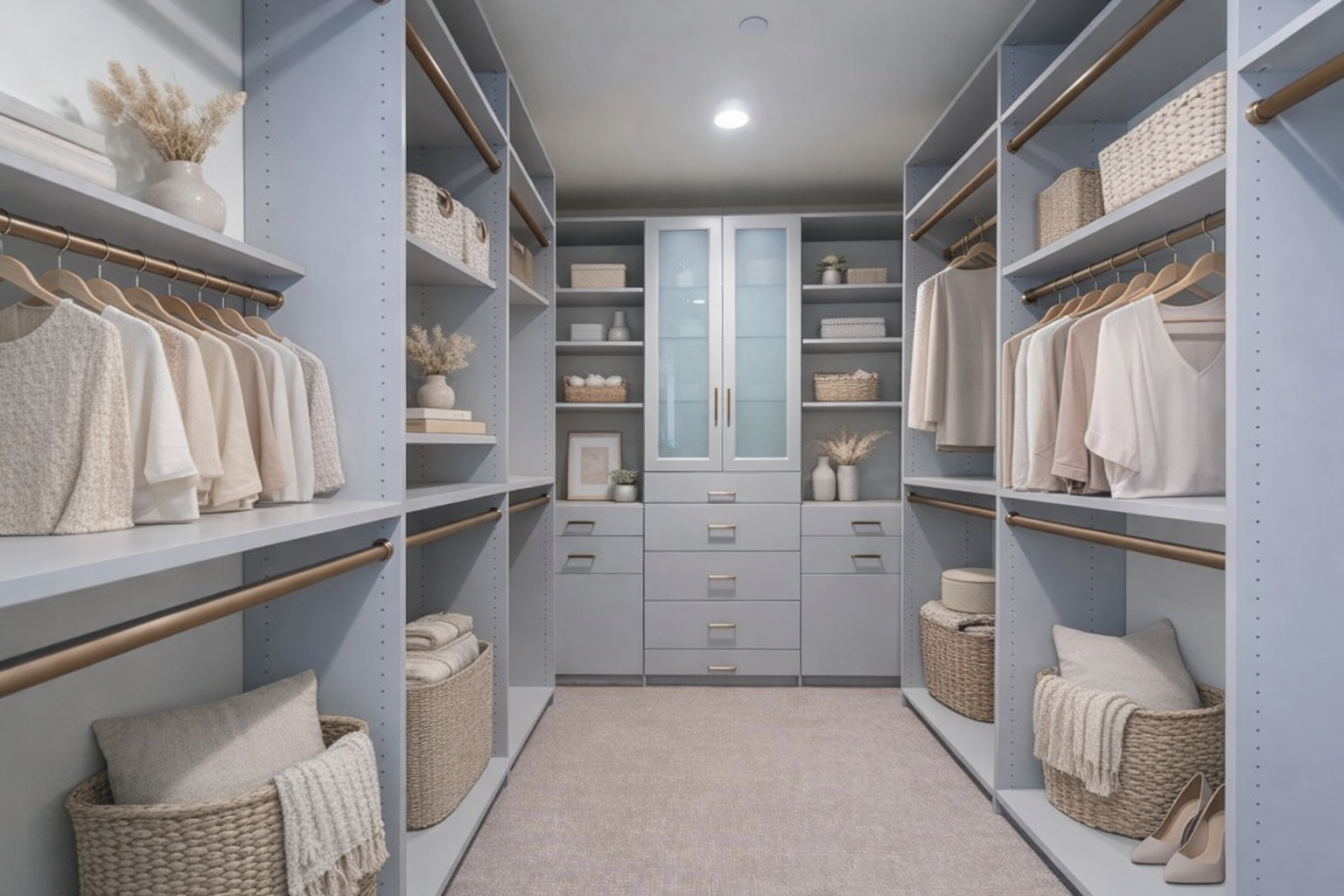
It usually starts with a simple thought—your closet just isn’t working the way it should. Maybe it feels cramped, hard to navigate, or simply doesn’t reflect how you use your space. The truth is, the right layout can completely change how your home functions day to day. Understanding the different types of closets is the first step toward creating a space that feels organized, efficient, and easy to use.
At The OC Tailored Closet, we’re passionate about helping you find the perfect fit for your home and lifestyle. With thoughtful design and a deep understanding of how different closet styles function, we create solutions that feel natural, elevated, and built around you. Once you see what’s possible, it opens the door to a space that truly works for you.
Types of Closets: Finding the Right Closet Style for Your Space
When you start thinking about improving your storage, one of the most helpful things you can do is understand what kind of closet you’re working with. Each type of closet comes with its own strengths, limitations, and opportunities. Once you recognize how your space is designed, it becomes much easier to see what’s possible and what kind of improvements will have the biggest impact.
Reach-In Closets
Reach-in closets are one of the most common types found in homes. They’re typically built into a wall and accessed from the front, making them a compact and practical solution for bedrooms, hallways, and guest spaces.
Their size encourages efficiency. With the right layout, a reach-in closet can feel surprisingly functional and well-organized. Thoughtful use of vertical space, layered storage, and well-placed accessories can make a noticeable difference in how easily you use the space.
At the same time, these closets rely heavily on internal organization. Without a clear system, they can become crowded quickly. Items tend to stack, overlap, or get lost in the back, which can make daily use feel less convenient.
- Great for smaller spaces: Ideal when square footage is limited and every inch needs to work efficiently.
- Requires intentional design: Smart layouts and accessories help prevent clutter and improve accessibility.
Walk-In Closets
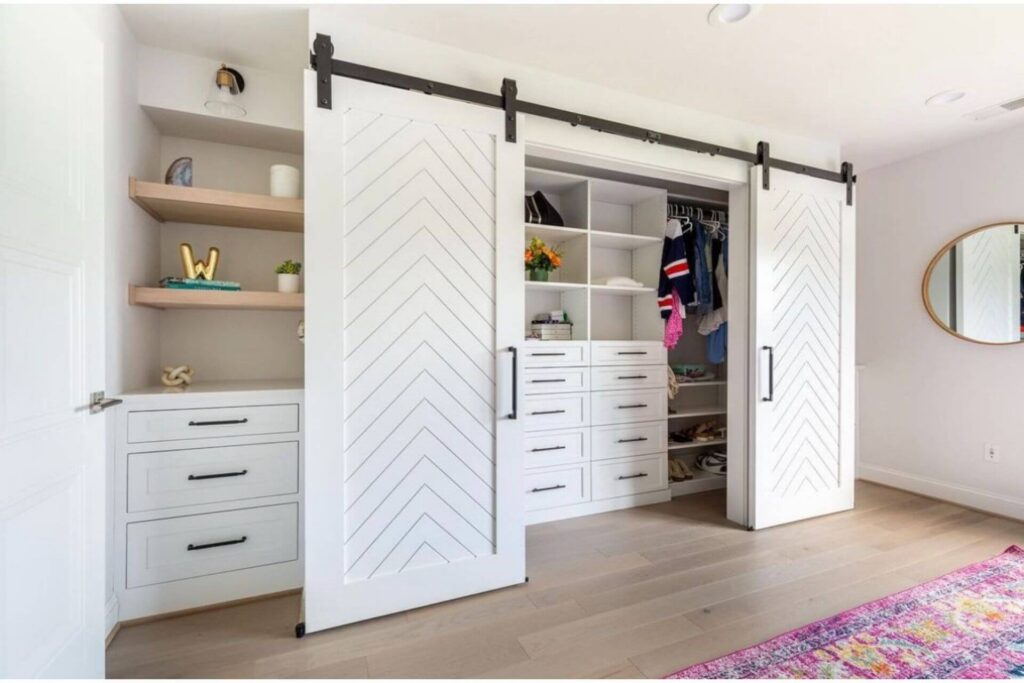
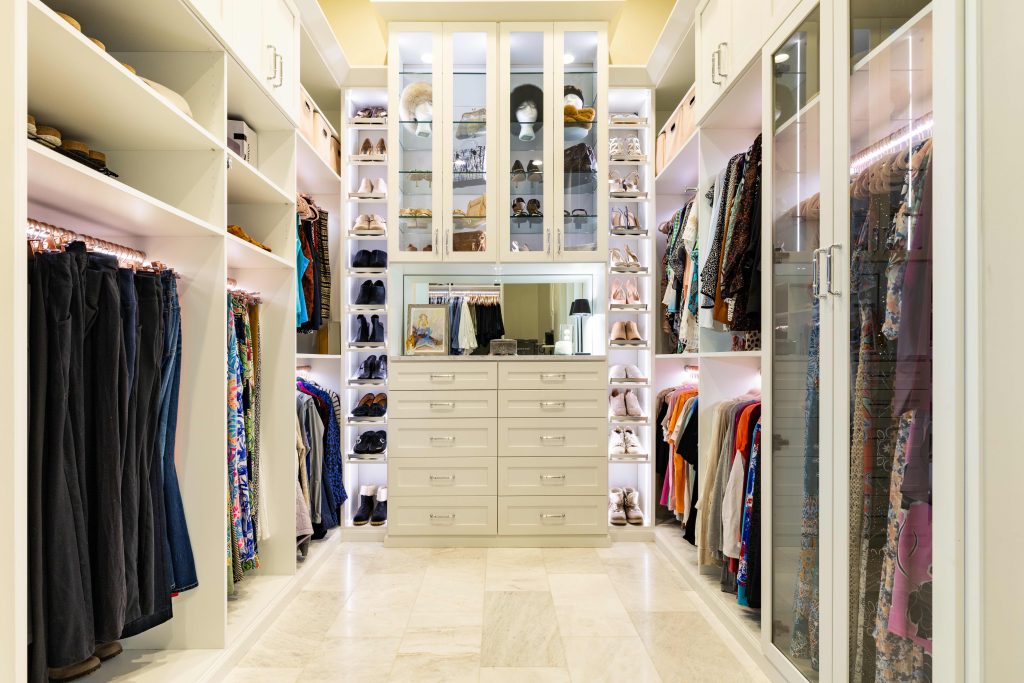
Walk-in closets offer more space and flexibility, allowing you to step inside and move around within the closet itself. This added room opens up more possibilities for storage, layout, and organization.
With more space comes the ability to create zones. You can separate clothing types, accessories, and seasonal items, which helps keep everything more organized and easier to navigate. This structure supports a smoother daily routine and makes it easier to maintain order. Even with the added space, planning still plays an important role. Without a clear layout, items can become spread out or underutilized. A thoughtful design ensures that the space feels cohesive and functions efficiently.
Wardrobes & Freestanding Closet Systems
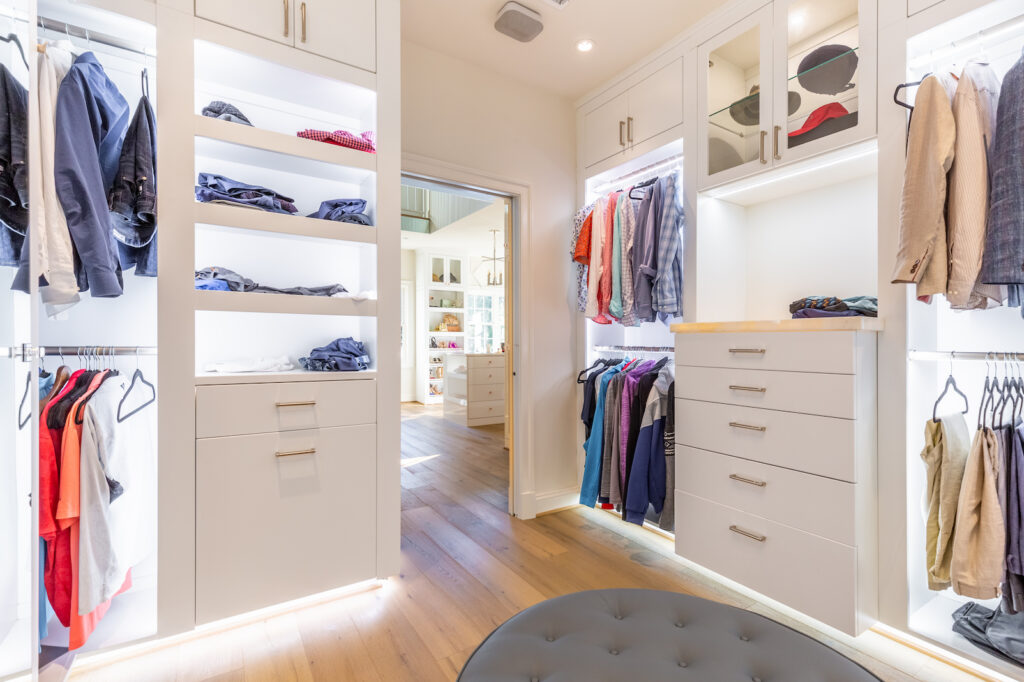
Wardrobes and freestanding systems are often used in homes where built-in closets are limited or unavailable. They offer flexibility in placement and can be moved or adjusted as needed, which makes them a practical option in certain situations. These systems can provide valuable storage, especially in smaller rooms or older homes. You can choose sizes and configurations that fit your immediate needs, giving you a level of adaptability.
- Flexible placement options: They can be positioned wherever space allows, making them useful in a variety of layouts.
- Quick storage solution: Ideal when built-in options aren’t available or when you need something in place quickly.
At the same time, they often lack the level of integration that built-in solutions provide. Because they aren’t designed specifically for your space, there may be gaps in functionality or unused areas around them.
Built-In Custom Closets
Built-in custom closets are designed specifically for your space and your lifestyle. Every element is planned with intention, from the layout to the smallest details, creating a system that feels cohesive and easy to use.
This type of closet offers the highest level of efficiency. It makes full use of available space, including vertical areas and corners that might otherwise go unused. Storage is tailored to your needs, which helps everything feel more organized and accessible.
Customization also allows for a more refined look. Materials, finishes, and design elements can be selected to match your home, creating a seamless and polished result.
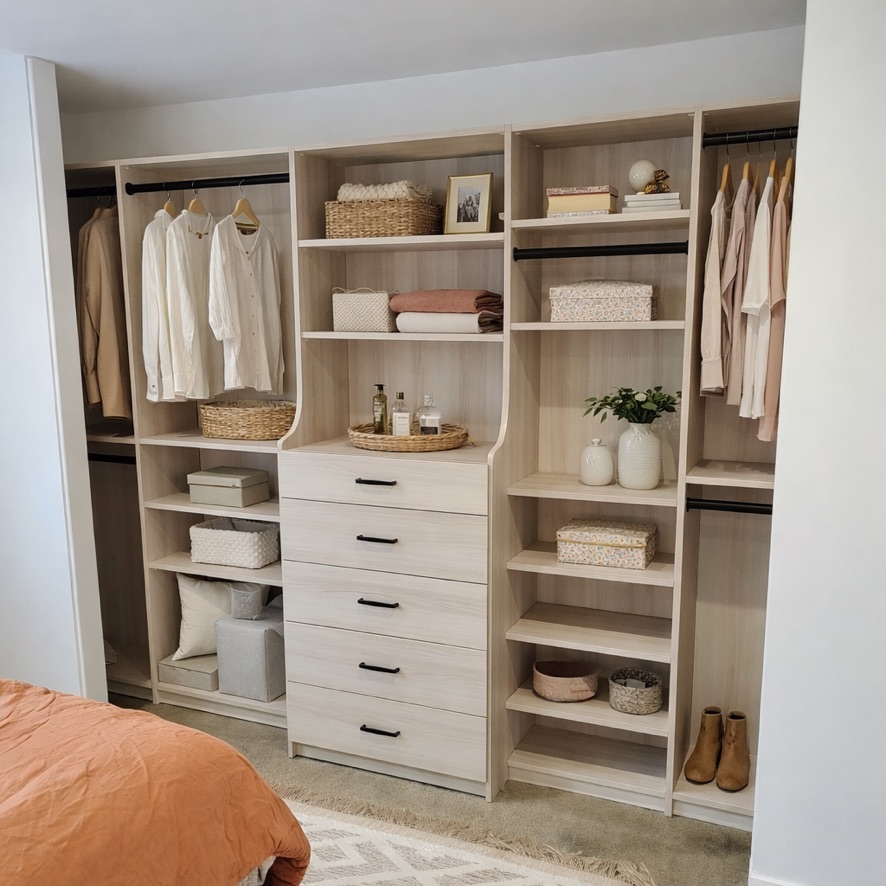
How to Think About Your Space Before Choosing a Closet Type
Before deciding on a closet style, it helps to take a step back and really look at your space as a whole. The way a closet functions has just as much to do with layout and flow as it does with square footage. When you understand how your space is structured, it becomes much easier to choose a solution that feels natural and works well over time.
Looking Beyond Square Footage
It’s easy to focus on how much space you have, though the layout often plays an even bigger role. The placement of walls, doors, windows, and ceiling height all influence what’s possible. A narrow wall, an angled ceiling, or a doorway in a certain position can shape how storage needs to be designed.
When you take these elements into account, you start to see opportunities that may not be obvious at first. A smaller space with a thoughtful layout can feel highly functional, while a larger space without clear structure may feel less efficient. The way the space is used matters just as much as its size.
How the Closet Fits Within the Room
Your closet doesn’t exist in isolation—it’s part of a larger room that needs to feel balanced and comfortable. Thinking about how the closet interacts with the rest of the space can help guide better decisions.
Consider how you move through the room, where natural light comes in, and how much open space you want to maintain. A well-placed closet can enhance the flow of the room, while a poorly planned one can make the space feel crowded or awkward. When everything works together, the room feels more cohesive and easier to live in.
Recognizing Design Limitations Early
Every space comes with its own set of constraints, and understanding them early can help you make more informed choices. Structural elements, layout restrictions, and existing features all play a role in what can be achieved.
Rather than seeing these as obstacles, they can help shape a more intentional design. When you work within the natural boundaries of your space, the result often feels more integrated and well thought out. This approach helps avoid frustration later and leads to a solution that feels realistic and effective.
Why Design Makes the Difference
Two closets with the same dimensions can feel completely different depending on how they’re designed. Layout, organization, and accessibility all influence how the space performs on a daily basis. When design is approached thoughtfully, even a modest space can feel organized and easy to use. With the right planning, your closet becomes something that supports your routine and enhances your home, rather than something you have to work around.
Types of Closets: How to Choose a Closet That Fits Your Daily Life
Choosing the right closet starts with understanding your daily life. The way you get ready, store your clothing, and move through your routine all influence what kind of setup will feel the most natural. When your closet aligns with your habits, everything becomes easier to find, easier to maintain, and more enjoyable to use.
How Your Daily Routine Shapes Your Closet
Your routine plays a big role in how your closet should be designed. Think about how often you access your clothing and which items you reach for the most. If your mornings are fast-paced, having frequently used pieces within easy reach can make a noticeable difference. When your layout supports your flow, you spend less time searching and more time moving through your day with ease.
Understanding Your Wardrobe
The size and variety of your wardrobe also influence what type of closet will work best for you. A larger collection may benefit from more space and clearly defined zones, while a more streamlined wardrobe can thrive in a compact, well-organized layout. It’s also helpful to consider how your clothing is stored (whether you prefer hanging, folding, or a mix of both) so your closet can accommodate those preferences comfortably.
Shared vs. Individual Spaces
If your closet is shared, organization becomes even more important. Creating designated areas for each person helps maintain clarity and reduces overlap. It also allows everyone to access their belongings without disrupting the rest of the space. In individual closets, the focus can shift more toward personal habits and preferences, allowing for a layout that feels completely tailored to you.
Planning for Flexibility
Your needs today may look different a year from now, and your closet should be able to adapt. Whether your wardrobe grows, your routine changes, or your storage preferences evolve, flexibility helps your space continue to work for you. Adjustable shelving, adaptable layouts, and thoughtful design choices all contribute to a closet that can shift along with your lifestyle.
Designing for Real Life
The most effective closet is one that reflects how you actually live. When your space is designed around your real habits and needs, it feels intuitive and easy to maintain. You’re able to stay organized without overthinking it, and your closet becomes a natural part of your daily routine rather than something you have to manage.
When choosing a closet, it’s easy to focus on the type—reach-in, walk-in, or freestanding. Each one offers its own advantages, though the real difference in how a closet performs comes down to design. The way your space is planned, organized, and executed has a much greater impact on your daily experience than the category it falls into.
No One-Size-Fits-All Answer
Every home and every lifestyle is different, which means there isn’t a single closet type that works best for everyone. What feels spacious and functional in one home may feel inefficient in another. The key is finding a solution that aligns with your space and how you use it.
When design is approached thoughtfully, any closet type can become highly effective. The focus shifts toward creating a system that supports your routine and makes everyday use feel smooth and intuitive.
Design Is What Brings a Closet to Life
The way a closet is laid out determines how well it functions. Placement of shelves, hanging areas, drawers, and accessories all work together to shape your experience. When these elements are planned with intention, the space feels organized and easy to navigate.
A well-designed closet considers accessibility, visibility, and flow. It ensures that frequently used items are within reach and that everything has a clear place. This level of detail transforms your closet into a space that supports you consistently.
- Efficient use of space: Every inch is considered, helping you store more while maintaining clarity.
- Improved daily flow: Thoughtful placement of items makes your routine faster and more comfortable.
- Better long-term organization: A clear structure helps your space stay organized with less effort over time.
How Smaller Closets Can Feel Surprisingly Functional
Even a compact closet can feel highly efficient when it’s designed well. Strategic use of vertical space, layered storage, and integrated accessories can create a sense of openness and accessibility.
In smaller spaces, design plays an even more important role. Every decision matters, from how shelves are spaced to where items are placed. With the right approach, a smaller closet can feel organized, practical, and easy to maintain.
Larger Closets Still Need Thoughtful Planning
A larger closet offers more room to work with, though it still benefits from clear structure and intentional design. Without a plan, items can become spread out, making the space feel less efficient and harder to manage. Thoughtful zoning and organization help bring clarity to larger layouts. When each area has a purpose, the space feels more cohesive and easier to navigate. This approach ensures that the additional space enhances functionality rather than complicating it.
The OC Tailored Closet’s Proven Process for Creating Better Closets
At The OC Tailored Closet, everything we do starts with you. We believe every closet should be designed around the person using it, because no two routines, spaces, or lifestyles are exactly the same. A closet should feel intuitive the moment you step into it—easy to navigate, simple to maintain, and aligned with how you move through your day. That philosophy guides every decision we make, from the first conversation to the final installation.
Understanding Your Space and How You Live
Before we begin designing, we take the time to understand both your space and your routine. These two elements shape everything that follows.
- Evaluating your layout and opportunities
We look closely at your available space, including dimensions, layout, and any unique features that can influence the design. - Learning your daily habits
We focus on how you use your closet—what you reach for most often, where things tend to get disorganized, and what would make your routine feel easier.
This foundation allows us to recommend solutions that feel natural and effective, rather than generic.
A Collaborative Design Process
Designing your closet is a collaborative experience. We work closely with you to translate your needs into a layout that feels both functional and refined.
We guide you through each step, helping you make informed decisions while keeping the process clear and enjoyable. As your ideas take shape, we refine the design to ensure everything works together seamlessly. The result is a space that reflects your preferences while supporting your everyday routine.
Customization That Works for Any Closet Type
No matter what type of closet you have, customization allows it to perform at a higher level. We create tailored configurations that make the most of your space while aligning with your personal style.
- Maximizing functionality
Every element is placed with intention, helping you use your space efficiently without feeling crowded. - Design flexibility
We offer a range of options in layout, finishes, and details, so your closet feels like a natural extension of your home. - Built for long-term performance
Professional installation ensures everything is secure, aligned, and ready to support daily use over time.
Expertise That Extends Beyond the Closet
Our experience goes beyond closets alone. We design storage solutions across multiple areas of the home, including pantries, home offices, and more. This broader perspective allows us to create spaces that feel connected and consistent, bringing a sense of flow throughout your home.
Your Next Step Toward a Better Organized Space
Choosing the right closet comes down to understanding your space, your routine, and how everything works together. From exploring different types of closets to recognizing the importance of thoughtful design, each decision plays a role in creating a space that feels organized and easy to use. When your closet aligns with how you live, it becomes a natural part of your daily routine.
Types of Closets FAQs
How do I know which types of closets are best for my home?
The best place to start is by looking at your space and your daily routine. Consider how much room you have, how you store your clothing, and how often you access different items. A reach-in closet may work well for smaller spaces, while a walk-in offers more flexibility. The right choice is the one that feels natural to use and supports your habits without adding extra effort to your day.
Is a walk-in closet always a better option than a reach-in?
A walk-in closet can offer more space and flexibility, though what matters most is how the space is designed. A well-planned reach-in closet can feel highly efficient and easy to use, especially in smaller rooms. It really comes down to how the layout supports your routine. When the design is thoughtful, both options can work beautifully and provide a great everyday experience.
What does the design process look like when working with The OC Tailored Closet?
We begin with a conversation to understand your goals, your space, and what you would like to improve. Then we take measurements and develop a layout that fits your needs. Throughout the process, we collaborate with you to refine the design, making sure everything feels right before moving into installation.
How long does installation take, and what should I expect?
Installation timelines can vary depending on the scope of the project, though we aim to keep the process efficient and well-organized. We handle everything with care and precision, making sure each element is properly installed. You can expect clear communication along the way and a finished result that feels polished and ready for everyday use.
Can you design closets for both small and large spaces?
Yes, we work with spaces of all sizes. Whether your closet is compact or more spacious, we focus on making it as functional and efficient as possible. Every design is tailored to the space available, so you get a solution that feels balanced and easy to use, no matter the size.
