
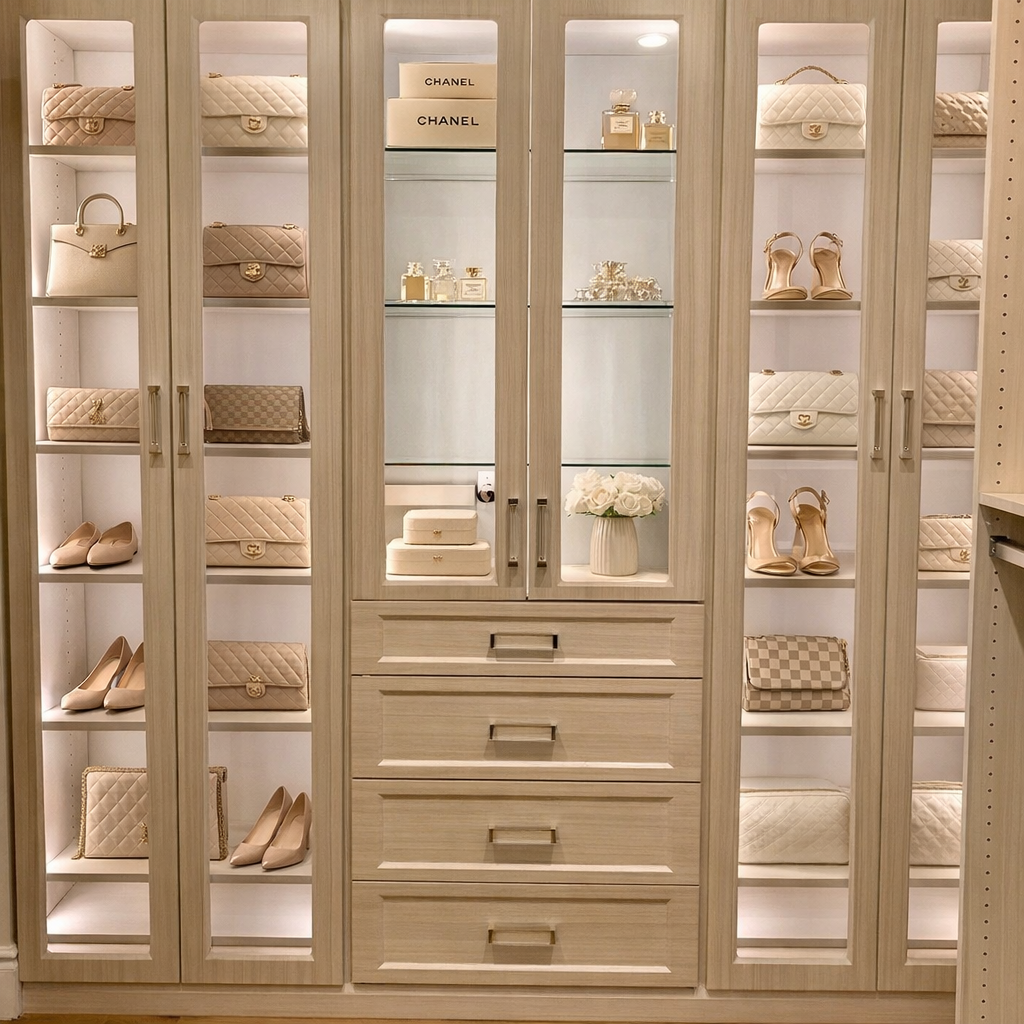
You’re staring at a closet that’s bursting at the seams—shoes piled haphazardly, handbags fighting for shelf space, clothes you forgot you owned wedged in the back. You know it needs organizing. You can picture the dream: everything accessible, beautifully arranged, finally functional. But between that vision and reality? Total paralysis. Where do you even start?
Here’s the truth we’ve learned after designing thousands of custom closets: the planning phase trips people up more than anything else. That’s why a good closet organization app (along with the right mix of digital tools and resources) can be the difference between staying stuck and actually transforming your space. Whether you’re DIYing or preparing for a professional redesign, the right planning tools turn overwhelming chaos into a clear, actionable roadmap. Let’s explore what actually works.
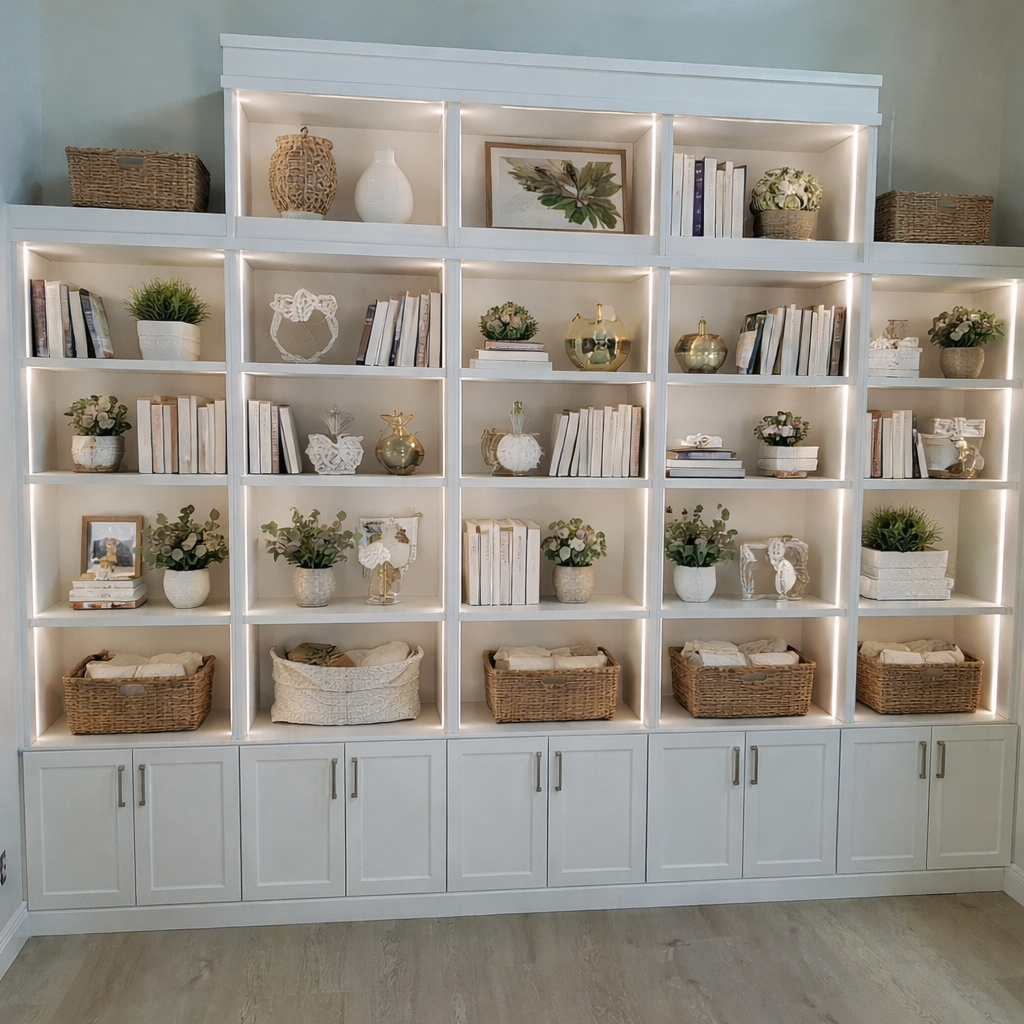
Before You Download—Know What Your Closet Actually Needs
Walk into any home goods store and you’ll find aisles of gorgeous organizing systems: acrylic drawer dividers, velvet hangers, modular shoe racks, matching storage bins. The temptation to buy immediately is real. Yet countless homeowners end up with garages full of unused organizers that seemed perfect in the store but collect dust at home.
The financial cost adds up quickly. A set of shelf dividers that doesn’t fit your actual shelf depth. Drawer organizers purchased before you realized you needed hanging space instead. Expensive shoe storage designed for heels when you live in sneakers. These mistakes typically cost anywhere from $200 to $800 before people pause and reconsider their approach.
Beyond money, there’s the time factor. Installing systems that don’t match your habits means you’ll abandon them within weeks. You’ll revert to old patterns, and the “organized” closet becomes just another source of guilt. Proper planning eliminates this cycle entirely. When you understand your actual needs, your lifestyle patterns, and your space constraints before making a single purchase, everything you invest in actually gets used. The system works with you instead of against you, saving hours of frustration and years of clutter creep.
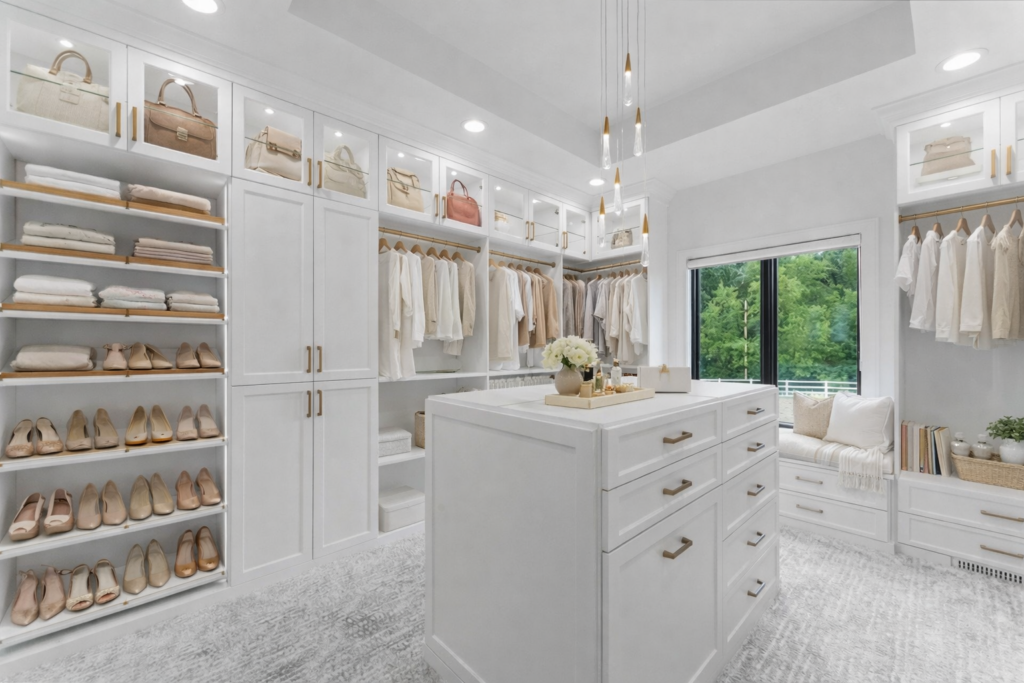
The Pre-Planning Assessment Questions
Before any app or tool can help you, you need clarity about your actual situation. These questions force you past surface-level assumptions and into the specific realities that will determine whether your organizational system thrives or fails.
- What do you actually own? A clothing audit reveals the truth about your wardrobe. Most people discover they wear 20% of their clothes 80% of the time. Counting your shoes, measuring your longest dresses, tallying your handbags, and assessing your seasonal items gives you concrete numbers to design around rather than vague estimates.
- What are your real daily routines? Your ideal morning might involve carefully selecting an outfit with plenty of time, but your actual morning might be a seven-minute scramble. Understanding whether you dress in the closet or the bedroom, whether you prep outfits the night before, and how you handle worn-but-not-dirty clothes shapes what organizational systems will actually serve you.
- What are your specific pain points? Generic frustration like “my closet is messy” doesn’t guide solutions. Specific problems do: you own 40 pairs of shoes but can only see five of them; your necklaces turn into tangled nightmares; your winter coats have nowhere to go in July; you’ve repurchased the same black cardigan three times because you couldn’t find the ones you already owned.
- What’s your actual available space and its quirks? Every closet has personality—and limitations. Sloped ceilings that eliminate standing height in corners. Awkward dimensions that don’t fit standard organizer widths. Door swings that block access to certain areas. Electrical outlets in strange places. Support beams that can’t be moved. HVAC vents that require clearance. These aren’t just minor details; they’re the constraints that determine what’s actually possible.
Even the most sophisticated closet organization app becomes useless without this foundational knowledge. Technology can show you beautiful renderings of organized spaces, but it can’t tell you that you never actually fold your sweaters or that you need immediate access to your gym bag every single morning. Apps and tools amplify good planning; they can’t create it from nothing. Answer these questions honestly, and every resource you use afterward becomes exponentially more valuable.
Take Your Planning Skills Beyond The Closet. Explore: Smart Storage Solutions for Every Room in Your House
Closet Organization Apps Worth Downloading
Your smartphone already helps you navigate traffic, track your fitness, and remember birthdays—why not put it to work planning your dream closet? The right apps can turn abstract ideas into concrete plans, helping you inventory what you own, measure your space accurately, and collect inspiration that actually translates to reality.
Category 1: Wardrobe Management Apps
Understanding what you actually own comes before planning where to put it. These apps turn the overwhelming task of cataloging your wardrobe into something manageable, even enjoyable.
Think of these as your digital wardrobe catalog—photograph every piece you own and build a visual database that reveals exactly what kind of storage you need.
Stylebook leads the pack for serious wardrobe planning. It lets you photograph items with the background removed automatically, then mix and match pieces to plan outfits. The calendar feature shows you what you’ve actually worn, which becomes eye-opening when you realize those five pairs of jeans get rotated constantly while twelve dresses sit untouched. The stats dashboard breaks down your wardrobe by category, helping you understand whether you need more hanging space or drawer real estate.
Acloset takes a simpler approach, perfect if you want the inventory benefits without the outfit-planning complexity. It’s particularly strong for organizing by season and color, which helps when you’re deciding how to allocate your closet’s prime real-estate versus deep storage areas.
Whering and Indyx both add sustainability tracking—showing you cost-per-wear and encouraging outfit creativity with what you already own. They’re ideal if your closet overhaul includes decluttering goals, as they highlight pieces you haven’t touched in months.
The planning benefit: Whichever app you choose, you’ll discover concrete numbers. Thirty t-shirts need drawer space. Eight dresses need hanging room. Fifteen pairs of shoes need visible storage. This data transforms vague ideas like “I need better organization” into specific requirements like “I need 18 inches of hanging space and four shallow drawers.”
Category 2: Measurement & Space Planning Apps
Accurate dimensions make the difference between custom solutions that fit perfectly and expensive mistakes. These apps get you started, though they have limitations worth understanding.
RoomScan and MagicPlan use your phone’s sensors to create room measurements and floor plans. Walk the perimeter of your closet, and the app generates dimensions and a basic layout. They’re excellent for getting initial numbers quickly and creating a visual reference. The limitation: these measurements typically have a margin of error of 1-3 inches, which matters enormously when you’re planning custom cabinetry. Use them for preliminary planning and budgeting, but professional measurement remains essential for actual installation.
AR Ruler and Measure excel at quick spot measurements. Need to know if your longest coat is 42 or 48 inches? Want to measure the depth of your existing shelves? These augmented reality tools give you instant numbers for specific items you’re planning to store. They’re perfect for cataloging your belongings’ dimensions—your tallest boots, your widest handbags, your bulkiest sweaters when folded. This data becomes invaluable when discussing your needs with closet designers.
These measurement apps serve as helpful starting points for understanding your space and getting rough dimensions. They let you begin visualizing possibilities and making preliminary decisions. When you’re ready for custom installations, professional measurement eliminates the guesswork entirely and accounts for the quirks, like walls that aren’t quite plumb or corners that aren’t exactly 90 degrees, that phone apps can’t detect.
Category 3: Inspiration & Design Apps
Gathering ideas and understanding what’s possible in your specific space type guides every decision that follows.
Pinterest remains the gold standard for visual planning. Create boards for different aspects of your closet project: shoe storage solutions, jewelry organization, lighting ideas, color schemes. The real power comes from seeing hundreds of real closet examples and identifying patterns in what appeals to you. Save images generously, then review them to spot themes. Do you gravitate toward open shelving or closed cabinetry? Neutral tones or bold accents? Minimalist designs or maximal storage?
Houzz offers a more curated collection of professional closet designs, often with dimensions and product information listed. The platform’s filtering system lets you search by room size, style, and specific features. You can see what other homeowners have done with spaces similar to yours—walk-in closets in master bedrooms, reach-in closets in guest rooms, odd-shaped spaces under stairs. Many photos include comments from the designers explaining their choices, giving you insight into why certain solutions work.
How to Use These Apps for Effective Planning:
Create two separate boards: one labeled “dream” where anything goes, and another called “realistic” for ideas that match your actual space and budget. Screenshot images and use your phone’s markup tools to annotate what specifically appeals to you—is it the LED lighting, the pull-out accessory tray, or the way the space handles corner storage? These annotated images become powerful communication tools when working with professionals, eliminating the translation gap between your vision and their design.
The Best Free Resources for Closet Organization Planning
Before investing in apps, products, or professional services, spend some time learning what’s actually possible. The internet offers a wealth of free resources that teach you the fundamentals of closet design, reveal clever organizational strategies, and show you real transformations from start to finish.
YouTube Channels for Organization Inspiration & How-Tos
The Tailored Closet YouTube Channel
At The OC Tailored Closet, we’ve spent years transforming chaos into calm for homeowners throughout Orange County. We design and build custom cabinetry for closets, home offices, pantries, wall beds, and mudrooms—basically anywhere you need storage that actually works with your life instead of against it. Our philosophy? Exceptional organization starts with exquisite design, advanced space planning, and the kind of meticulous craftsmanship that makes opening your closet door feel like a small daily luxury.
What you’ll find on our channel:
- Before-and-after transformations: Real client spaces going from “how did they even live like that?” to jaw-dropping functionality, with detailed walkthroughs explaining every design decision
- Expert design tips: Our team shares space-planning strategies, solutions for tricky items (extensive shoe collections, handbag hoards, seasonal storage nightmares), and answers to the closet challenges we see most often
- Client stories: Hear from homeowners who can’t believe they once tolerated their old closets—and how custom solutions changed their daily routines
- Craftsmanship behind the scenes: Watch quality custom cabinetry come to life, from first measurement to final installation, so you understand what separates amateur organization from professional transformation
It’s part inspiration, part education, and entirely about showing you what’s possible when storage solutions are tailored to your exact needs.
The Home Edit
Clea and Joanna have built an empire on rainbow-organized spaces that look almost too beautiful to use. Their content delivers genuine value beyond the aesthetics; watch for their color-coding systems, categorization methods, and the way they create zones within larger spaces. Their closet decluttering videos prove particularly helpful when you’re trying to pare down before redesigning, offering decision-making frameworks that make letting go easier.
Alejandra.tv
Alejandra Costello covers organization across your entire life: closets, home offices, handbags, kitchen drawers, even your car. Her videos emphasize practical systems that work for busy people, with detailed product recommendations and step-by-step implementations. The closet content focuses on maximizing space in standard builder-grade closets, making her channel especially valuable if you’re working with typical dimensions and constraints.
Blogs & Free Design Tools
Apartment Therapy’s closet archives specialize in realistic small-space solutions that acknowledge real-world limitations. Their articles feature reader submissions showing actual homes with actual budgets, making the advice feel achievable rather than aspirational. Browse their archives for space-specific solutions (narrow closets, sloped ceilings, shared spaces) that might mirror your own challenges.
Planner 5D lets you create basic room layouts and experiment with furniture placement in a simplified drag-and-drop interface. You can mock up your closet’s footprint, add walls and windows, then play with different configurations of shelving and hanging areas. The 2D and 3D views help you visualize how different layouts would actually feel in your space.
Custom Closets Done Right: Our Complete Solution
You’ve inventoried your wardrobe, measured your space with three different apps, and saved 247 Pinterest images of dream closets. You know what you want. You understand your needs. The gap between vision and reality still feels enormous—and that’s exactly where we come in.
At The OC Tailored Closet, we follow a simple process: We Measure, We Design, We Install, You Enjoy. We specialize in custom cabinetry designed for closets, home offices, pantries, wall beds, and mudrooms throughout Orange County. Our philosophy centers on the belief that exceptional organization begins with exquisite design, advanced space planning techniques, and meticulous craftsmanship. We create custom cabinetry that redefines storage solutions, offering the kind of quality, versatility, and style that transforms your space into a harmonious blend of functionality and elegance.
We Measure
Our expert craftsmen arrive with laser-accurate measurement tools that capture dimensions down to the millimeter. Every detail matters when you’re creating custom cabinetry that needs to fit perfectly in your specific space. We account for obstacles that smartphone apps simply can’t detect—baseboards that protrude, crown molding that reduces ceiling height, electrical outlets that need clearance, windows that limit wall space, and doors whose swing patterns affect layout possibilities.
We also identify structural limitations and opportunities that apps miss entirely. That awkward corner might actually be perfect for pull-out accessory storage. The sloped ceiling that seems like a problem becomes valuable space for seasonal items you access infrequently. Support beams that can’t be moved get incorporated into the design as natural dividers. HVAC vents that require clearance get planned around from the beginning.
We Design (3D Visualization Collaboration)
Our 3D design tool represents the ultimate planning resource—the point where possibility becomes tangible. You’ll see your exact closet with exact dimensions and exact finishes before a single piece of wood gets cut. The rendering shows your specific space with the architectural quirks we measured, populated with the organizational systems we’re proposing, finished in the colors and materials you’re considering.
Real-time collaboration transforms the design process from guesswork into confident decision-making. Want to see what happens if we swap shelving for drawers in that corner? Change it instantly and watch the rendering update. Curious whether the darker wood finish feels too heavy? Toggle between options and compare them side by side. Wondering if you need deeper shelves for your sweater collection? Adjust the depth and visualize the difference. What you see in the 3D rendering is exactly what gets installed in your home.
Lifestyle-Based Design Expertise
Our designers ask questions apps never will because they’re trained to design for how you actually live. Do you plan your outfits weekly and need space to hang pre-selected combinations? Or do you choose daily and need to see everything at once? Do you rotate seasonal items regularly or store them separately? Do you prefer folded stacks or prefer everything hanging? Do accessibility needs require specific rod heights or pull-out systems?
We design custom solutions for unique items that generic organizational systems ignore. Golf clubs need vertical storage that keeps them organized and accessible. Seasonal ski gear requires space that accommodates bulk while maintaining easy access during winter months. Extensive shoe collections deserve display-quality storage that protects your investment. Designer handbag collections need dust-free visibility that showcases them properly.
Material & Finish Guidance
Our team provides durability recommendations based on your specific use case. We guide style matching so your new closet feels integrated with your home’s aesthetic rather than installed as an afterthought. Traditional homes pair beautifully with raised-panel doors and classic hardware. Modern spaces call for clean lines and minimalist finishes. Transitional designs bridge both worlds with thoughtful material choices.
We Install
Our expert craftsmen bring years of specialized experience to every installation. They follow the exact 3D specifications we designed together, which means the closet that appears in your home matches the rendering you approved down to the smallest detail. The installation process stays clean and professional from start to finish.
Your project manager conducts a final inspection that you participate in and approve. We walk through every element together—drawer alignment, door operation, shelf stability, hardware function, finish quality. Nothing gets signed off until you’re completely satisfied with the result.
You Enjoy
The completed space delivers exactly what those initial apps promised to help you achieve: a place for everything, everything in its place. Your morning routines flow smoothly because items live where you naturally reach for them. Getting dressed becomes efficient instead of frustrating. Finding what you need takes seconds instead of minutes.
The closet feels luxurious in a way that goes beyond mere functionality. Opening the door reveals a thoughtfully designed space that respects your belongings and simplifies your life. The custom cabinetry is built to last decades rather than years, maintaining its beauty and function through daily use.
Ready to Stop Planning and Start Building?
Apps and online tools offer valuable starting points, they help you inventory your wardrobe, visualize possibilities, and gather inspiration for your ideal closet. But the real transformation happens when professional expertise takes those ideas and turns them into custom solutions built specifically for your space, your routines, and your life.
At The OC Tailored Closet, we’ve guided thousands of homeowners from chaotic closets to organized sanctuaries. Our complimentary in-home consultation brings our 3D design tool directly to your space, letting you see exactly what’s possible before making any commitments. Ready to stop planning and start enjoying? Schedule your free consultation today and discover how custom cabinetry transforms daily life.
FAQs
How much does professional closet measurement actually matter?
Millimeters make the difference between “good enough” and “looks built-in.” Professional laser measurement captures details smartphone apps miss: baseboard depth, electrical outlet placement, door swing radius, ceiling slopes, and HVAC vent clearances. These tiny factors determine whether drawers glide smoothly, doors close without gaps, and shelves maximize every available inch. DIY measurements work fine for buying furniture; custom cabinetry requires precision that ensures your $5,000+ investment fits flawlessly and functions beautifully for decades.
What should I prepare before my first closet consultation?
Complete a clothing audit so you know exactly what you’re storing: count shoes, measure your longest dresses, tally handbags. Think through your daily routines: where you get dressed, how you handle worn-but-not-dirty clothes, whether you plan outfits ahead. Gather inspiration images showing specific features you love (pull-out jewelry trays, LED lighting, shoe displays). If you’ve used wardrobe apps, bring that data—it helps designers understand your collection’s scope. Honesty about budget ranges also helps; designers can show options at different price points.
What happens if I change my mind about the design after seeing the 3D rendering?
Design changes are expected and welcomed, that’s exactly why we use 3D visualization. You’ll see your closet before anything gets built, and we collaborate in real-time to adjust layouts, swap materials, change configurations, or rethink organizational systems until you’re completely confident. Want deeper shelves? Different hardware? More drawers instead of hanging space? We modify the rendering instantly so you can compare options side-by-side. Nothing goes into production until you approve the final design. This collaborative process ensures zero surprises on installation day.
How do you design for couples sharing one closet?
Shared closets require careful space division and smart compromises. We typically create distinct zones—his side, her side—with organizational systems tailored to each person’s wardrobe and habits. One partner might need extensive hanging space while the other needs more drawers and shelves. We design sightlines so both people can access their items without interference. Central shared zones work well for items like luggage or seasonal storage. The 3D design process lets couples visualize the division and make adjustments until both feel the space serves them equally.
